A front yard update can boost curb appeal and make the route to your front door easier to see. Because the driveway often takes up much of that view, the way you landscape around it can make a noticeable difference. These driveway landscaping ideas show how to use planting beds, paver borders, low garden walls, and lighting to tie the property together. A bed near the entrance can add color where you see it first, while a defined edge gives the lawn and pavement a cleaner transition.
Start with what you see from the street, then walk from your usual parking spot to the front door. Is there room for planting near the entrance? Could guests use a clearer path to the house? Would a border help keep mulch off the pavement? The answers can help you decide what to tackle first. Many of these ideas work with the driveway you already have, and others are worth planning when you’re ready to repave.
| What you notice | Where to start |
| The street entrance looks bare | Plant one side of the opening, or use capped pillars where there’s room. |
| Mulch spreads onto the pavement | Add edging along the bed and see whether runoff is carrying material across it. |
| Guests head toward the garage | Make the walkway visible from where visitors usually park. |
| A broad curve takes up much of the front yard | Use the center island for a low planting group that follows the curve. |
| A narrow strip holds water after rain | Follow the runoff before selecting plants or adding a wall. |
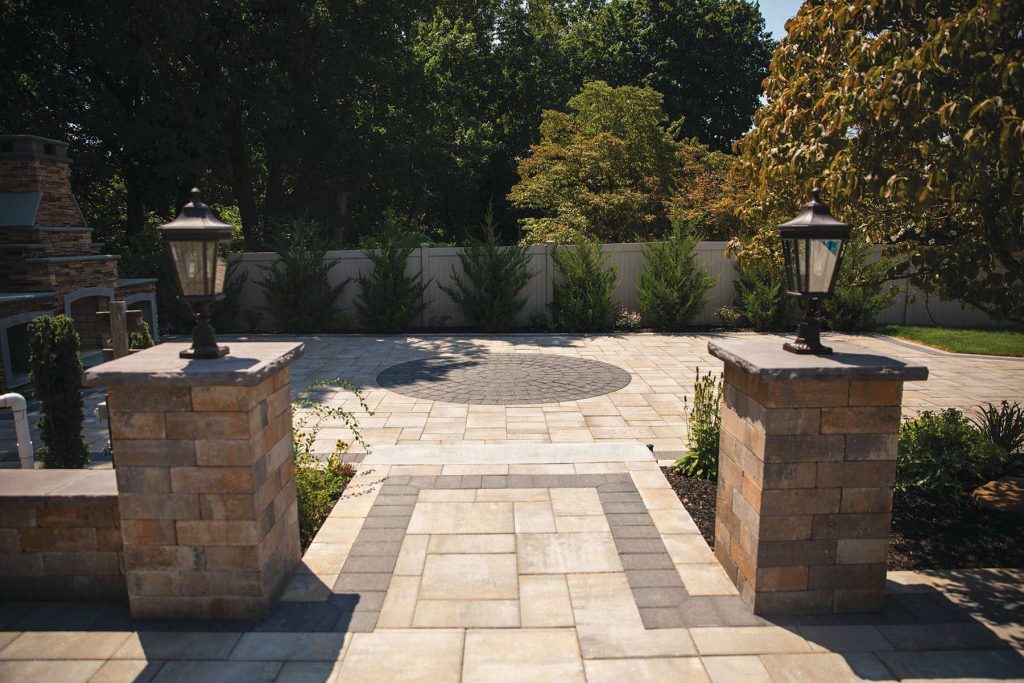
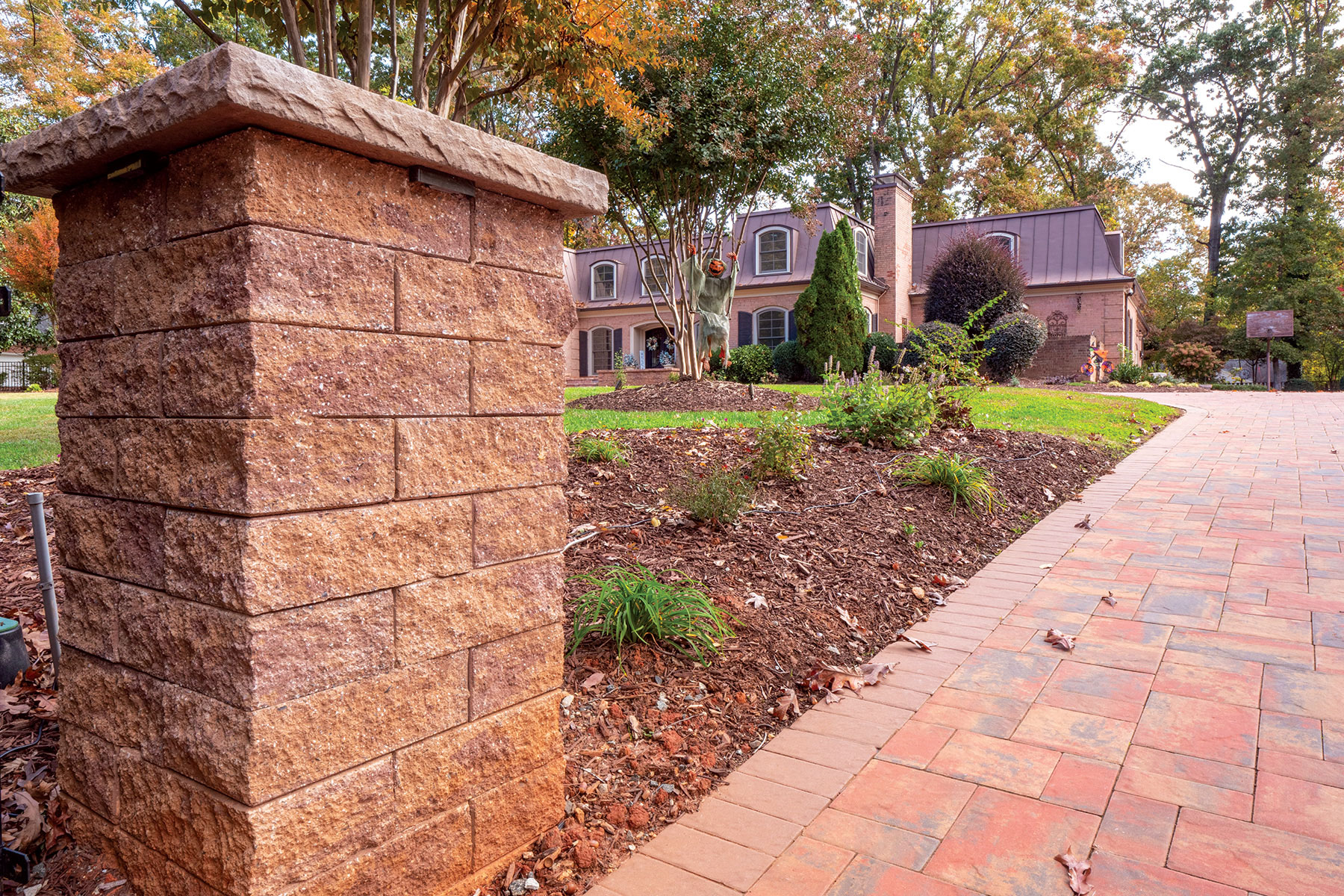
A pair of capped pillars can frame a wide opening and bring some of the home’s masonry closer to the street. Try a cap that picks up a gray tone from the façade or a warmer shade from the steps. If a short wall extends from one pier, tuck flowers or grasses behind it so there’s something green to see at the entrance.
Before choosing where the pillars go, check the view from the driver’s seat. Leave room to turn comfortably and account for how far nearby shrubs will spread. Confirm local requirements before planning work near the street.
One low bed can give a compact entrance a finished look. Put it on the side with more room and repeat a flower, grass, or stone color from closer to the house. On a straight approach, a gently curved bed can soften the corner where pavement meets lawn. A square bed can carry the lines of a contemporary home out to the street. Keep plants low near the road so drivers have a clear view.
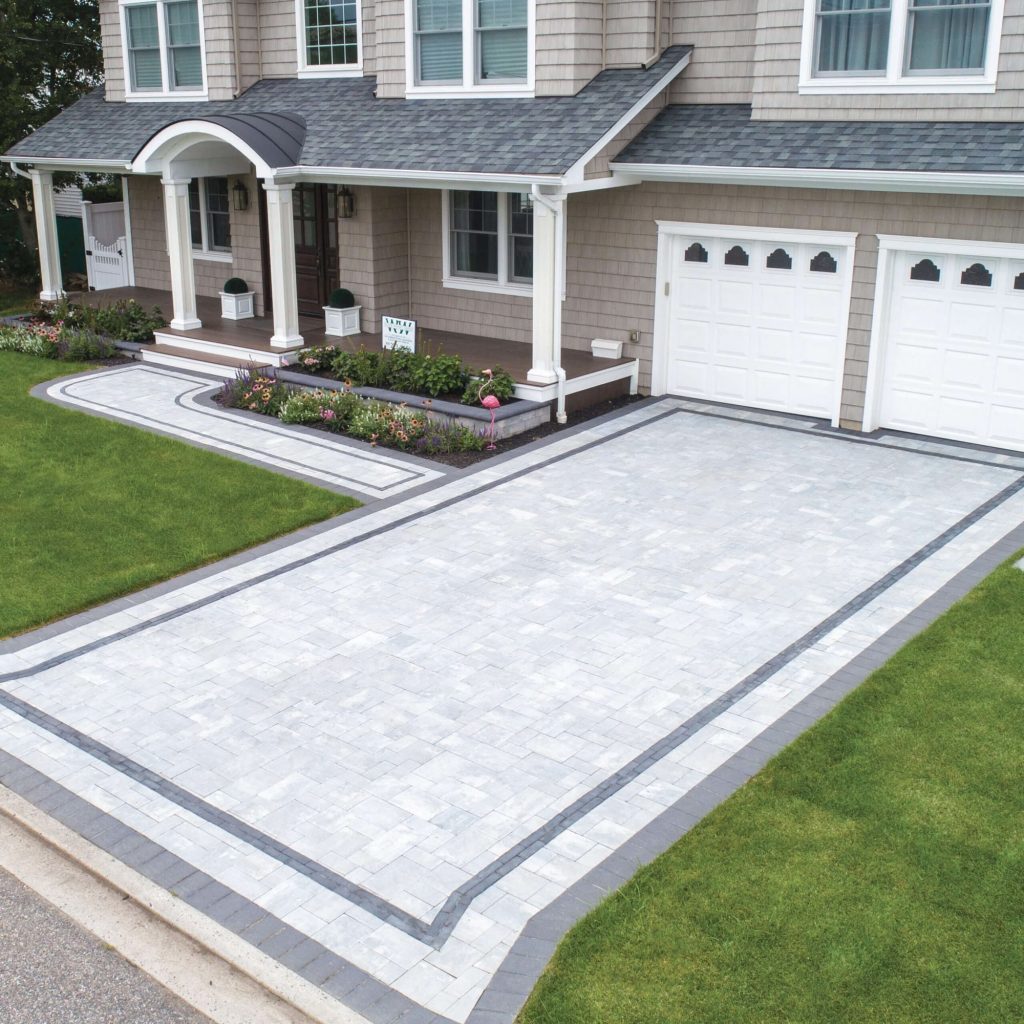
Try opening the passenger door where you normally park. Then walk past it with a grocery bag in hand. You’ll get a better sense of how much space a bed can occupy and where branches might get in the way once they fill out.
For a narrow strip, use compact plants with a mature spread that leaves the pavement clear. A fuller group of grasses or shrubs can go beyond the parking spot, where there’s room to appreciate it from the house or walk past it on the way to the door. If the entire strip is tight, concentrate the planting in a deeper bed near the garage and leave the area beside the car open.
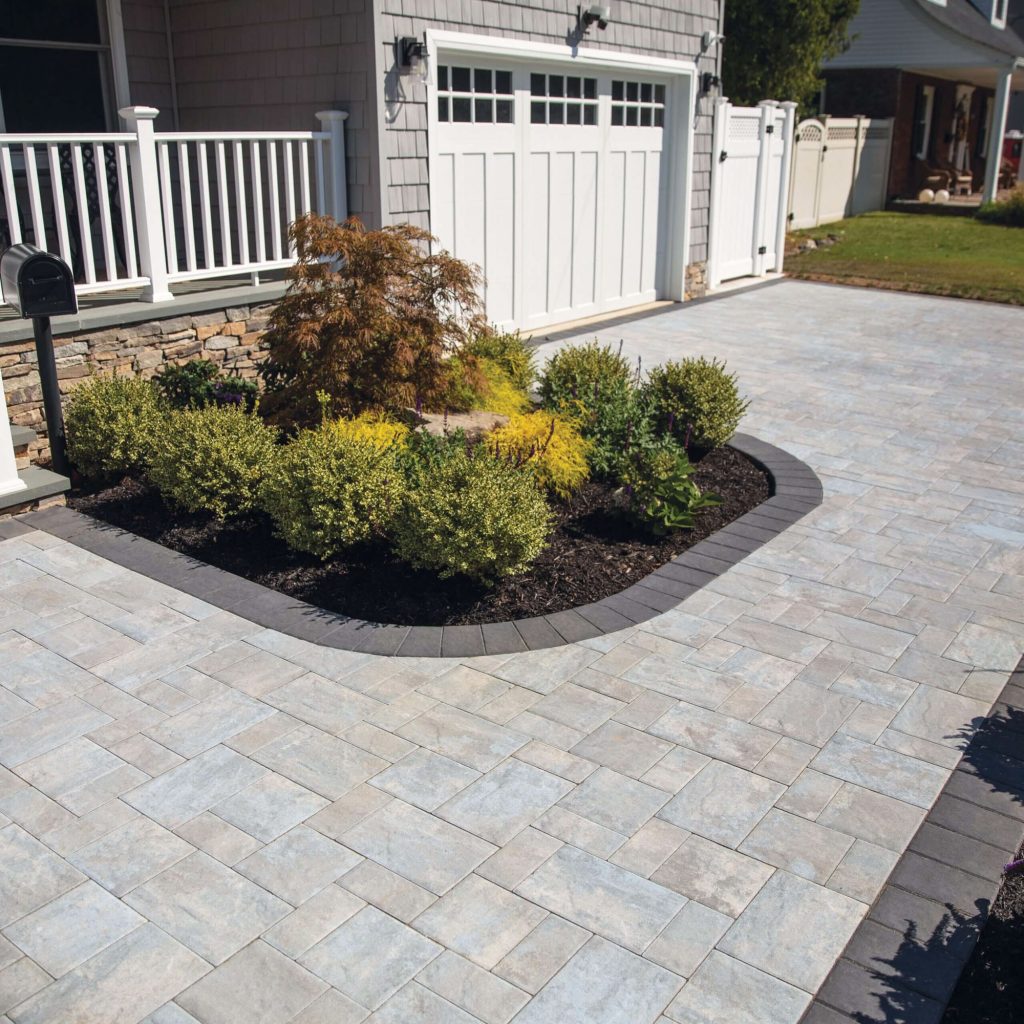
If mulch regularly lands on the driveway, a row of Nicolock Edgestone can help keep it in the bed. Choose a color that relates to a nearby walk or wall so the edging looks like part of the front yard. If you’re repaving, a contrasting band within the driving surface can make the perimeter easier to see. Your installer can specify the structural restraint for the paver system.
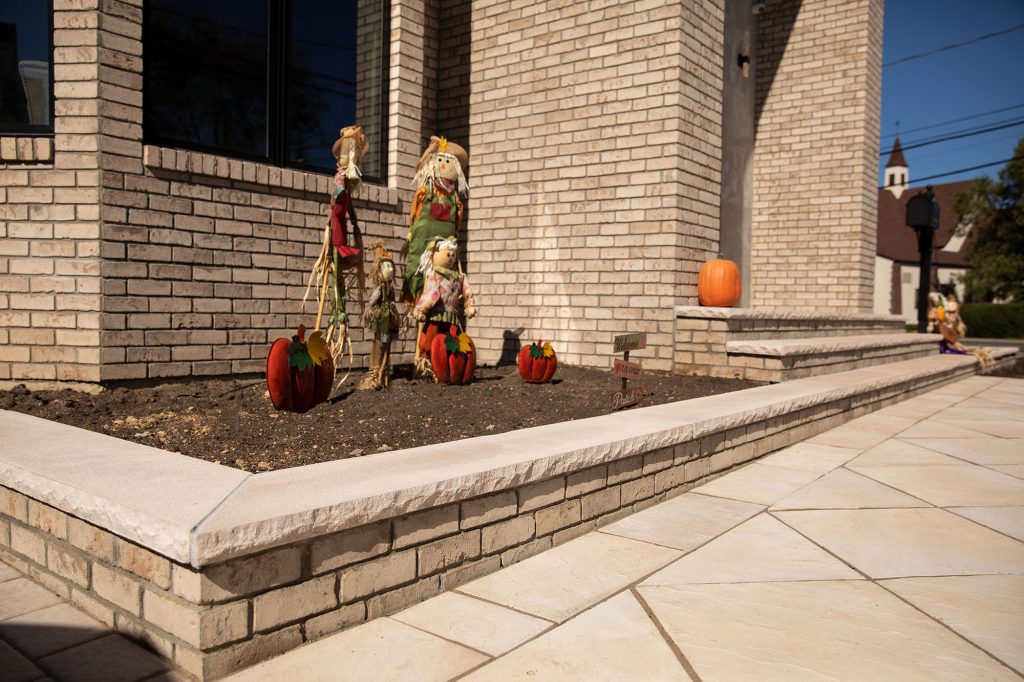
A wider area beside the pavement gives you space for a low garden wall and raised bed. Set shorter plants near the cap where their leaves or flowers can show, then place taller varieties behind them. If the wall will hold back a slope, have a contractor assess the grade and specify a suitable retaining system.
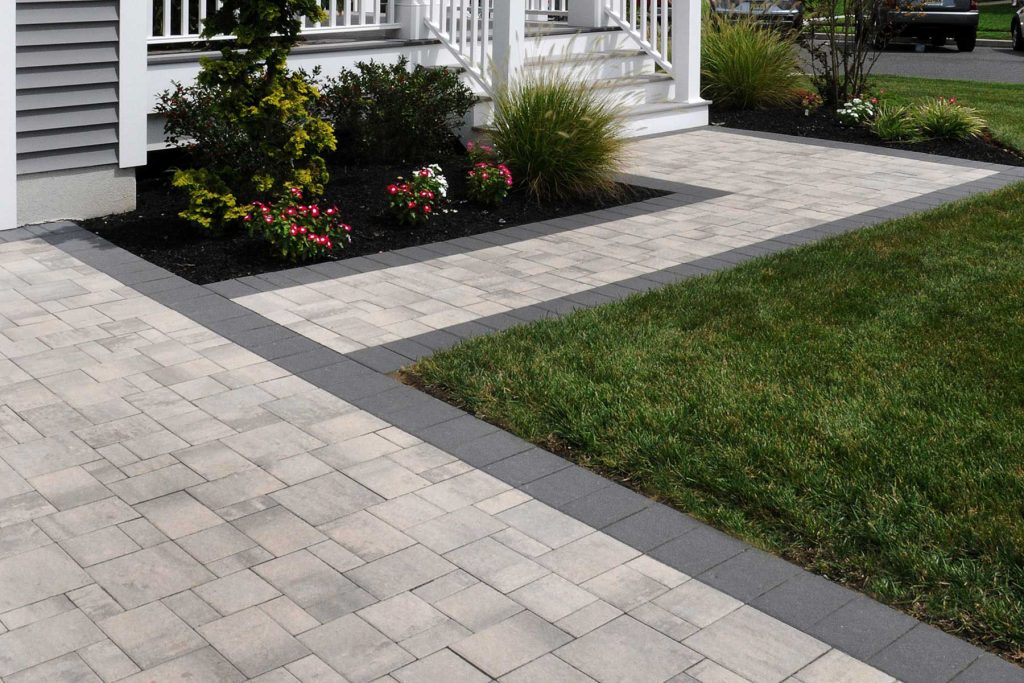
When friends come over for dinner, they should be able to see the front walk as soon as they get out of the car. A short bed can show them where the path begins, especially if the garage doors are the first thing they see. If you’re pairing a paver walkway with an existing asphalt driveway, pick up a color from the trim, steps, or stonework to connect the new path to the house.
For evening arrivals, place a light where guests turn toward the door or step onto a different level. A low fixture can show where the walk begins. Beside a raised bed, a light under a compatible wall cap can direct the glow onto the paving.
A group of grasses near the street can appear again at a bend, with a larger bed near the house. From the car, you’ll notice the plantings as they come into view. Leaving lawn between the groups gives you room to mow and a place to put snow where needed.
Near the house, use the extra space for a plant you’ll enjoy seeing up close. Spring bulbs might be easy to miss along a long approach, but they can bring color right where you park and step out. Repeating one grass or shrub from farther down the drive keeps that larger bed connected to the rest of the property.
A half-circle layout gives you room for a garden inside the curve. If the island is mostly lawn, start with one bed where you can see it from both the street and the house. Follow part of the curve with low plants, or add a small ornamental tree whose mature canopy keeps views clear for drivers entering from either side.
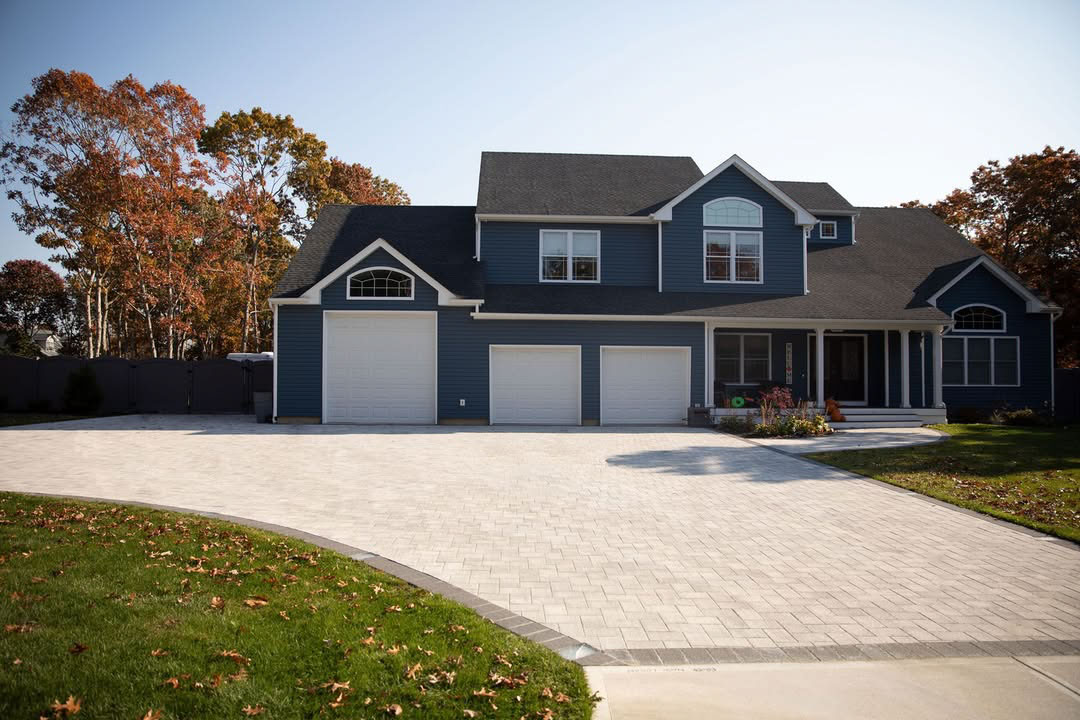
The featured Nicolock project shows how the same paving can look different from two points along the approach. Use both photographs to show where the eye goes in each view.
See both views of the Colonial Cobble project.
Planting beside pavement calls for a closer look at the site. A sunny strip can reflect heat, while a bed by the street may get deicing salt or a pile of snow from the plow. Choose varieties for the conditions in each spot. If snow regularly lands in the same place, leave that area open and put the seasonal color closer to the house.
Take a walk after steady rain and look for mulch washed into the driveway or water collecting close to a wall. Those clues can help you find where runoff enters the bed before you make changes. If repaving is already part of the plan, ask a contractor whether a permeable paver system suits the site and how it would meet the surrounding grade.
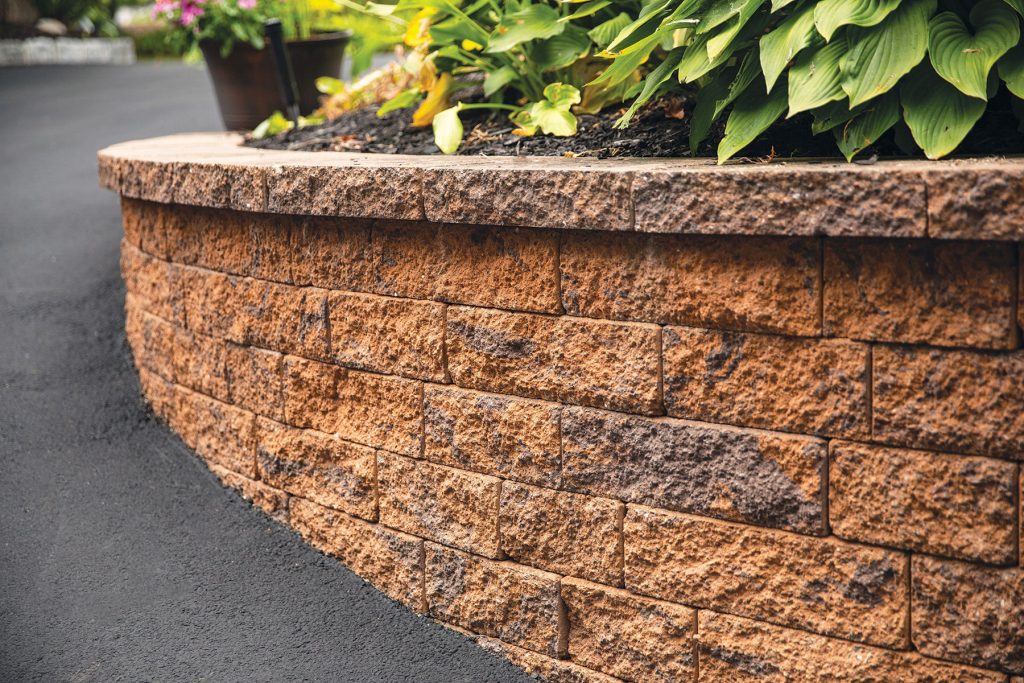
You can add more color at the entrance, keep mulch in its bed, or make the route to the house easier to follow while keeping the surface you have. Use the location of the improvement to gauge the work involved.
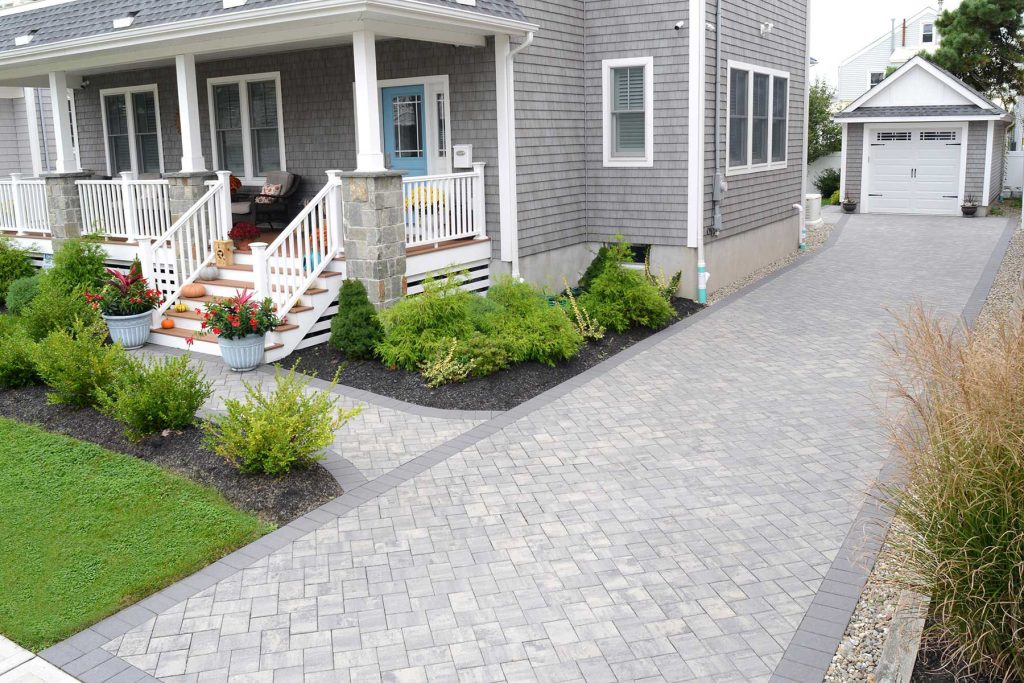
Replacing the driveway gives you a chance to plan the paving, borders, planting beds, and front walk together. Start with the colors and materials already on your home. A gray blend might pick up tones in a stone façade, while a warmer shade could work well with brick or wood siding. Bring a photo taken from the street so you can see how the paving will fit into the whole front yard.
At a Nicolock Design Center, you can compare driveway pavers and see how different colors, textures, and border combinations look side by side. Once you have a few favorites, use Nicolock’s Find a Contractor tool to connect with a local installer who can assess the driveway, talk through the layout, and help you plan the replacement.