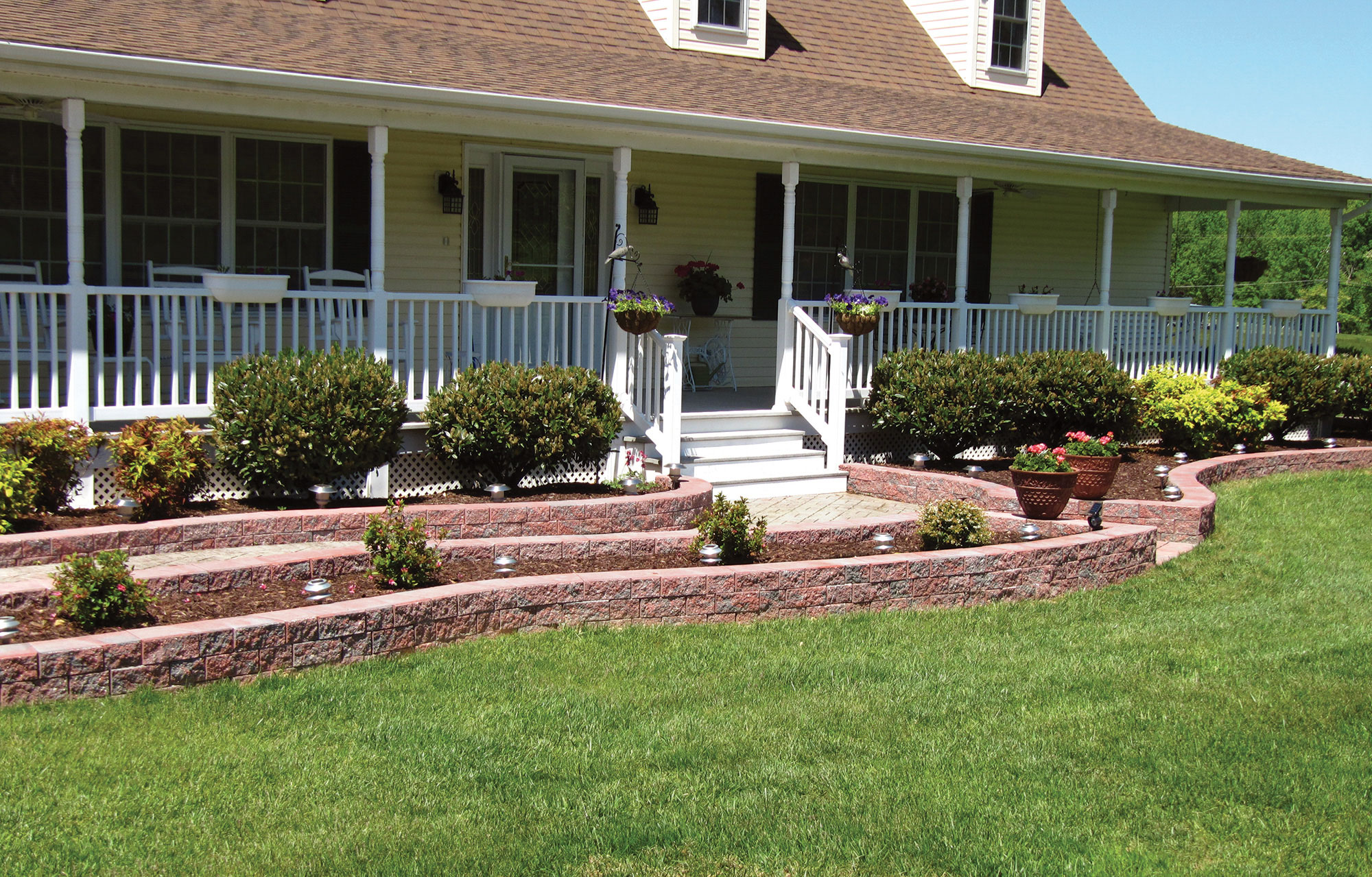
An outdoor remodel can give you more room for weekend dinners on the patio, mornings in the garden, and evenings around the fire pit. Landscape edging ideas help connect those spaces by defining where planting beds meet lawns and pathways. The right border also helps keep mulch off the grass and makes mowing around flowers easier.
Your choice depends on the layout, surrounding materials, and maintenance involved. A raised concrete edge can contain bark beside a flower bed, while flush paving can provide a surface for mower wheels.
Key takeaways

Start with the area you want to improve. A front walk may need a border that matches the house, while a backyard planting bed might need better separation from the lawn.
| Your goal | An option to consider | Planning detail |
| Keep mulch away from grass | Continuous raised edging | Leave space between fill and border top |
| Reduce awkward trimming | Flush paving beside planting | Allow enough width for mower-wheel access |
| Limit turf spreading into beds | A barrier suited to the grass’s growth habits | Account for buried depth and connections |
| Separate gravel from paths | Solid edging with stable support | Limit gaps and avoid overfilling |
| Replace leaning sections | Better-supported masonry or anchored strips | Identify what caused the movement |
A border can serve more than one purpose. Along a patio, for example, it can separate planting from paving and repeat a color used elsewhere in the remodel.

Materials change both a boundary's appearance and function. Consider where people walk, how equipment reaches the lawn, and how much room plants will need as they grow.
A flush mowing strip provides a firm surface between turf and planting. When it's wide enough to accommodate the mower wheel, you can follow the bed without maneuvering around raised rocks or timber ends.
This arrangement suits open lawns and long garden perimeters. Rectangular pavers can also match a nearby walkway, connecting the two areas through a repeated material.
Measure equipment clearance before settling on dimensions. A narrow row may mark the boundary without providing enough space for mowing.

Pavers can follow a planting bed beside a winding walkway or frame the route between a patio and garden gate. Their shape and spacing determine how closely they fit the curve.
Mark the proposed line with a hose before excavation. Then view it from the house and walk alongside it to assess the space available.
Broad bends generally accommodate lawn equipment more comfortably than tight turns. Nicolock's border collection includes Edgestone and paving stones such as Old Vienna. Discuss the planned curve with your installer to determine which product and layout fit the space.
Raised concrete edging creates a physical boundary where mulch meets grass. It can be useful beside foundation planting, flower beds, and shrubs bordering a patio.
Nicolock Edgestone is a concrete edging product designed to define gardens, flower beds, patios, and walkways. Its textured surface provides a stone-like appearance.
Keep bark below the exposed top rather than filling the bed to its brim. Allow access along the outside for trimming, especially near shrubs that will widen over time.

Rectangular borders work well beside masonry facades, front porches, and cottage-style planting. Their repeated shape gives the bed a defined outline.
Flat placement creates a low profile. Upright or angled arrangements show more of the unit but may require additional trimming around the exposed edges.
Clay brick and brick-shaped concrete pavers are different materials. Nicolock Holland Stone is a concrete paving stone with a classic brick shape that can serve as a border or the main paved surface.
Thin metal edging suits yards with straight paths, ornamental grasses, and large paved areas. Its narrow profile separates surfaces without adding a wide band around the planting.
A dark finish can blend into the space between soil and turf. Weathering steel produces a rust-colored surface that may complement gravel and earth-toned materials.
Review the selected product's flexibility and anchoring instructions. Exposed edges need appropriate positioning, particularly beside places where people walk.

Irregular fieldstone can fit alongside ferns, shade plants, and gravel paths. Cut pieces produce a more consistent line where the design calls for even spacing.
Place each stone securely on appropriate support. Weight alone does not prevent rocking or settlement.
Consider the gaps between pieces before choosing this approach for containment. An open arrangement may suit a rock garden, but smaller material can pass through the joints.
A low wall adds height around planting and separates the bed from an adjacent gathering area. It can also define a garden beside a courtyard or walkway.
For a taller boundary around planting, Nicolock offers garden wall blocks, including Garden Wall and Serafina Wall. These products create small-scale walls rather than a single row of edging. Their manufactured concrete construction provides an alternative to natural stone.
Use the selected system within its installation limits. Where slopes, soil pressure, or concentrated runoff affect the project, have a qualified installer assess the site.

Wood provides a straightforward boundary around kitchen gardens and informal flower beds. Boards suit rectangular layouts, while connected log sections can follow gentler bends.
Choose timber suited to the installation conditions. Contact with damp soil affects service life, so plan for inspection and eventual replacement.
Leave enough room between the assembly and nearby paths. Narrow pockets of grass can create recurring trimming work.
Composite, plastic, and rubber products offer alternatives where handling weight, flexibility, or purchase price influences the decision.
Their construction varies. Composite may resemble wood, plastic often comes in rolls, and rubber products use different profiles and connection methods.
Look at how each system secures to the ground and joins at corners. A decorative panel may outline flowers without containing much bark or gravel.
A cut turf boundary separates planting from lawn without installing another product. It also lets you change the shape as flowers and shrubs develop.
Establish the line with an appropriate edging tool, then remove unwanted growth. Periodic recutting maintains the outline during the growing season.
This approach keeps material expense low. However, the ongoing labor may outweigh that benefit if reducing routine gardening is your main goal.

The price of the edging is only one part of the project. Delivery, preparation, cutting, fastening, and future repairs can change the total.
| Approach | Installation work | Care afterward |
| Concrete pavers or purpose-made edgers | Prepare support, position units, and make necessary cuts | Watch for settling and unwanted growth |
| Irregular natural stone | Lift and fit pieces securely | Reset movement and clear openings |
| Metal strips | Connect and anchor the selected system | Inspect fasteners and exposed edges |
| Timber assemblies | Cut, secure, and align boards or logs | Monitor decay and loose stakes |
| Manufactured flexible sections | Prepare the route and install connectors | Address lifting or separation |
| Hand-cut turf | Establish the outline with edging tools | Recut during active growth |
These comparisons describe typical tasks rather than measured installation times or price quotations.
For a temporary planting layout, a lower upfront expense may make sense. A permanent front-yard border may justify masonry that matches the walkway and remains part of the design for years.
Ask for estimates based on the same measurements and scope. That makes differences in preparation, delivery, and labor easier to identify.

After selecting a layout, use the unit length to estimate the number of pieces needed. Linear coverage differs from paved area, so square-foot pallet information may not answer the question.
The following calculation compares a hypothetical straight run measuring 60 feet.
| Product and specification source | Published length | Units before allowances |
| Edgestone | 10 inches | 72 |
| Holland Stone | 8 inches | 90 |
| Old Vienna with Paver-Shield™ | 7½ inches | 96 |
A lengthwise row of 72 Edgestone units spans 60 feet before allowing for joints, cuts, or waste, based on Nicolock's published dimensions.
The method converts feet into inches, then divides by the chosen unit length. For Edgestone, that means 60 × 12 ÷ 10.
Treat this as an initial estimate, not a final order recommendation. Curves, orientation, extra courses, and construction details will change the requirements.
Have your dealer or installer review the plan before purchase.

Repeat a material, texture, or color already present in the outdoor space. A tone from the home's masonry can carry into the garden, while a darker accent can frame lighter paving.
Nicolock's walkway pavers provide options for relating pedestrian surfaces to planting areas. Compare physical samples beside existing materials under the same light.
Plan the connections as carefully as the longer sections. Where a border reaches the patio or turns beside a gate, consistent alignment helps the layout look complete.
Also distinguish visible accents from structural restraints used to secure paving. Ask the installer how each component fits into the assembly.
Walk the proposed route before installation. Watch for plant growth, equipment access, and areas where water collects.
Projects that hold back soil need an appropriate retaining design. Review suitable wall systems with a qualified installer, rather than assuming decorative units can do the job.

Inspect the perimeter during seasonal gardening and after noticeable ground movement. Look for leaning sections, loose connectors, or paving that no longer meets the surrounding grade.
Return displaced fill and remove encroaching shoots before they spread through the planting. Follow product-specific cleaning instructions instead of applying one treatment to every material.
If movement returns after resetting a section, investigate its support and the conditions beneath it. Repairing the visible surface may leave the cause unchanged.
Properly installed masonry can reduce replacement work, but access and layout also affect everyday care. Consider trimming, settling, and repairs alongside the material's appearance.
No border eliminates every maintenance task.
Results depend on growth habits, barrier depth, connections, and regular inspection. Some grasses travel above or beneath a boundary.
Remove unwanted shoots while they remain easy to reach.
Raised placement helps contain loose material. Flush paving creates a lower transition and may accommodate mower wheels.
Some projects combine both functions, depending on the components and their intended applications.
A small, level layout may be manageable with suitable tools and clear instructions. Extensive cutting, heavy lifting, slopes, or drainage concerns can make professional assistance worthwhile.

Edging gives the spaces within a remodel a defined finish. It can frame flowers beside the front steps, separate lawn from a gravel path, or connect planting beds with the patio where friends gather.
Nicolock's Edgestone, paving stones, and garden wall blocks give you several ways to define planting beds and coordinate borders with nearby patios and walkways.
Find a Nicolock Design Center to see textures and colors in person. Bring photographs, measurements, and a sketch of the area so you can discuss materials that fit the way you want to use your yard.