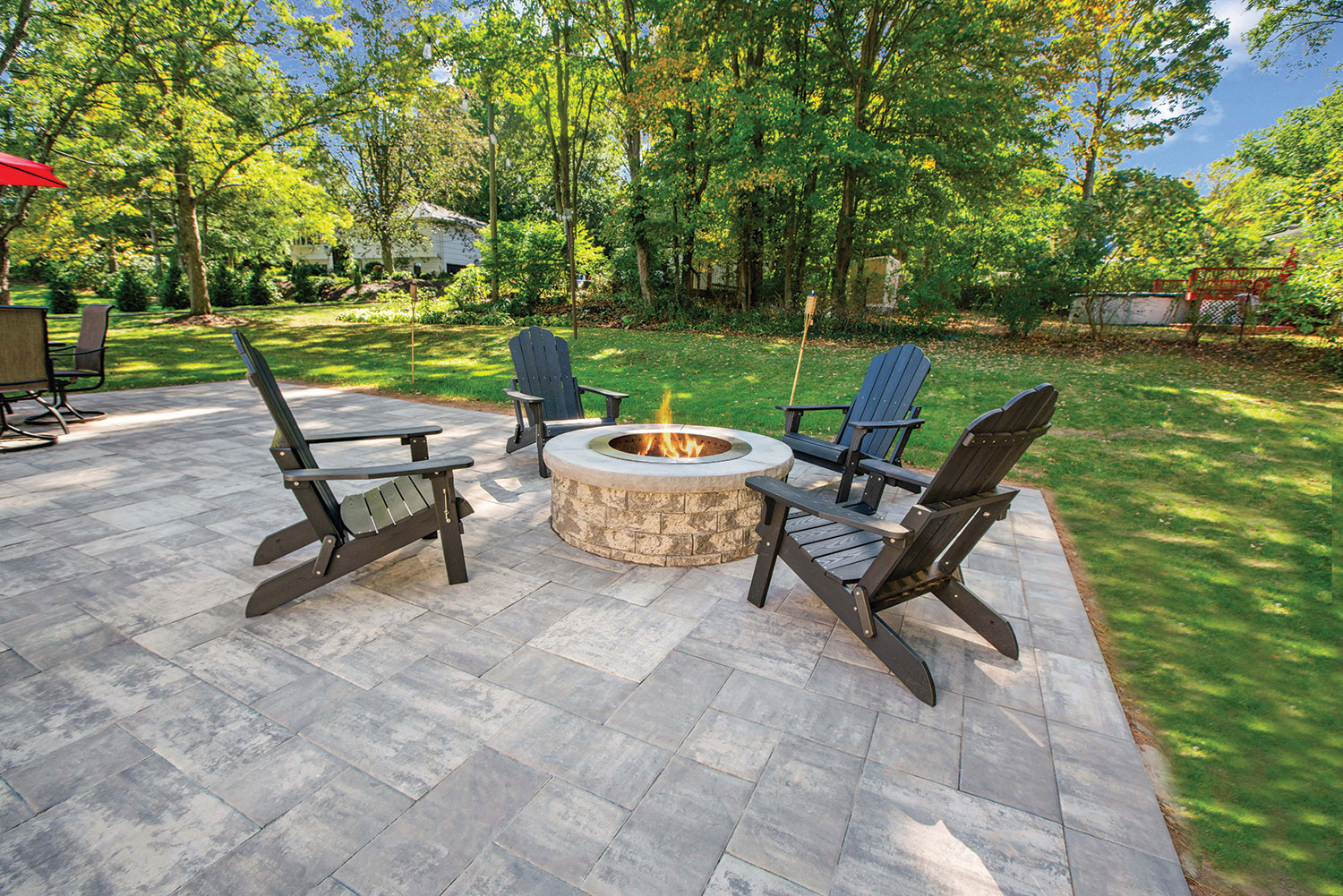
Winter weather brings more than cold air—it brings moisture, freezing temperatures, and repeated thaw cycles that test every surface outside. Without proper patio winter care, those conditions can fade colors, shift pavers, and shorten the lifespan of your hardscape. The good news is that prevention is simple. With a clear plan and a few seasonal habits, you can keep your Nicolock pavers strong, vibrant, and ready for the warmer days ahead.

Repeated freeze-thaw cycles are brutal on outdoor surfaces. Water expands when frozen, putting pressure on pavers and joints. Over time, that stress causes cracks, edge separation, or fading if surfaces are not protected. Neglecting winter maintenance often leads to spring repairs that could have been avoided.
Nicolock pavers already have an advantage. Each one is manufactured with paver-shield™ technology, which adds a dense surface layer and concentrated color that resists wear and water absorption. Even with that protection, seasonal care reinforces durability and keeps the patio looking freshly installed year after year.
Every successful maintenance routine starts with a clean surface. Dirt, leaves, and other debris can trap moisture that can freeze in small pores, causing discoloration or minor surface flaking.
How to clean effectively:
Avoid using harsh acids or high-pressure washers. They can erode joint sand or dull surface color. Clean pavers bond better with sealant and prevent haze caused by trapped moisture.

Sealing provides a barrier that repels water, resists stains, and locks in color depth. Fall offers the ideal conditions: moderate temperatures, lower humidity, and consistent drying windows. New patios should wait 6–12 months before their first sealing to allow the system to settle and dry thoroughly.
Before applying sealer:
Depending on use and exposure, reseal about every three to five years (after the initial 6–12 months on new installs), and assess sooner in high-traffic or heavy ice-melt areas. Choose your preferred finish—matte for a natural appearance or semi-gloss for added richness. Allow at least a full day to cure before placing furniture or walking on the area.
Because Nicolock pavers already feature dense construction and long-lasting pigment, sealing adds an extra safeguard rather than a correction step. That layered protection keeps colors true through freeze-thaw cycles and constant exposure.

De-icing is often where patios sustain the most damage. Regular salt, or sodium chloride, corrodes concrete, drains color, and weakens joints. Choose paver-safe alternatives such as magnesium chloride or calcium magnesium acetate. These formulas melt snow efficiently while remaining gentle on hardscape and landscaping.
Safe snow management checklist:
Quick snow removal limits freeze damage and protects joint sand from erosion. It also helps preserve the surface's clean finish through the harshest months.
Outdoor furniture, planters, and grills can all impact the surface beneath them during the cold season. Metal legs may rust and leave marks, while heavy planters trap moisture that freezes underneath.
Simple precautions:
Minor adjustments prevent surface stains and speed up spring setup.

Water control is one of the most overlooked parts of winter patio care. Poor drainage creates ice sheets that put extra stress on the joints and edges.
Inspect the patio for areas where runoff pools or soil has washed away. Backfill those spaces with compacted material to stabilize the perimeter. If polymeric sand has eroded between pavers, refill and lightly mist to reactivate bonding.
Also, examine downspouts and landscape drains. Direct them away from the patio to prevent heavy flows from freezing along the edges. Keeping the base dry through winter helps maintain even leveling and long-term structural strength.
A well-cared-for patio doesn’t close for the season. Fire pits, heaters, and lighting create warmth and comfort long after the first frost.
For wood-burning fire features, remove ashes after each use and cover once cooled. Gas systems should be inspected to ensure burners and vents stay clear of debris. Keep components capped when not in use.
Lighting deserves quick attention, too. Wipe fixtures clean and confirm that seals and connections remain dry. Nicolock’s outdoor living products, from fire features to lighting, are engineered for year-round reliability. With basic maintenance, your space stays welcoming even on cold evenings.

Keeping up with winter care doesn’t require extensive effort—just consistency. Use this quick seasonal rhythm as a reference:
Following these few steps saves hours of repair later and protects the investment in your hardscape.
If you notice uneven settling, wide cracks, or drainage that doesn’t improve after cleaning, professional help may be needed. Certified installers can re-level pavers, adjust edges, or reseal using specialized tools and products.
Find reliable help through Nicolock’s network:

Your patio is more than a project—it’s part of your lifestyle. With proper patio winter care, you keep that space ready for every season ahead. Nicolock’s paver-shield™ technology delivers long-term color and durability, but your effort completes the picture. By cleaning, sealing, and maintaining drainage, you’ll welcome spring with a patio that looks new, performs flawlessly, and stands as proof of lasting craftsmanship.
Ready to prepare for winter?
Visit a nearby Nicolock Design Center or Design Studio for personal guidance on maintaining your outdoor space and choosing products designed to last through every season.