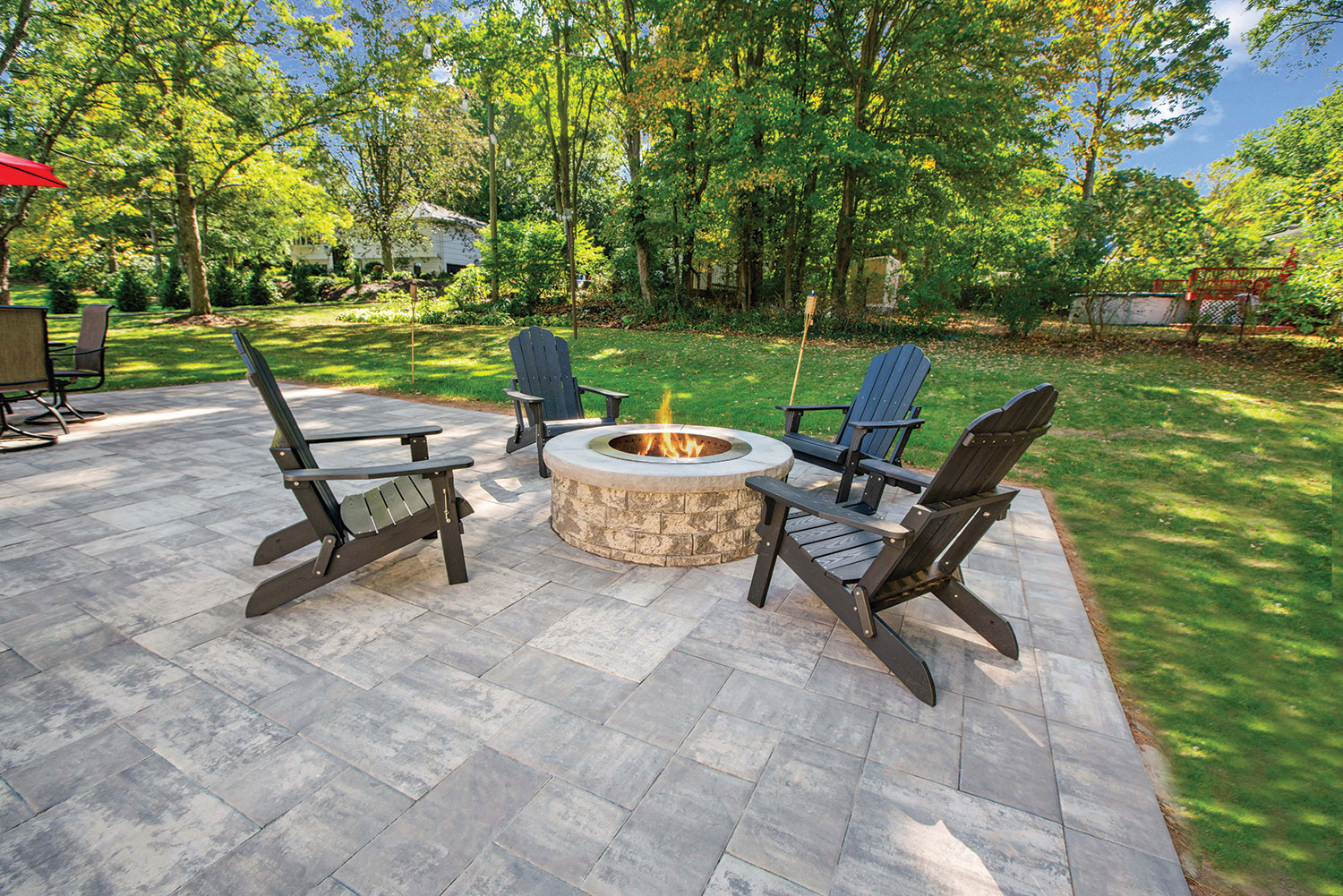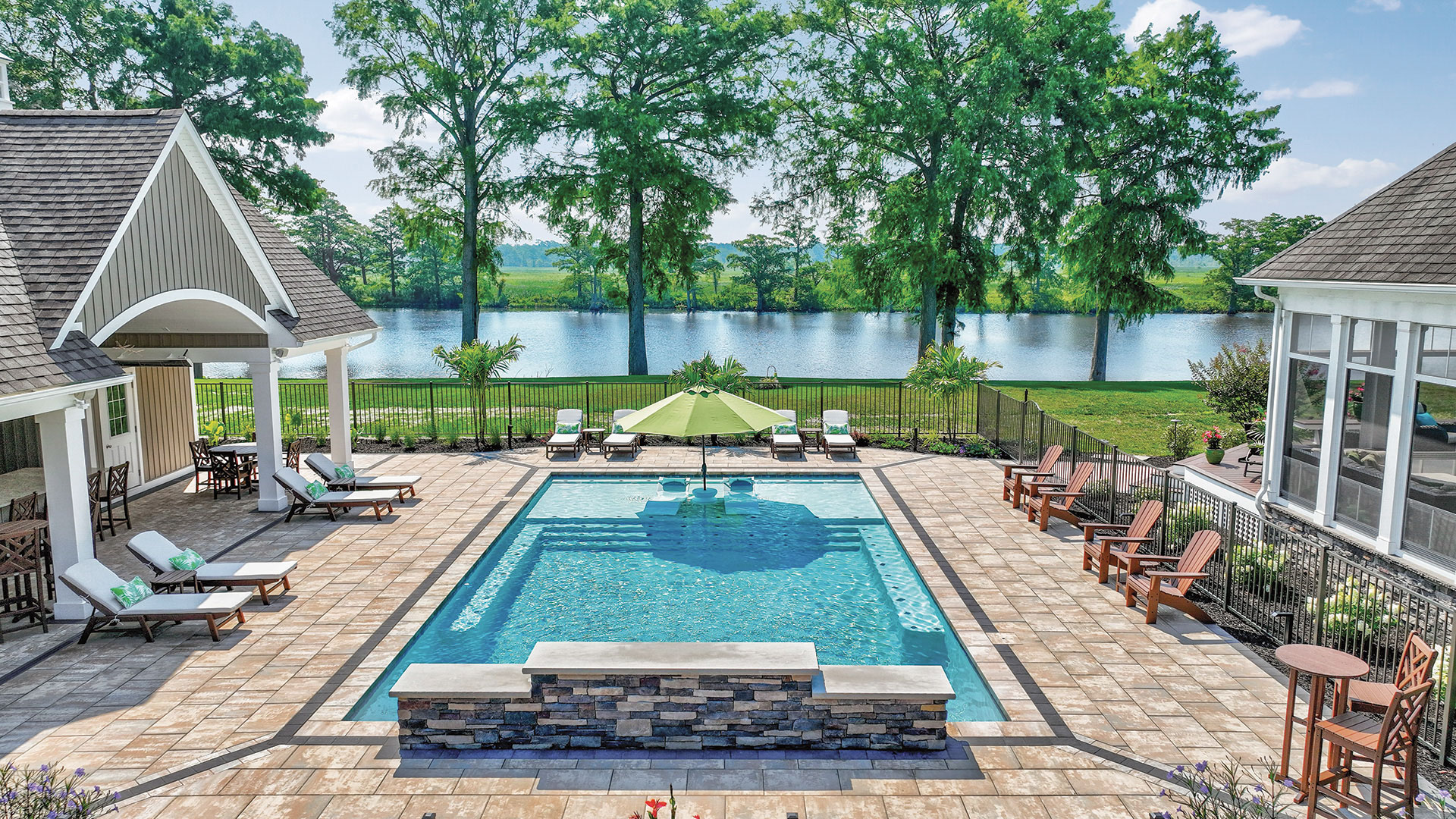
Choosing concrete pavers vs stone pavers affects how your patio, walkway, driveway, or pool area looks and how you will enjoy it for years. Natural stone brings authentic quarried character, with variations shaped by nature. Concrete pavers give you more control over sizes, colors, textures, patterns, and layouts while offering the durability needed for outdoor life.
If authentic quarried stone and naturally occurring variation are your priorities, stone remains an appealing choice. Concrete pavers are often a stronger fit if you value consistent dimensions, broad design freedom, products suited to specific uses, and flexibility as your property changes.
The right choice starts with your home and how you want to spend time outside.
Both options create attractive outdoor surfaces, but their characteristics differ in meaningful ways.
| Consideration | Concrete Pavers | Natural Stone Pavers |
| Appearance | Extensive colors, textures, finishes, and stone-inspired styles | Authentic geological colors, markings, and textures |
| Design control | Broad choice of formats, patterns, borders, and color combinations | Natural characteristics influence the finished look |
| Consistency | Manufactured dimensions support predictable layouts | Thickness, shape, and dimensions may vary |
| Durability | Products can be selected for specific hardscape uses | Performance differs among stone types |
| Weather | Options are available for various climates and settings | Climate suitability depends on the selected stone |
| Repairs | Individual units can often be lifted, reset, or replaced | Options depend on the stone and installation method |
| Maintenance | Influenced by environment, joints, traffic, and installation | Requirements vary by stone and environment |
| Installation | Consistent sizing supports controlled layouts | Variation may require added fitting or cutting |
| Project cost | Driven by product, preparation, design, labor, and site | Influenced by stone, sourcing, cutting, preparation, and labor |
| Best fit | Design choice, consistency, coordinated spaces, and future flexibility | Authentic quarried character and naturally occurring variation |
Looking at the complete project will tell you more than choosing from any single row.
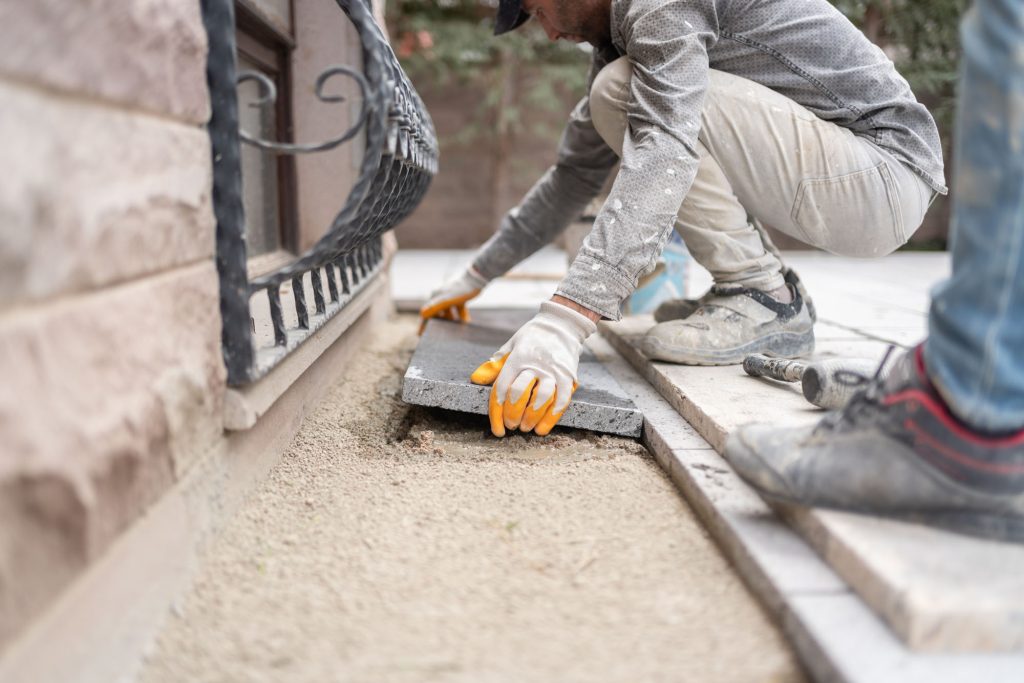
Concrete pavers are individual manufactured units installed as part of a complete paving system. Controlled production provides consistent dimensions while allowing extensive choices in color, surface texture, size, and shape.
Those options support many styles of outdoor living. Smaller modular patterns can bring traditional character to a walkway or patio, while larger formats create clean lines for contemporary homes. Borders and contrasting colors offer another way to define spaces and connect different areas of the property.
Nicolock's paver-shield™ pavers feature rich color from top to bottom and an ultra-dense surface designed to resist wear and weather. The collection includes numerous styles for patios, walkways, driveways, and other residential projects.
Natural stone pavers begin with quarried materials that are cut or shaped for hardscape installations. Common choices include flagstone, bluestone, granite, limestone, travertine, and sandstone.
Each piece may carry its own tone, markings, texture, and edge character. Those differences create the organic appearance that draws many people toward quarried products.
Stone is a broad category, however. Granite does not share all the physical characteristics of limestone, sandstone, or travertine. Porosity, strength, surface texture, climate suitability, and care requirements vary among varieties.
If you appreciate that character but prefer a manufactured paving system, Nicolock's Nicostone collection offers flagstone and travertine-inspired textures in several styles and colors.
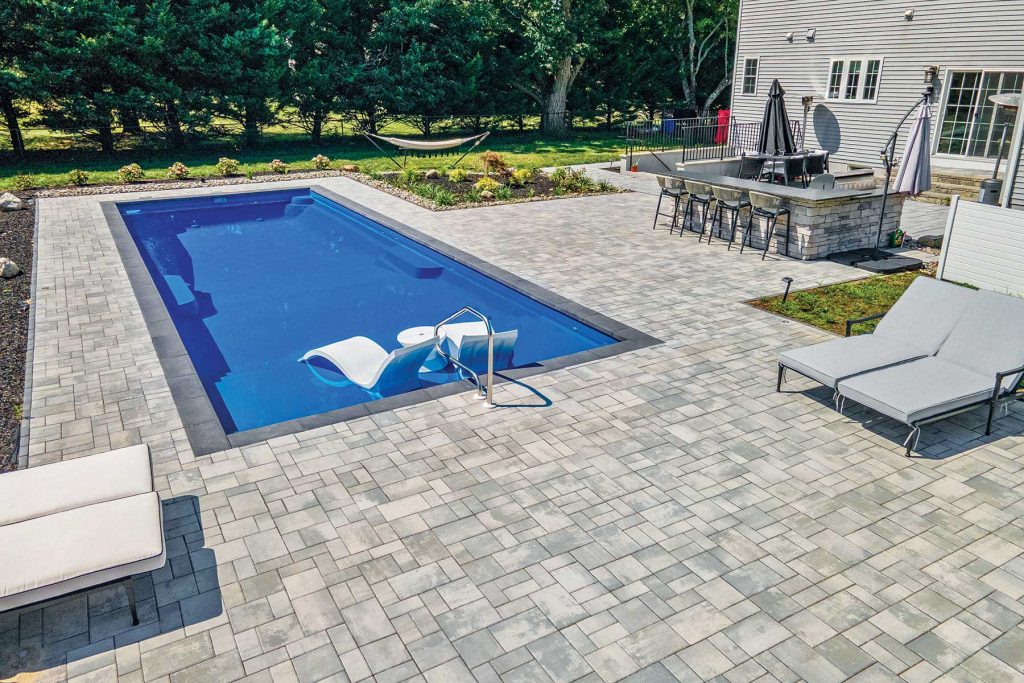
Your hardscape occupies a large visual area around the home, so appearance deserves serious attention. The best designs also account for what happens there every day.
Quarried products provide markings and variations formed by nature. Concrete paving approaches character through curated color blends, surface treatments, multiple formats, and pattern choices.
Manufacturing also gives you more control over the finished layout. Large-format units can establish a contemporary setting. Multiple sizes add movement across a patio, while a contrasting border creates definition around dining or conversation areas. Related tones can continue through nearby paths without requiring every part of the property to use the identical product.
Nicolock's color options make it easier to coordinate paving with architecture, landscaping, outdoor furniture, and surrounding features.
Consistency does not have to look uniform. Scale, texture, pattern, and complementary tones bring plenty of personality to a finished space.
The base beneath a paved surface strongly influences drainage, settlement, and performance over time. Much of the craftsmanship supporting a finished patio or driveway disappears once construction ends.
Depending on site conditions, professional preparation may include:
A pedestrian patio has different demands from a driveway carrying vehicles. Soil, slope, water movement, climate, and site access can change the preparation required even when two projects use the same paver.
Nicolock's article on understanding paver cost from the ground up explains why the work below the finished surface deserves as much attention as the paving you see.
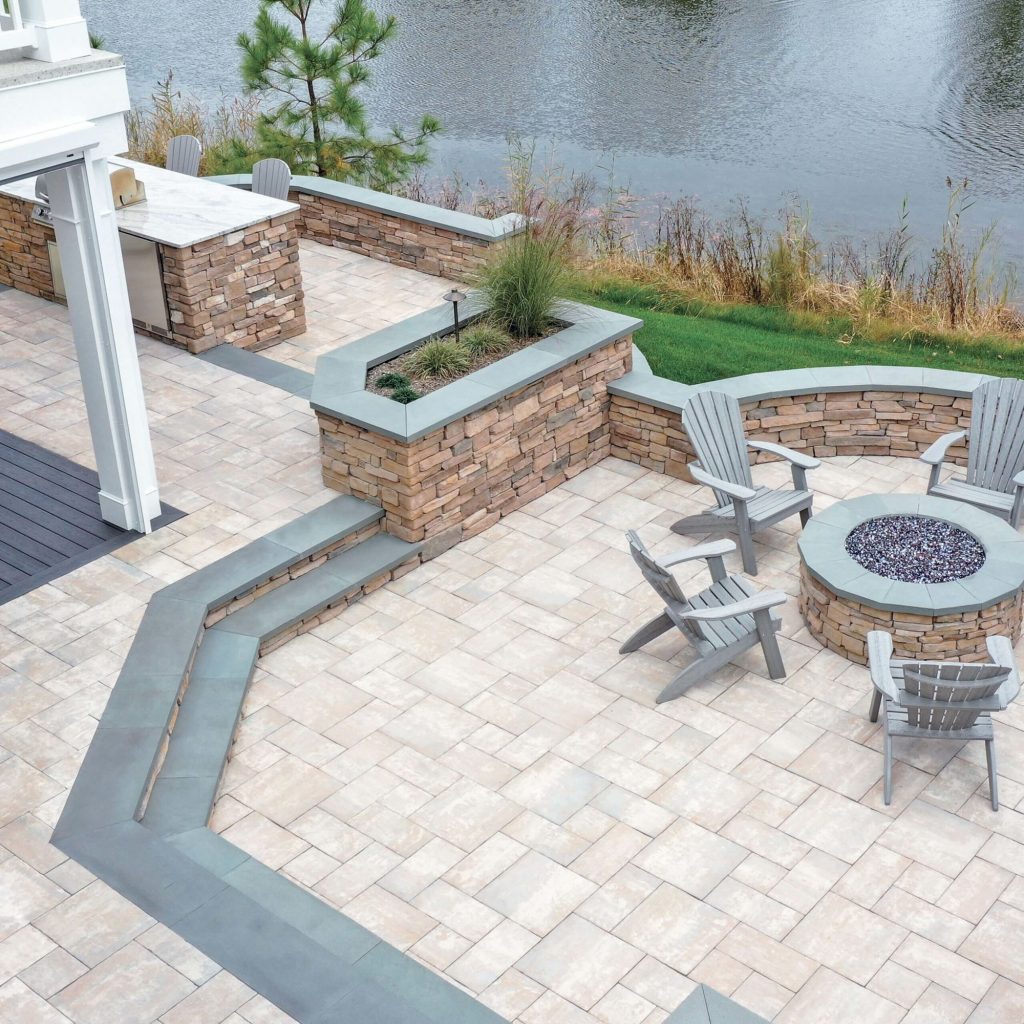
Start with what the hardscape needs to handle instead of relying on a general claim about which option lasts longer.
A backyard patio supports foot traffic, grills, dining furniture, and regular gatherings. Driveways carry much heavier loads. Pool surroundings face frequent water exposure. Cold-weather projects must account for seasonal freezing and thawing.
Performance among quarried stones varies, so verify that the specific variety fits its intended setting and local climate.
Concrete paving lets you choose products made for specific uses. For example, a driveway should feature units approved for vehicular traffic, rather than assuming every patio product will support the added weight.
Matching the paver to real conditions around your property puts the project on stronger footing from the start.
Your yard will keep changing after the patio is finished. Trees mature, soil settles, drainage needs may shift, and future utility work could require access beneath part of the surface.
An individual-unit paving system gives you options when a localized area needs attention.
A professional can often remove concrete pavers from the affected section, address conditions underneath, and reset usable units. A damaged piece may also be replaced without rebuilding the surrounding area.
Proper preparation still matters. Pavers can move, stain, settle, or become damaged under certain conditions, just like other outdoor surfaces. Their individual-unit construction makes localized work more manageable when circumstances change.
That flexibility can become especially valuable years after the original installation.
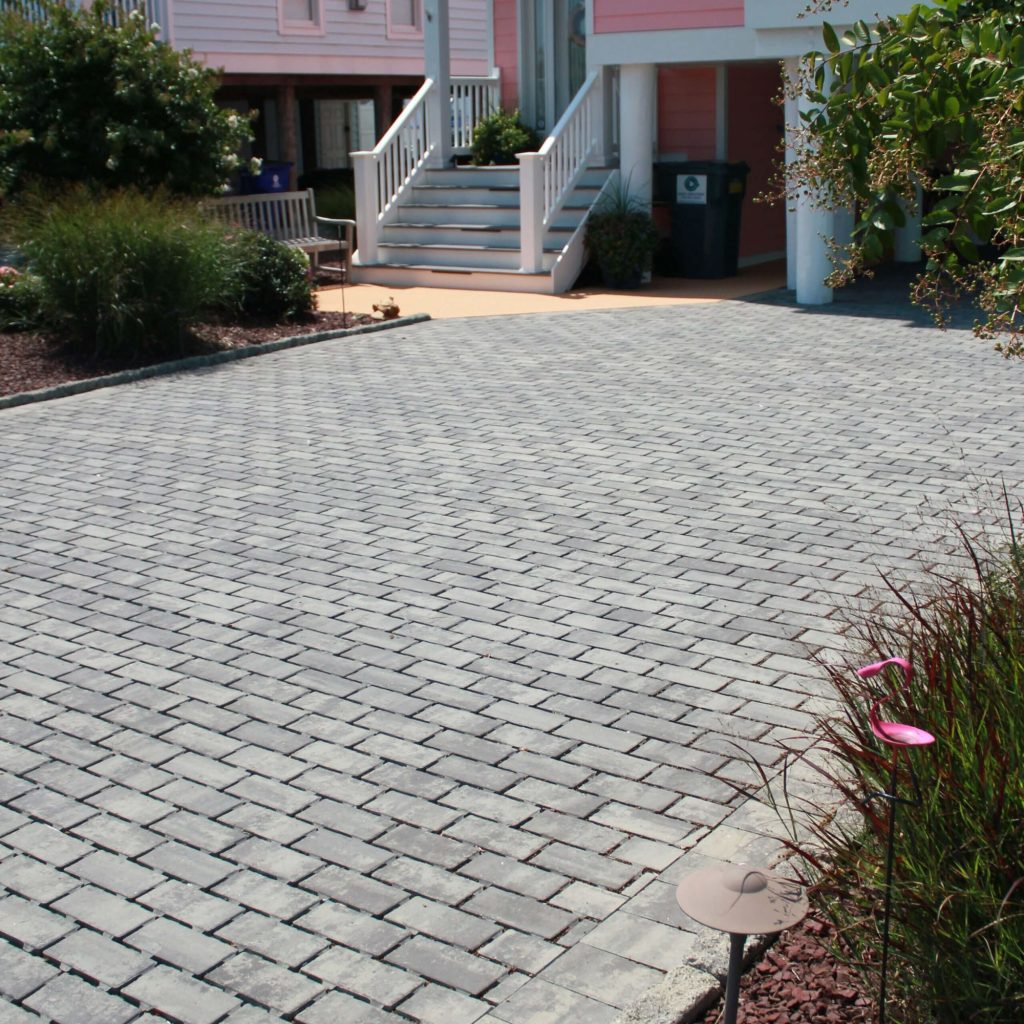
Outdoor surfaces encounter rain, leaves, soil, food spills, foot traffic, and seasonal weather, so reasonable upkeep is part of owning any hardscape.
Care may include:
Requirements for quarried products depend heavily on the selected stone. Differences in porosity and composition can affect cleaning and sealing needs.
Concrete paver care also varies with the product, environment, traffic, and surrounding landscape. Nicolock states that sealing is optional for paver-shield™ pavers and is not required for their performance.
Think about the level of upkeep that fits your lifestyle before settling on a surface. A little planning now can help you choose something you'll be comfortable caring for later.
If you've tried to price a patio online, you have probably found estimates that vary widely. There's a good reason. Square footage tells you how large the area is, but it cannot tell you everything required to build it on your property.
A 20x20 paver patio cost covers a project measuring 400 square feet. For comparison, a 12x12 patio contains 144 square feet. These measurements help estimate material quantities, but multiplying either number by a generic price per sq ft does not produce a dependable installed estimate.
For example, one 400-square-foot patio may sit on a flat yard with convenient equipment access. Another of identical size could require extensive excavation, drainage improvements, or added labor because machinery cannot reach the backyard.
The dimensions match. The work required does not.
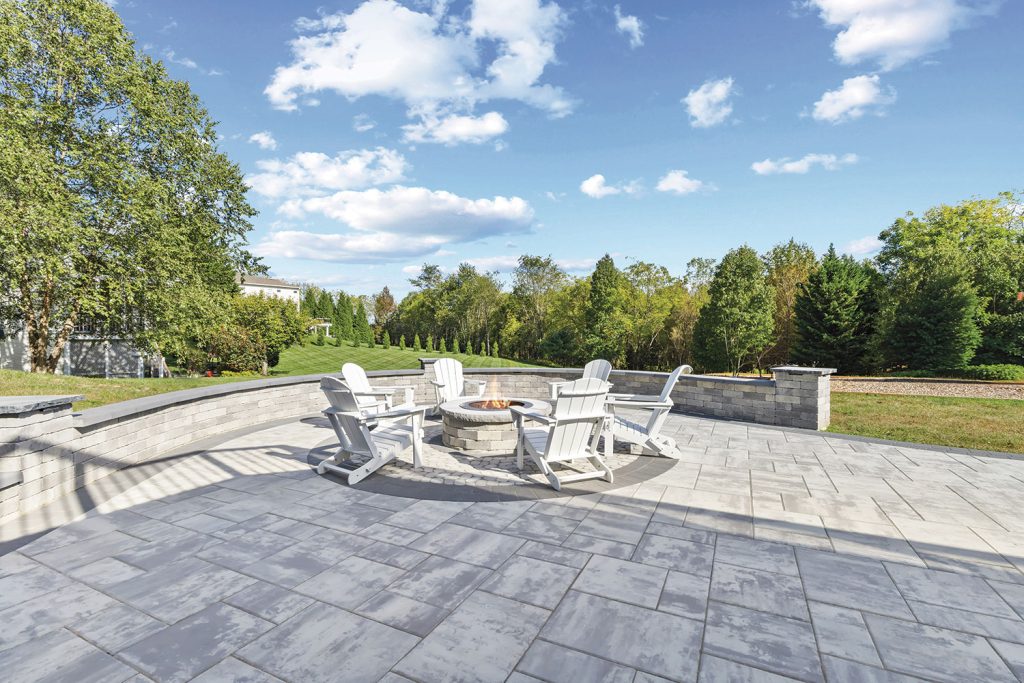
A cost calculator can help establish an early budget, but an online tool cannot account for every condition at your home.
Several factors influence the finished price:
A contractor can see the slope, evaluate access, discuss drainage, and determine what preparation the project requires. That site-specific information turns a broad online estimate into a far more useful budget.
The cost of paver patio construction makes more sense once you separate the paving product from everything required to install it properly.
Material price covers the selected pavers and related materials.
Installed cost may include excavation, aggregate base, bedding, drainage, labor, cutting, edge restraints, joint material, cleanup, and other site-specific work.
This difference explains why two products with similar material prices can lead to different project totals. The same principle applies in reverse. A lower initial product price does not automatically create the lowest completed cost.
Value extends beyond installation day, too. Factor in future care, the ability to address localized problems, design longevity, and how well the finished area supports life at home.
For a deeper budgeting discussion, read Nicolock's Are Pavers Worth the Investment? Understanding Paver Cost From the Ground Up.
Concrete paving offers extensive control over how separate outdoor areas look and relate to one another.
Design possibilities include:
A patio might feature one format with a contrasting perimeter, while related colors continue through a nearby walkway. Driveway accents can reference details used elsewhere without making every surface identical.
Nicolock offers paving collections suited to many architectural styles and residential settings. Where stormwater management is part of the project, Environmental Pavers provide choices for properly designed permeable paving systems.
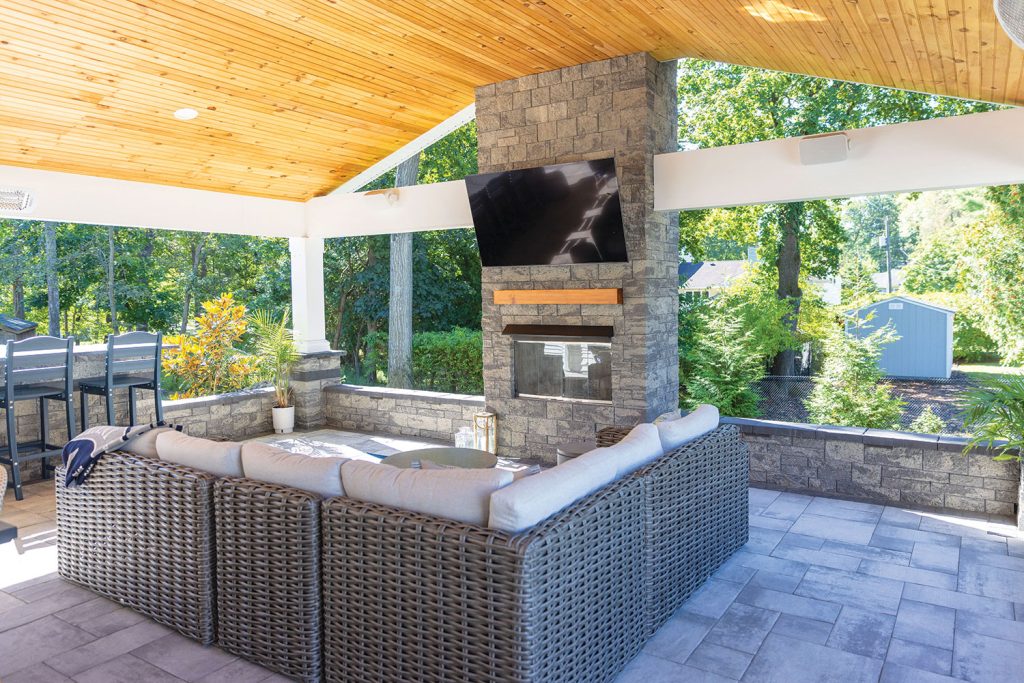
Think about what happens in each part of the yard before selecting a product. A poolside setting, front walkway, driveway, and dining patio each have different needs.
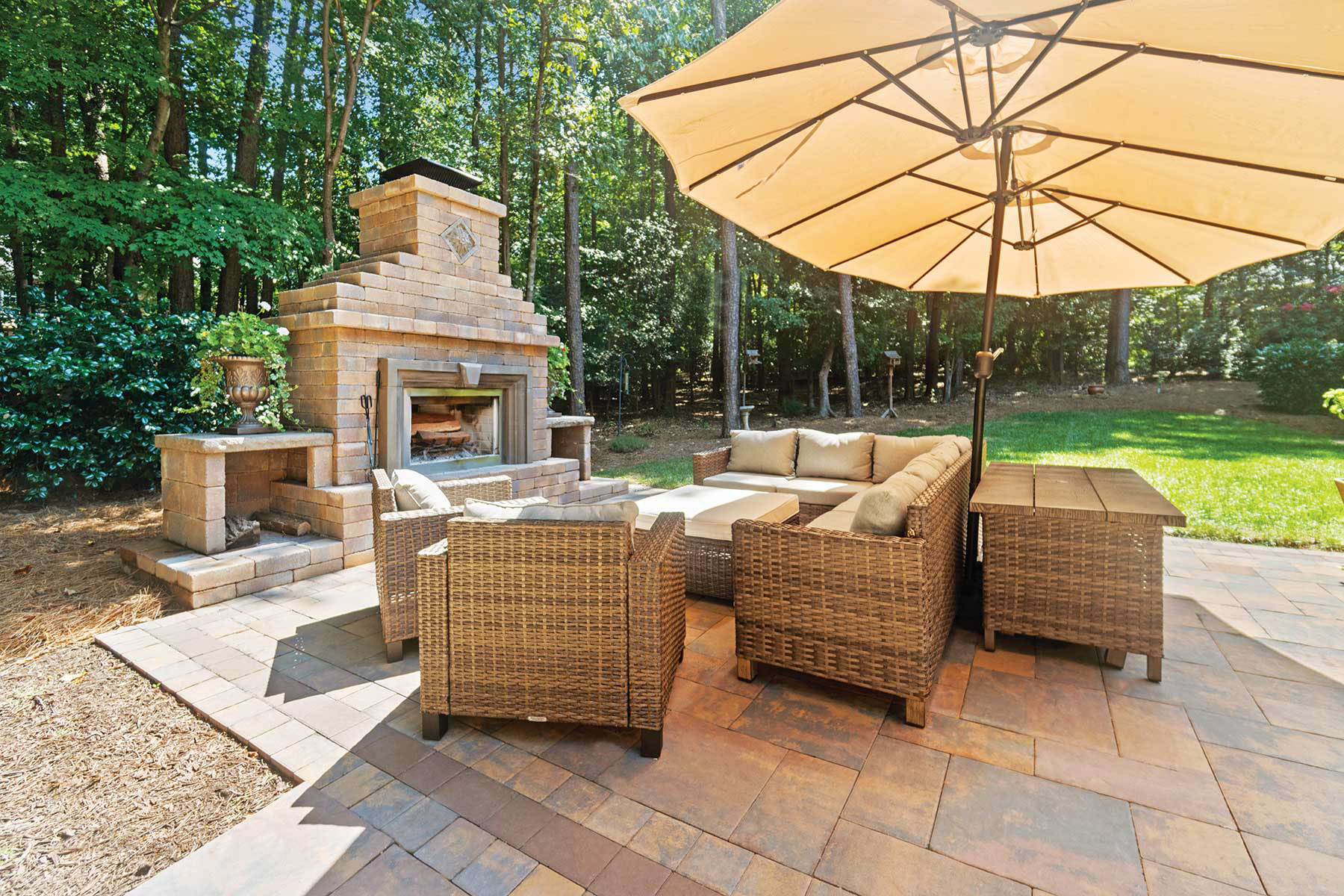
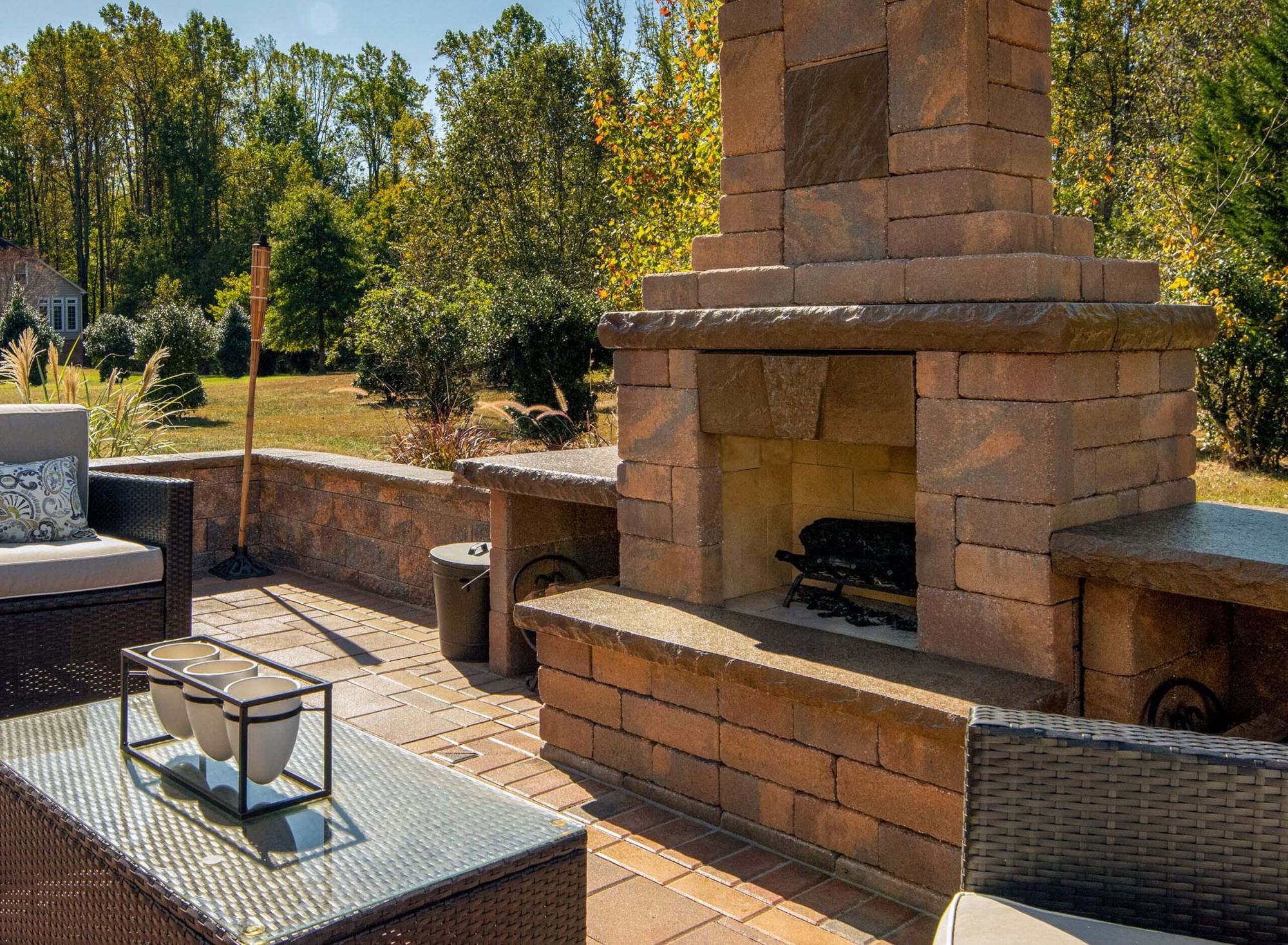
A patio might host dinner from the grill on Friday night, friends on Saturday afternoon, and a quiet cup of coffee Sunday morning.
Plan around furniture placement, walking routes, dining areas, and the transition between your house and yard. Stone textures can add warmth, while varied paver sizes and patterns help define gathering areas without adding walls or barriers.
A pathway guides movement while contributing to the property's overall character.
Use colors and patterns to complement architectural details, frame planting beds, connect outdoor rooms, and create continuity between the entrance and surrounding hardscapes.
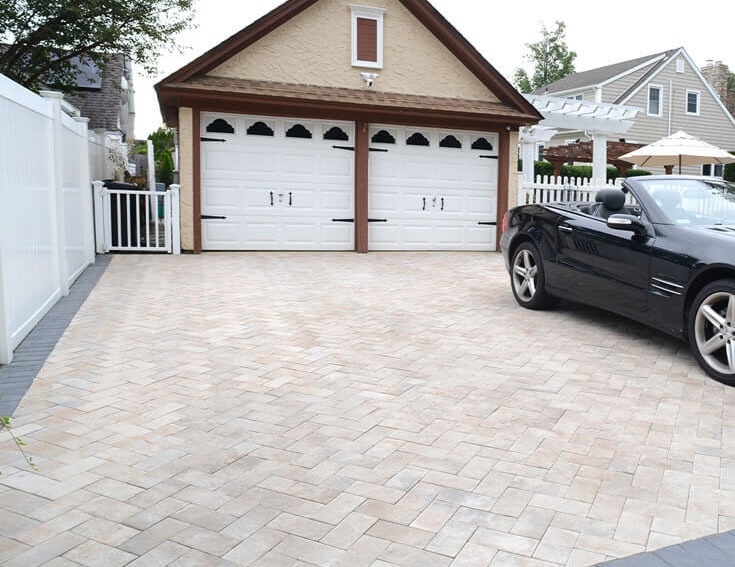
Because a driveway occupies so much visual space, it can contribute significantly to curb appeal.
Select concrete pavers approved for vehicular use, then choose patterns, borders, and tones that complement the house. Carrying related design details into walkways or the front entrance can create a cohesive arrival experience.
Pool surroundings regularly encounter water and bare feet, making product selection especially important.
Nicolock's Nicostone combines flagstone and travertine-inspired character with Cool Touch Technology™, designed to reflect summer heat. Nicolock recommends the collection for patios and pool areas, not vehicle traffic.
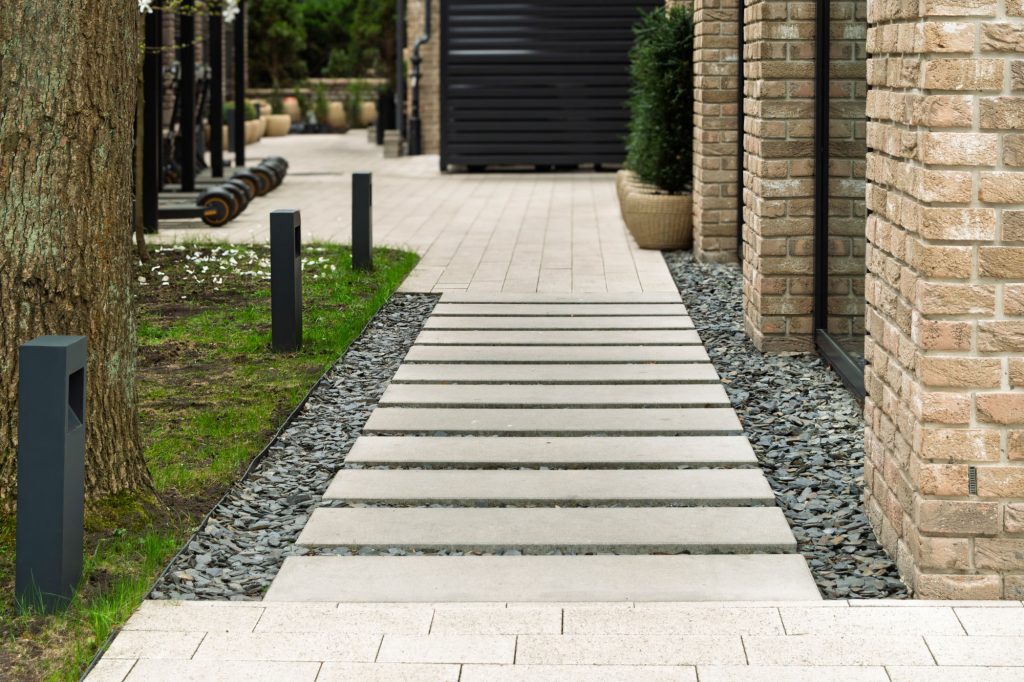
Your priorities provide the clearest answer to the concrete pavers vs stone pavers decision.
Natural stone may suit your plans if:
Concrete pavers may suit your plans if:
Neither choice needs to rest on price or appearance alone. Your home, lifestyle, budget, climate, and plans for the property provide a much better guide.
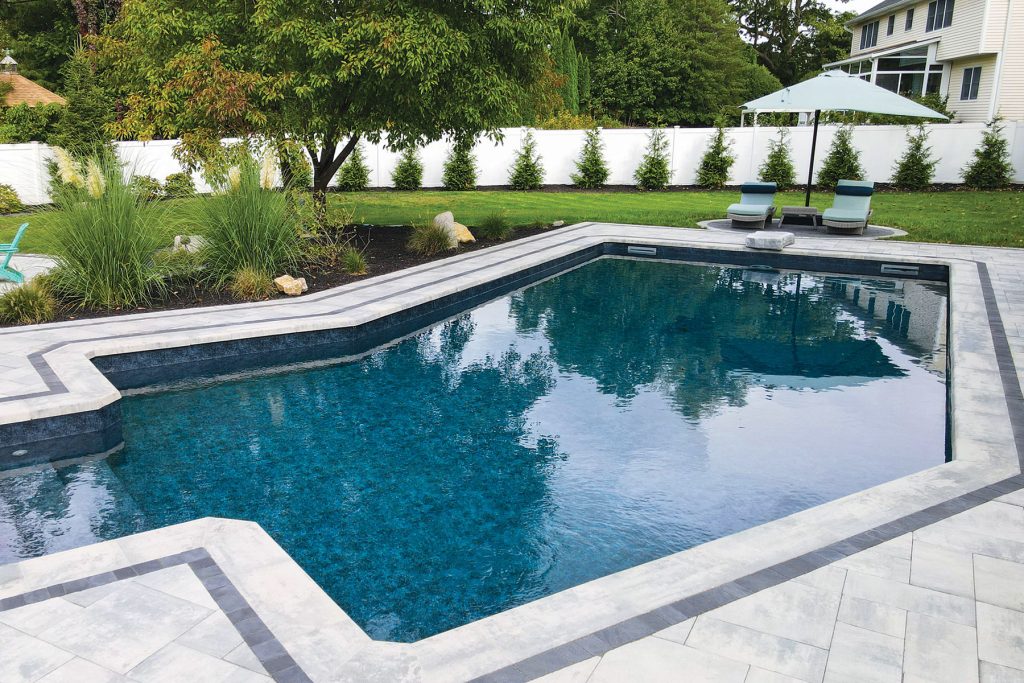
A hardscape becomes part of everyday life at home. It welcomes friends for dinner, gives family a place to gather outside, leads guests to the front door, and creates a setting for long summer afternoons by the pool.
For more than 50 years, Nicolock has manufactured concrete hardscape products in the United States, helping people create patios, walkways, driveways, poolside spaces, and outdoor settings made for real life.
Seeing pavers in person and speaking with an experienced professional can help you compare scale, color, texture, installation needs, and how each choice will complement your property.
Ready to start planning? Find a Nicolock contractor for professional installation guidance, or find a Nicolock Design Center to see paving colors, textures, and styles in person.