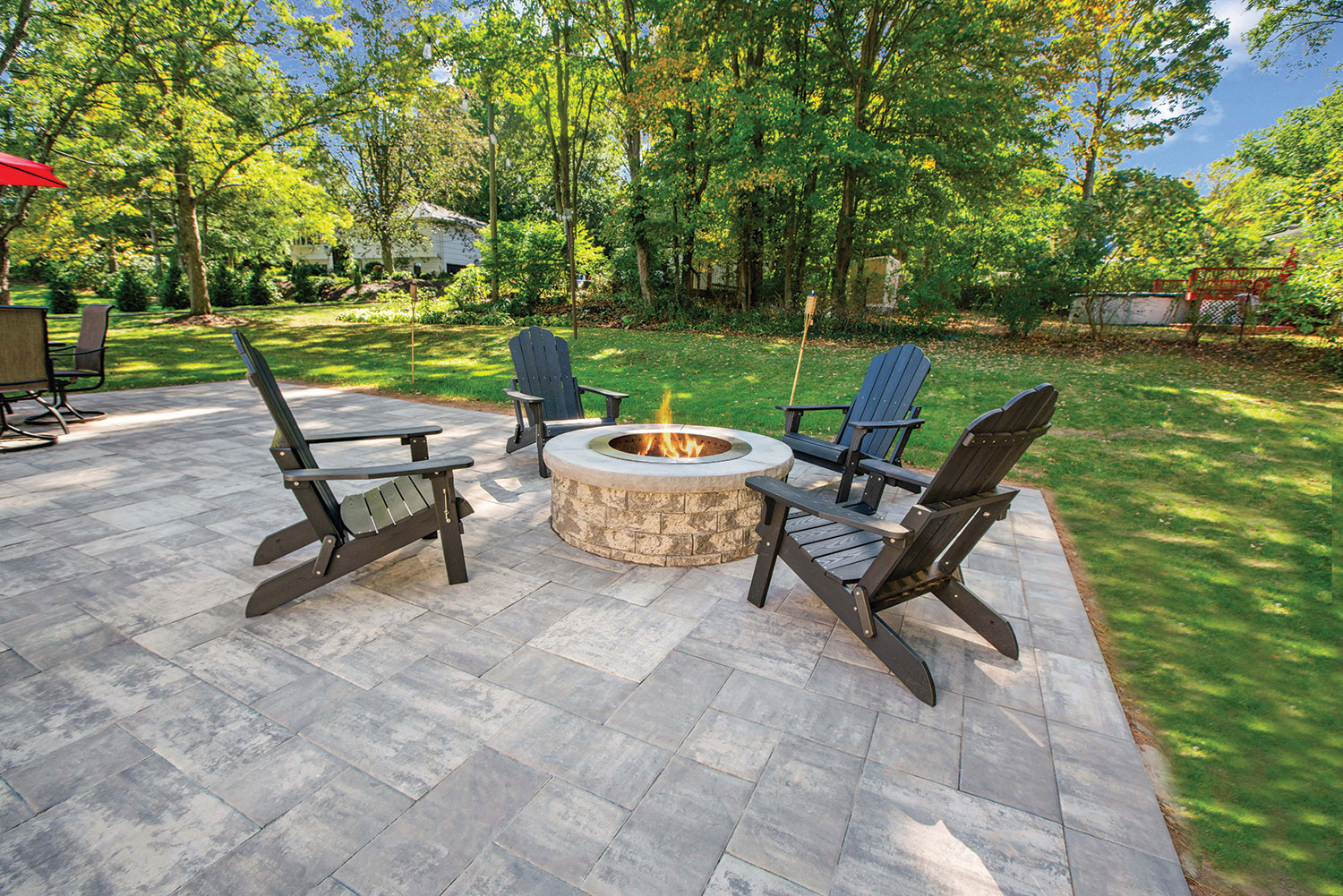
You have a project in mind. Maybe it's a backyard patio where the family can finally spread out, a driveway built to handle northeastern winters, or a front walkway that sets the right tone. The vision is clear. Picking from the different types of pavers that will make it real? That's where most homeowners get stuck.
Nicolock Paving Stones has manufactured premium hardscape products in the United States for more than 50 years. Led by CEO Roberto Nicolia and operating seven production facilities, Nicolock exceeds standards set by both the Interlocking Concrete Pavement Institute (ICPI) and the American Society for Testing and Materials (ASTM). That experience informs everything in this guide.
From paver materials and shapes to patterns and color, here is a clear framework for choosing the right paver for each part of your project.

Before comparing materials, it helps to understand what makes pavers a smarter structural choice. A concrete slab is one piece. One crack becomes the whole problem. Pavers are individual units set over a compacted aggregate base, so the surface flexes with the ground rather than fighting it.
That structural difference produces real-world advantages:
Patterned concrete, by contrast, is prone to cracking and fragmenting in freeze-thaw conditions, offers no access to underground utilities, and cannot be repaired in sections.
No one warns homeowners about the most common and expensive regret in hardscaping: choosing the wrong paver for the wrong location.
Thin brick pavers in harsh freeze-thaw climates can crack after a single hard winter. Dark-colored pavers in full sun get too hot to walk on barefoot, especially around a pool. Porous natural stone near water can absorb chemicals over time, leading to staining.
The second mistake is underestimating lifecycle cost. Skimping on base preparation saves money upfront and often costs far more in repairs within a few seasons. A poorly compacted base causes shifting, sinking, and drainage problems.
The third mistake, and the one most suppliers skip over at the point of sale, is color fade. Standard concrete pavers carry pigment that UV exposure breaks down over time, particularly on south-facing or fully exposed installations. After a few seasons, the surface looks washed out and rough as aggregate becomes exposed through weathering.
paver-shield™ technology from Nicolock addresses that problem directly. During manufacturing, iron oxide bonds with cement molecules to push vibrant color throughout the entire paving stone, not just a surface coat. Color holds year after year, guaranteed not to fade. The full explanation of how that works appears in the color section below.

Choosing paver materials comes down to matching each material's strengths to where it is going and how it will be used.
Concrete pavers are manufactured from cement, sand, and aggregate, then molded into a precise shape. That controlled production gives them consistent sizing, an interlocking structure that evenly distributes load, and a wider range of shapes, textures, and colors than any other paver type. Individual units can be lifted and replaced without disturbing the surrounding surface.
For homeowners planning a patio in Connecticut who want color choices that hold up to coastal humidity and 20-degree winters, concrete is the clear starting point. Nicolock's paver-shield™ pavers go a step further, packed with iron oxide pigment from top to bottom, not just the wear surface, so color stays deep and rich under traffic and sun alike.

Brick pavers are kiln-fired from natural clay, which means color comes from the firing process rather than a surface coating. That gives brick inherent color stability over time. The warm tones (reds, tans, and browns) suit traditional and colonial-style homes well, and the material develops a natural patina many homeowners appreciate.
The trade-off is range. Clay-fired pavers are limited to the earthy palette produced by the mineral composition. Some thinner versions also struggle in severe freeze-thaw climates, so confirming thickness and product specs for your region matters before buying.
Side by side, here is how they compare:
| Factor | Concrete pavers | Brick (clay) pavers |
| Color range | Very wide | Earth tones only |
| Color stability | paver-shield™ guaranteed | Inherent, no coating needed |
| Freeze-thaw performance | Exceeds ASTM C936 | Varies by thickness |
| Repair | Individual unit replacement | Individual unit replacement |
| Cost tier | Budget to mid-range | Mid-range |

Natural stone is not a single material; it is a category of very different options with different performance profiles.
Flagstone and Nicostone: Irregular shapes and surface variation make flagstone a natural fit for informal patios, garden paths, and landscapes that lean toward a relaxed, organic look. Nicolock's Nicostone collection captures the natural flagstone and travertine character while adding patented Cool Touch Technology™, which means the surface reflects summer heat rather than absorbing it. Nicostone stays comfortable underfoot even on hot days, making it a strong choice for pool surrounds and barefoot spaces. The line includes Grand Flagstone, Natural Cleft Flagstone, Old Town Flagstone, and Versailles Travertine.
Granite and limestone: These denser stones can withstand heavier loads and hold up well in high-traffic areas. Granite is one of the hardest natural stones available, with compressive strength suited to driveways. Limestone offers a soft, warm palette that works in formal garden settings. Both benefit from sealing at installation and again every two to three years.
One practical note: Natural stone color and grain vary from quarry to quarry. Order enough material for the full project plus ten percent extra, and blend batches during installation for a consistent result.

Permeable pavers let water pass through their joints and into a layered aggregate base beneath, reducing stormwater runoff and helping replenish groundwater rather than sending it into storm drains.
Nicolock's environmental paver line includes the SF-RIMA®, an engineered, high-performance, permeable concrete paver designed to look and feel like natural stone while managing stormwater. The Eco-Ridge and Eco-Tre options offer textured, chamfered surfaces with open joint areas that meet ADA compliance standards. Checker Block® provides a 75% open surface area for maximum drainage, making it ideal for overflow parking areas, fire lanes, and stream bank stabilization.
Note that permeable pavers should not be sealed. Sealing blocks the drainage function they are designed to provide, and it requires periodic joint vacuuming to maintain infiltration over time.
Shape affects more than aesthetics. The shape you choose affects how the finished space looks and feels to someone standing in it, and it also affects how well the surface holds up over time.
Rectangular and square units are the most versatile. Rectangular pavers offer the widest range of pattern options, while square units create a clean grid that reads as contemporary or traditional, depending on the surrounding design.
Cobblestone and tumbled shapes have rounded, worn edges that create an old-world, European-courtyard feel. These are especially effective on driveways and garden paths where texture and character are the priority.
Large-format pavers (18 inches and above) reduce the number of visible joints, making a small patio appear more open and architectural. They require a very level, stable base since there is less flex tolerance for unevenness.
Irregular and flagstone shapes use organic edges and natural variation, best suited to informal patios and winding garden paths where a naturalistic approach fits the landscape.
One sizing principle worth knowing: smaller units have greater visual texture across their surfaces and are slightly more forgiving of base imperfections. Larger units demand precision but reward it with a cleaner, more refined finish.

The pattern you choose affects both structural performance and visual impact. Some patterns are strictly decorative choices; others are engineering decisions.
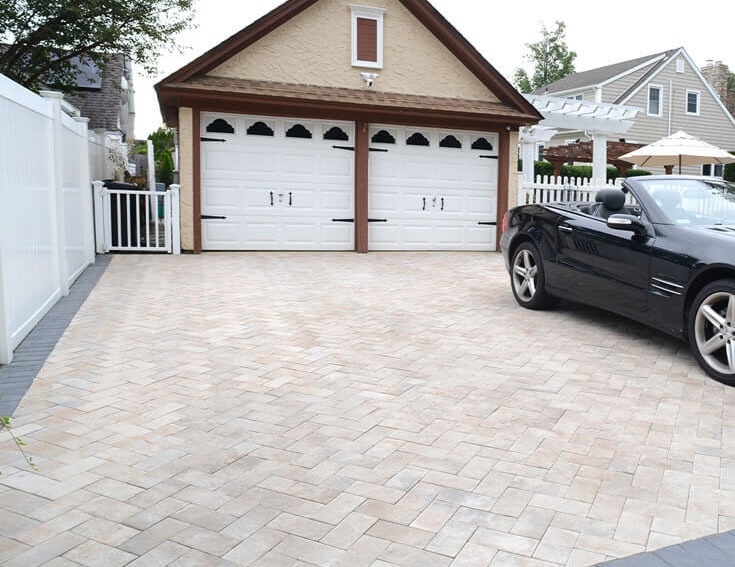
Herringbone is the strongest option. Pavers laid at 45° or 90° in a zigzag formation interlock with approximately 40% more lateral resistance than other patterns, according to ICPI technical research. That makes herringbone the recommended choice for driveways and any surface that carries vehicle loads.
Running bond offsets rows like traditional brickwork. Clean, directional, and versatile, it works on patios, pool surrounds, and walkways without competing with surrounding plantings or architecture.
Stack bond aligns pavers in a grid for a geometric, contemporary look. Best suited to patios and pedestrian walkways since it has less structural interlock than herringbone.
Basketweave and fan patterns add warmth and visual interest to enclosed courtyards and patio spaces. Fan and radial layouts create a natural focal point, especially effective when centered on a fire feature or outdoor kitchen.
One thing most people overlook: diagonal patterns visually widen a narrow space, while straight patterns aligned with the long dimension of a rectangular area tend to make it feel more formal and elongated. Talk through this with your installer before finalizing the layout.

Color is where most homeowners feel least confident, and where the right information makes the biggest difference.
Start with heat absorption. Dark pavers absorb more solar radiation and reach higher surface temperatures. Light pavers reflect more heat and stay cooler underfoot. For pool decks and other areas where people walk barefoot in summer, lighter tones are a practical choice, not just an aesthetic one.
Match your home's palette. Warm-toned exteriors, such as red brick, wood siding, and tan stucco, pair naturally with earth tones like browns, buffs, and tans. Cool-toned homes with gray siding or white render work well with charcoal, slate, and cool gray pavers. Accent colors through border pavers or inlays can add depth without overcomplicating the overall palette.
Understand why standard pavers fade. Most conventional concrete pavers carry pigment mixed into the unit or applied as a surface coat. UV exposure breaks down that pigment, especially on south-facing or fully sun-exposed installations. The surface gradually looks washed out, and as weathering exposes aggregate, the texture changes too.
paver-shield™ is how Nicolock solves this. During manufacturing, iron oxide pigments bond directly with cement molecules throughout the entire paving stone, not just a thin veneer on top. An ultra-dense surface with a tight, smooth texture resists aggregate exposure as it wears. Color stays true from year one through year ten. Nicolock's paver-shield™ pavers carry a guarantee against fading and continue to exceed ICPI and ASTM standards. Learn more about paver-shield™ technology.
Consider color blending. A single uniform tone across a large paved area can look flat, particularly from a distance. Mixing two or three complementary tones within the same installation creates the kind of depth that makes a finished project look intentional. Ask to see blended samples at your dealer rather than single-color chips.

Check freeze-thaw ratings. Concrete pavers manufactured to ASTM C936 standards are rated for freeze-thaw performance. Nicolock exceeds both ICPI and ASTM standards across its full product line. For natural stone, confirm porosity and sealing requirements for your specific climate before purchase.
Budget for base preparation. The paver itself is only part of the system. Walkways and patios typically require 4 to 6 inches of compacted aggregate base. Driveways require eight to twelve inches. This work is labor-intensive and accounts for a large portion of the total project cost. A lower material price built on inadequate base prep is rarely the savings it appears to be.
Know your sealing requirements. Natural stone generally needs sealing at installation and every 2 to 3 years thereafter. paver-shield™ pavers from Nicolock are manufactured with built-in surface protection, which reduces dependence on aftermarket sealers. Sealing permeable pavers should never be done, as it blocks the drainage function they provide.
Factor labor into your total budget. Installation labor commonly equals or exceeds material cost. When comparing quotes, confirm that each one specifies base depth, aggregate type, and compaction method. Those variables are where the real cost differences live.
Watch for efflorescence. Efflorescence is a white, powder-like deposit that can appear on paving stone surfaces shortly after installation as natural salts migrate to the surface. It is not a product defect, and it normally dissipates with weathering. If you prefer to remove it sooner, an efflorescence remover from most masonry supply dealers works well. Avoid muriatic acid, and remove efflorescence before applying any sealer.
Many homeowners consider asphalt or patterned concrete before landing on pavers. The options compare as follows:
| Surface | Crack resistance | Repair method | Design options | Freeze-thaw | Lifespan |
| Concrete pavers | High | Individual unit | Extensive | Excellent | 25–50+ years |
| Poured concrete | Moderate | Full section | Limited | Fair | 15–25 years |
| Patterned concrete | Low | Full section | Moderate | Poor | 10–20 years |
| Asphalt | Moderate | Patch/overlay | Very limited | Fair | 15–20 years |
Pavers consistently outperform the alternatives on repairability and longevity. The upfront material cost is offset by the fact that individual units can be replaced without tearing out the entire surface.

Not every paver material suits every application. Here is a quick reference by project type.
Best pavers for patio projects: Concrete pavers offer the widest color and texture range, and Nicostone or natural stone adds a premium finish. Comfort underfoot, color heat absorption, and joint width all affect how the space feels day-to-day.
Driveway: Use thick concrete pavers (minimum 2-3/8 inches for residential vehicles) or dense natural stone. Herringbone is the structural pattern of choice. Driveway base depth should be eight to twelve inches of compacted aggregate; anything less risks settling.
Garden paths and walkways: Nearly any material works for pedestrian traffic (minimum thickness of 1.5 to 2 inches). Irregular flagstone and cobblestone-style units are popular for garden paths because they complement planted borders naturally.
Pool deck: Nicostone is the standout choice here. Cool Touch Technology™ keeps its surface cooler underfoot than most materials, and the natural travertine and flagstone textures provide a solid grip even when wet. The paver-shield™ line from Nicolock is also well-suited for pool surrounds, with a dense, low-absorption surface that resists moisture and pool chemicals. Lighter colors reduce heat absorption along the perimeter, regardless of the material you choose.
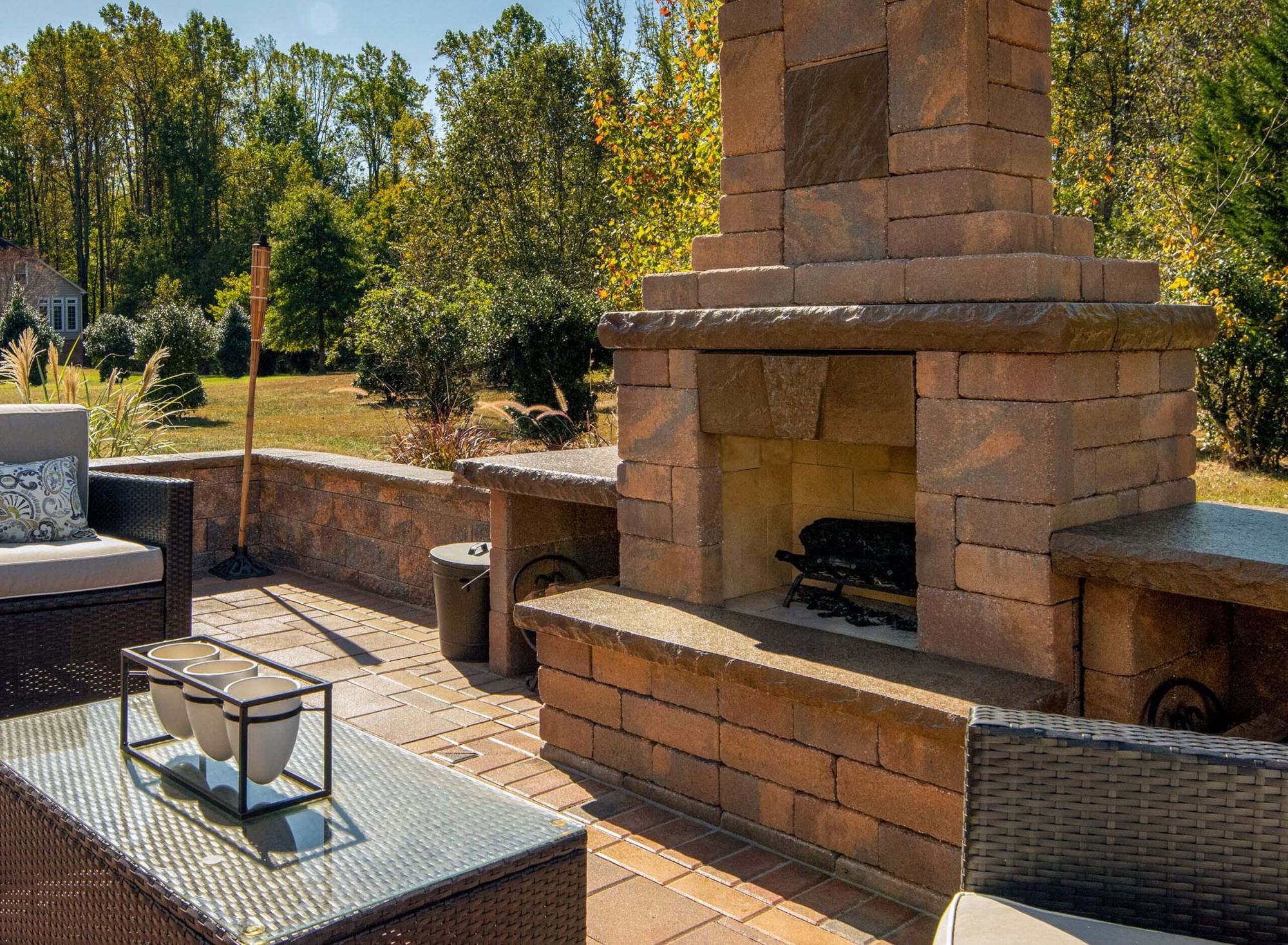
Outdoor kitchen and fire features: Concrete pavers or natural stone rated for heat exposure work best near cooking surfaces. Stain resistance matters more here than anywhere else. Nicolock's fire pits and outdoor living products are designed to integrate with its paving stone line, so the material palette can unify across the entire outdoor area.
What is the most durable type of paver? Concrete paving stones are the most durable choice for most residential projects. They are approximately three times stronger than poured concrete and designed to handle heavy foot traffic and vehicle loads. Granite holds up comparably in high-traffic and commercial settings. In every case, base preparation quality matters as much as the paver material itself.
Can pavers be installed over existing concrete? Yes, provided the slab is structurally sound with no major cracking or settlement. Installing over concrete raises the finished surface level, which can affect drainage slopes and door thresholds. Drainage holes should also be drilled in large existing slabs and filled with pea gravel to prevent water from pooling underneath.
How long do pavers last? Properly installed concrete and brick pavers regularly last 25 to 50 years or more. Stone pavers can last significantly longer with appropriate maintenance. Base preparation and ongoing joint care determine lifespan more than the paver material alone. Individual damaged units can be replaced without disturbing surrounding pavers.
How do I stop weeds from growing between pavers? Polymeric sand is the most effective long-term solution. It hardens when activated by water, binding joints and resisting weed germination. A properly compacted base with a geotextile barrier beneath the aggregate layer further reduces weed pressure from below. Annual joint sand top-up keeps the system working.
Do all pavers fade over time? Most conventional concrete pavers are vulnerable to UV-induced color fade, particularly in full-sun applications. paver-shield™ technology from Nicolock addresses this directly. Iron oxide pigments bond with cement molecules throughout the entire paving stone during manufacturing, not as a surface application. That vibrancy holds year after year, guaranteed not to fade. Kiln-fired brick and natural stone pavers have inherent color stability based on their material composition.

You now have a clear framework for choosing the right paver material, shape, pattern, and color. The next step is to see these options in person and talk through your specific project with someone who knows the product line.
Find a Nicolock dealer near you to browse the full product range and request free color samples. Prefer to work with a professional installer? Connect with a certified contractor in your area. For an immersive design experience with full-scale displays and side-by-side material comparisons, visit a Nicolock Design Studio or Design Center near you.
Dream it with Nicolock.
By the Nicolock Product Team | Nicolock Paving Stones | Updated 2025