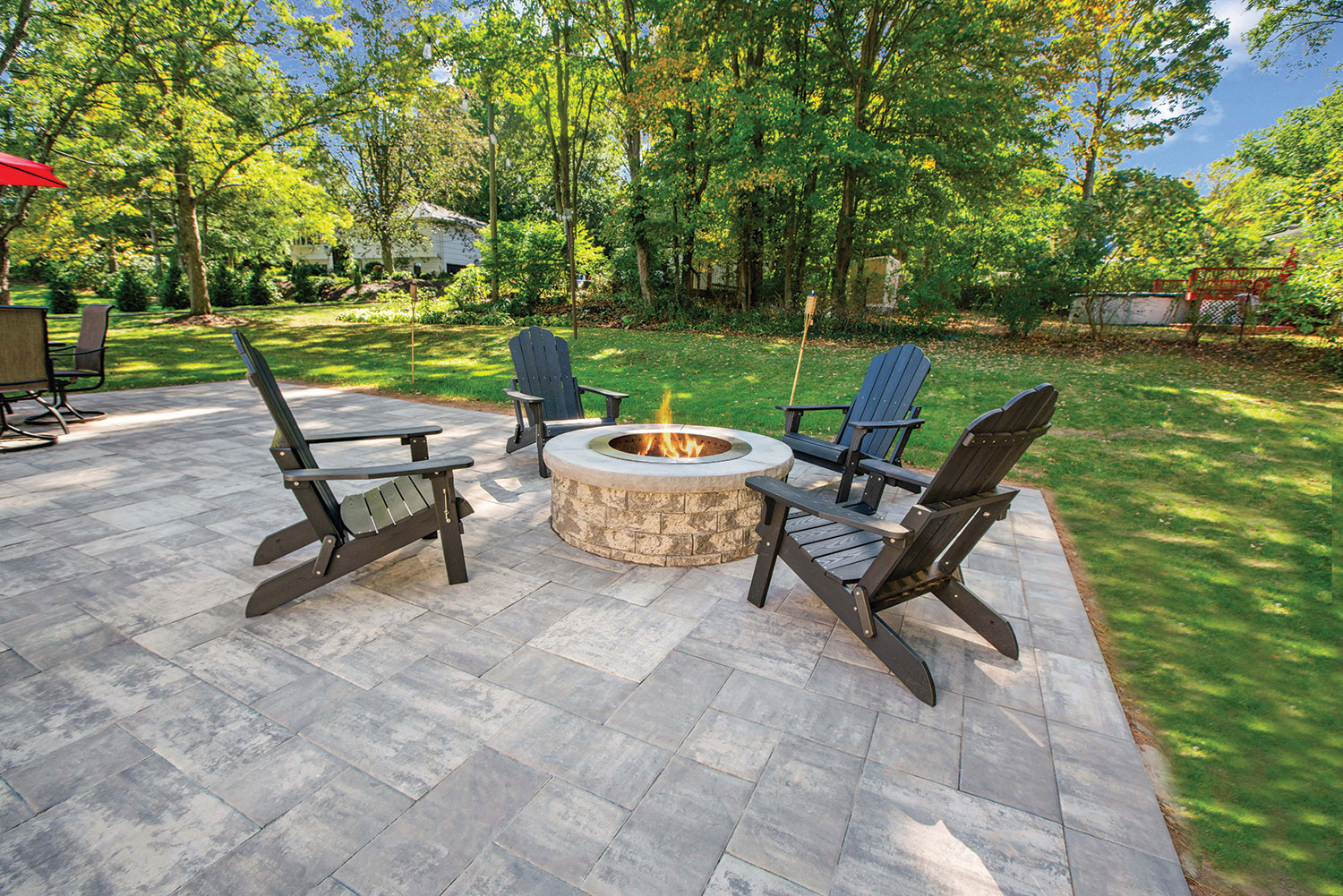
The best outdoor fire feature gives people a reason to linger outside after dinner, pull their chairs closer on a cool evening, and enjoy the backyard well beyond daylight hours. Choosing one begins with more than finding an open spot on the patio. The flame, seating, fuel, walking routes, and surrounding hardscape all need to make sense together.
Nicolock offers several ways to build around those moments, from social fire pits to substantial outdoor fireplaces and contemporary fire tables. Think about how people will use the backyard before settling on a model. Where will everyone sit? What will they see? How does someone get from the grill to a fireside chair without cutting through the conversation?
Quick answer: Fire pits favor conversation around the flame. Fireplaces establish a defined destination with seating facing the structure. Tables pair well with lounge furniture, while bowls introduce a lower-profile source of flame. Patio dimensions, fuel preference, clearances, and the surrounding hardscape should shape the final choice.
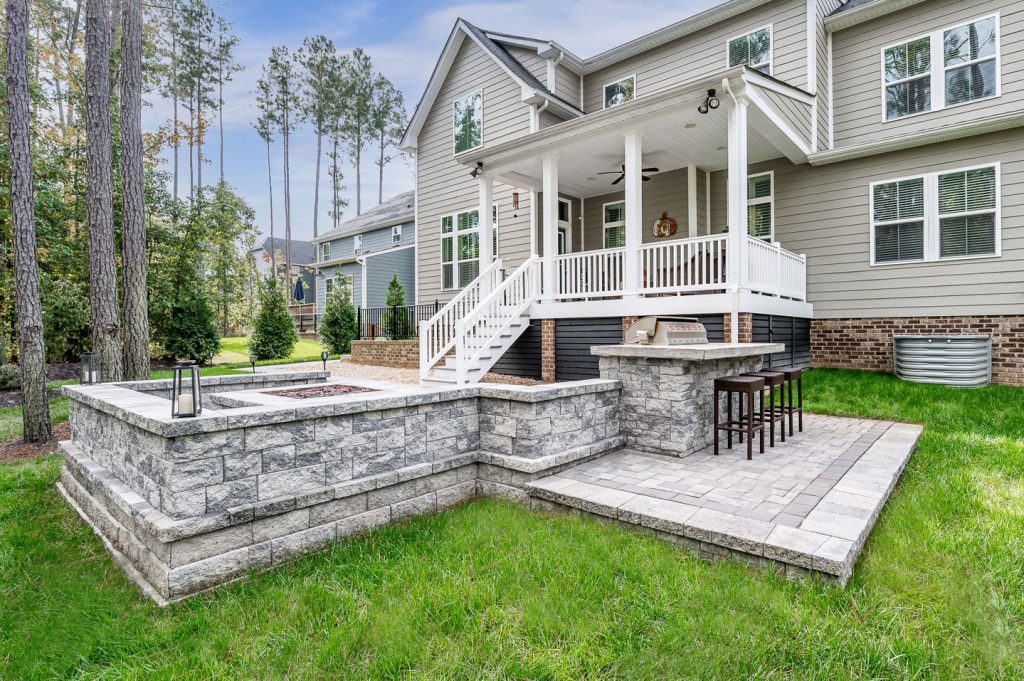
Dinner may end at the table, but that does not mean everyone has to head inside. A nearby fire gives guests another place to settle in as daylight fades and the air cools.
Think about who usually joins you outside. A couple enjoying quiet evenings has different needs than a family that hosts a dozen friends on weekends. If conversation is the priority, chairs surrounding an open flame may feel right. A fireplace works differently, drawing attention toward one end of the patio and creating a more defined outdoor room.
Your everyday routines offer useful clues:
Answer those questions before comparing finishes and colors. They reveal far more about which format belongs in your backyard.
Each format changes how people sit, talk, move, and see the rest of the property. The table below offers a quick reference before we look more closely at the differences.
| Type | Gathering Style | Space Needs | Visual Presence | Fuel Choices* | Upkeep | Design Strength |
| Fire Pit | Conversation from several sides | Moderate | Low to medium | Wood or gas | Varies | Keeps people centered around the flame |
| Fireplace | Directional seating | Larger | High | Wood or gas | Varies | Defines one side of an outdoor room |
| Fire Table | Lounge-style seating | Moderate | Medium | Commonly gas | Generally lower | Combines flame with surrounding surface |
| Fire Bowl | Flexible | Often smaller | Low to medium | Commonly gas | Generally lower | Adds flame without a tall structure |
*Fuel availability depends on the individual product and local requirements.
Product dimensions tell only part of the story. A modest fire pit may require considerable patio room once chairs and walking paths surround it. Conversely, a fireplace can occupy one edge of the layout while leaving the center open.
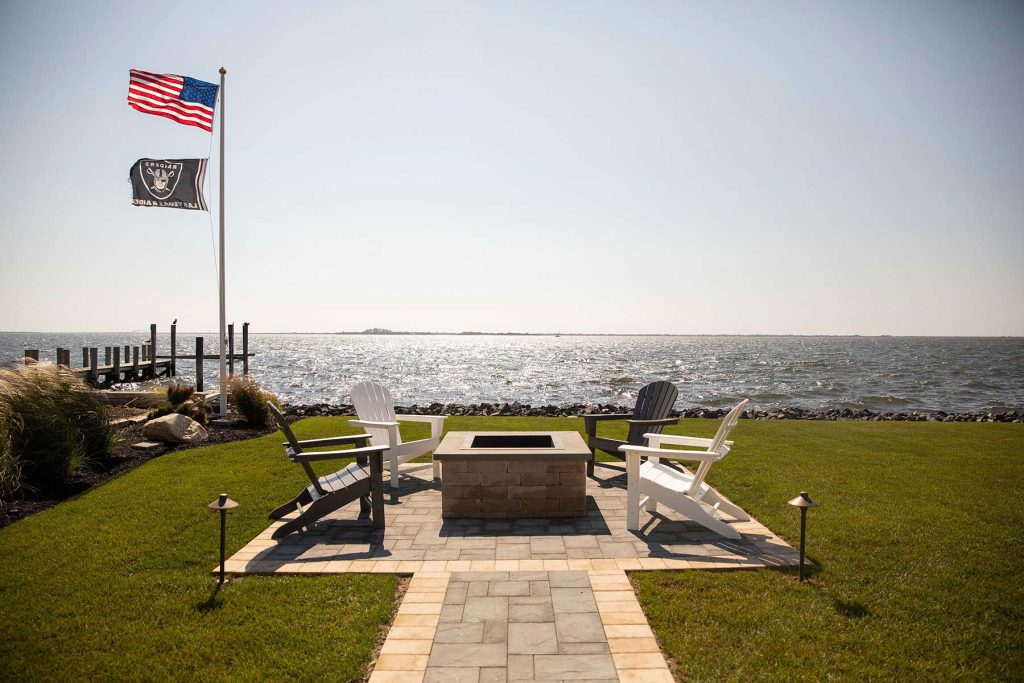
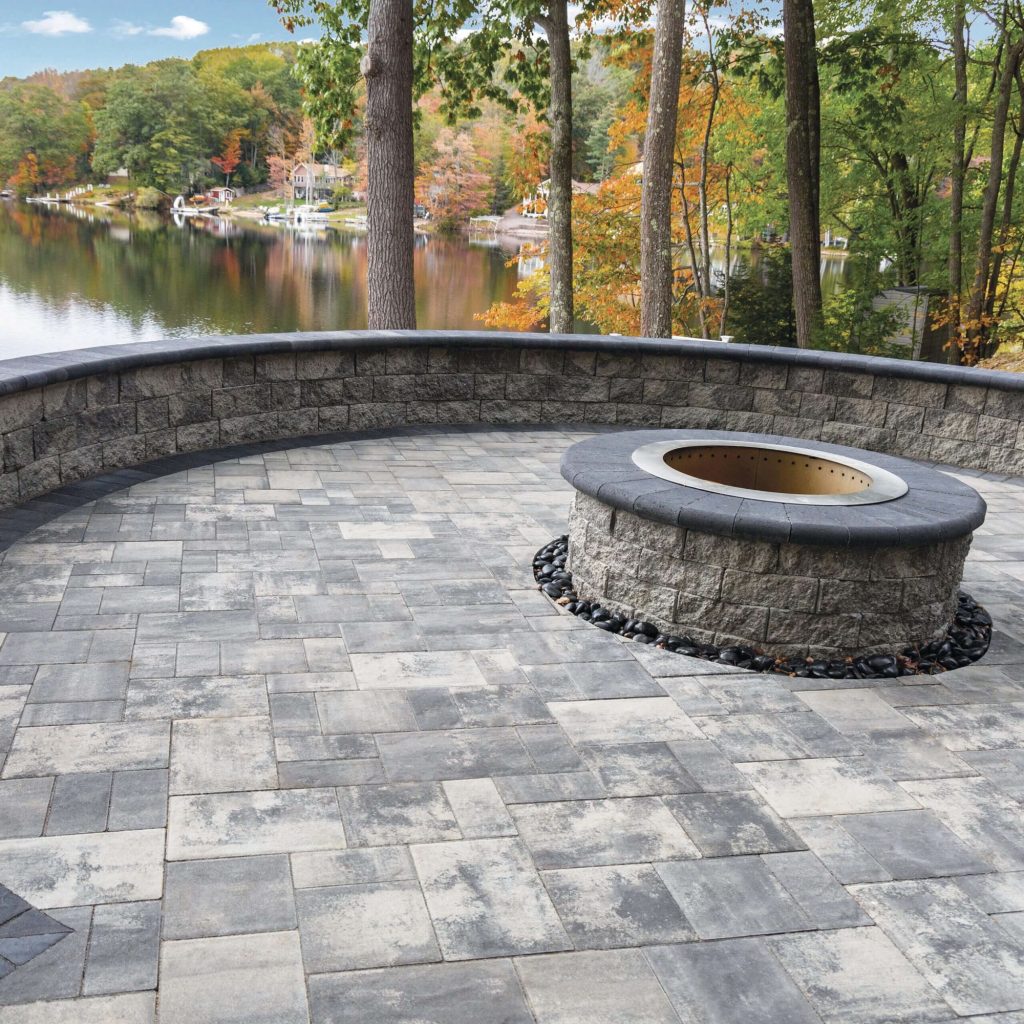
Fire pits work especially well when you want people looking at each other as much as the flame. Round configurations support chairs from several directions, while square and rectangular versions create a more linear arrangement.
The Serafina Fire Pit uses a circular form with a generous burn area and multiple stone colors. For more configuration choices, the Encore Fire Pit offers wood, smoke-less, or gas burn packages along with several textures and colors.
An open form can preserve long views across a pool, lawn, or garden because no tall structure interrupts the sightline. That advantage comes with a spatial tradeoff. Chairs occupy several sides, and people still need comfortable routes around them.
On a narrow patio, placing a round pit directly in the center could push every walkway toward its perimeter. Giving the fire its own conversation zone may create a cleaner route between the house, grill, and dining table.
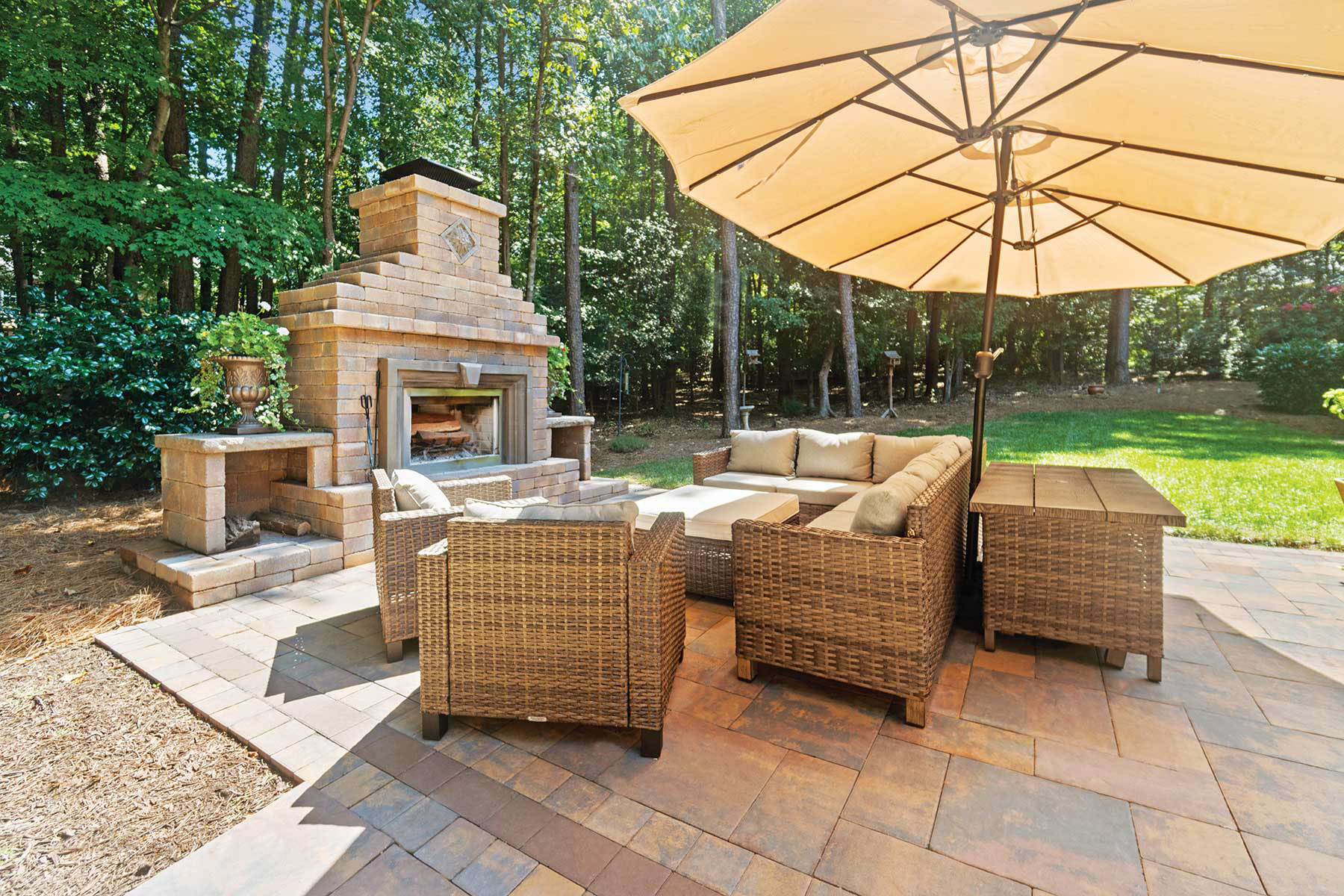
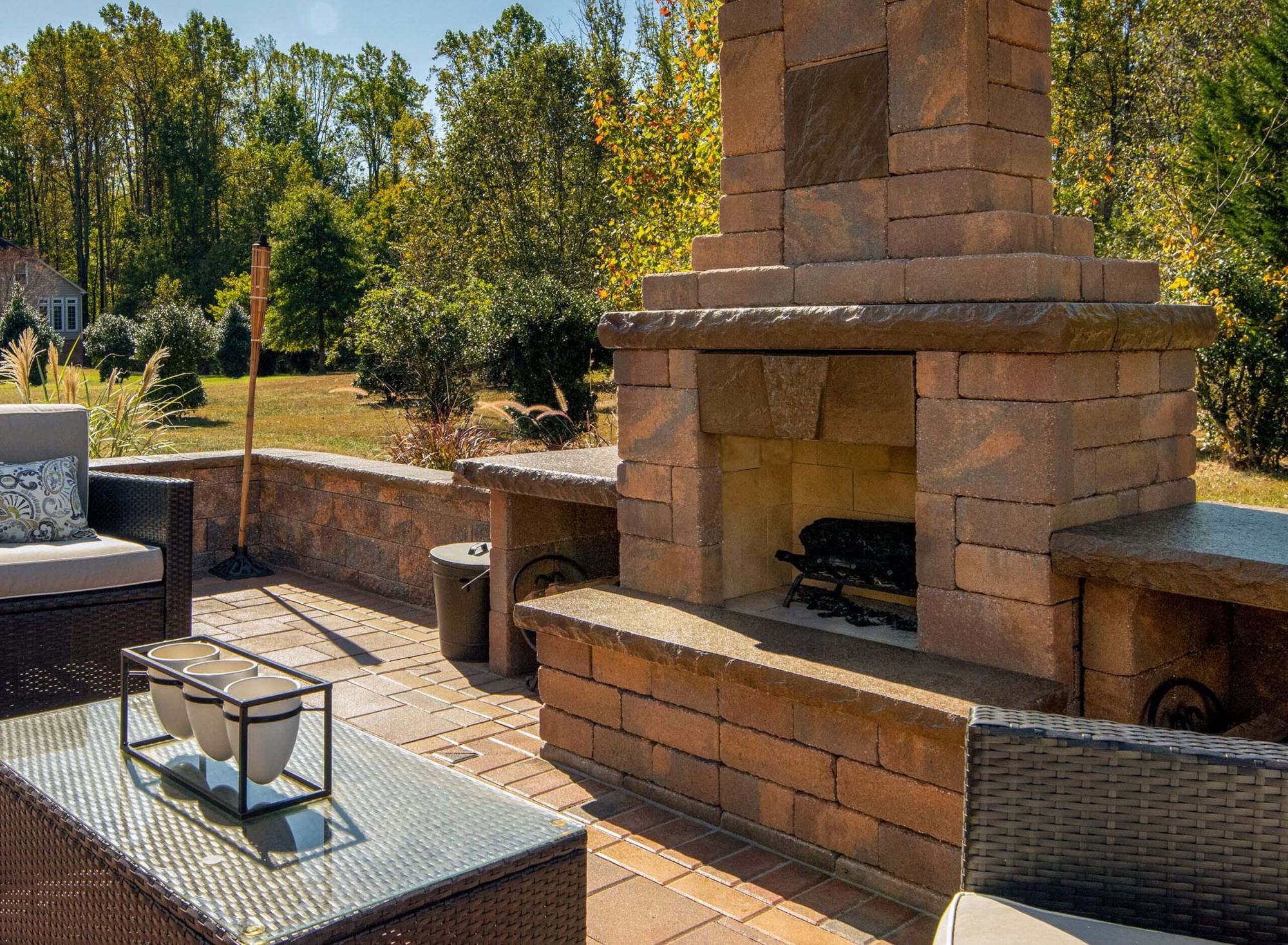
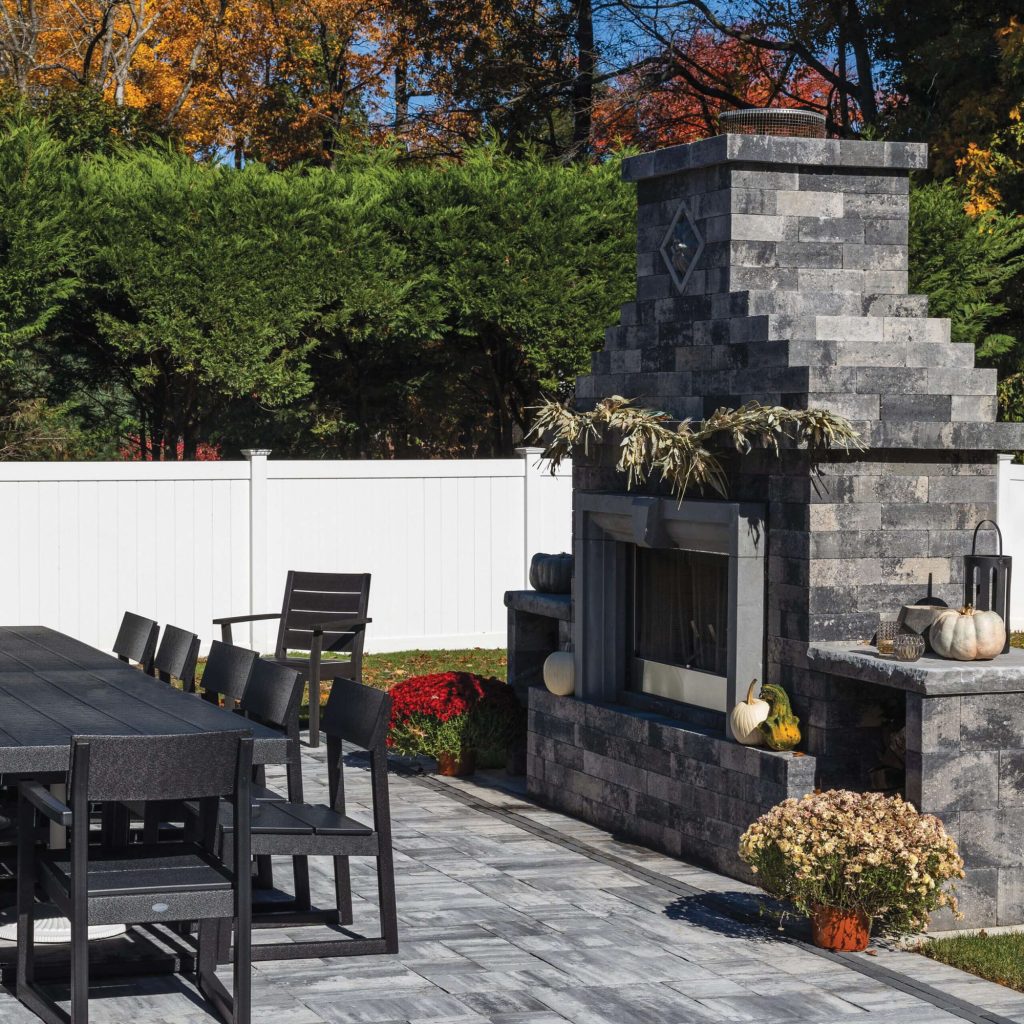
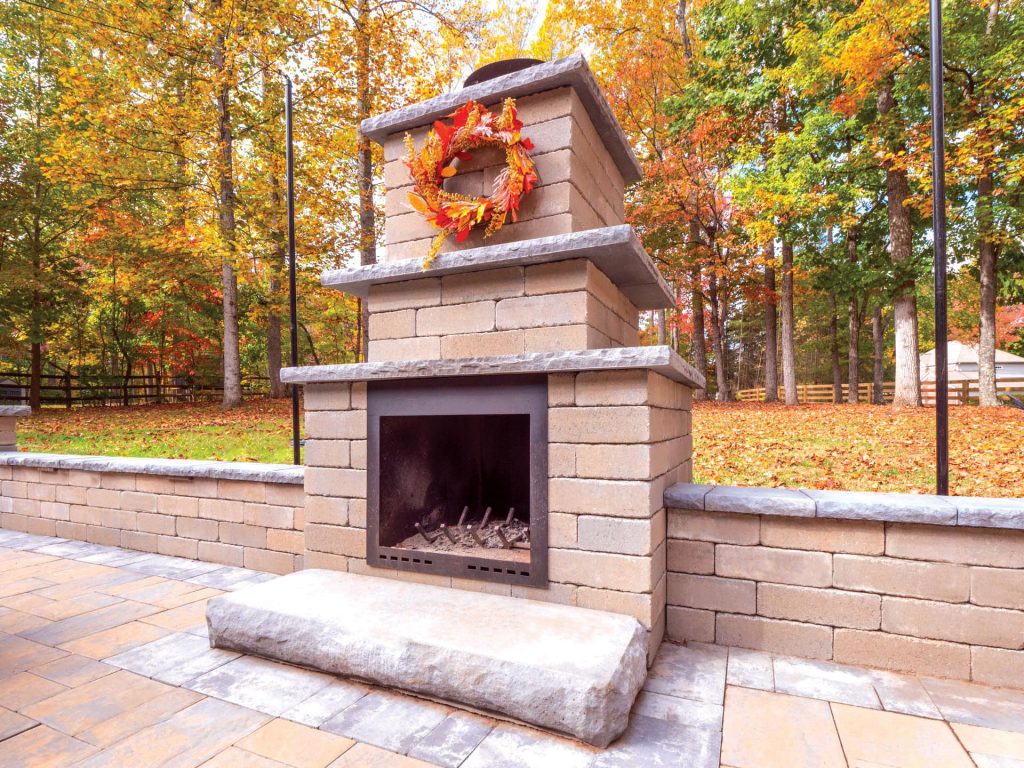
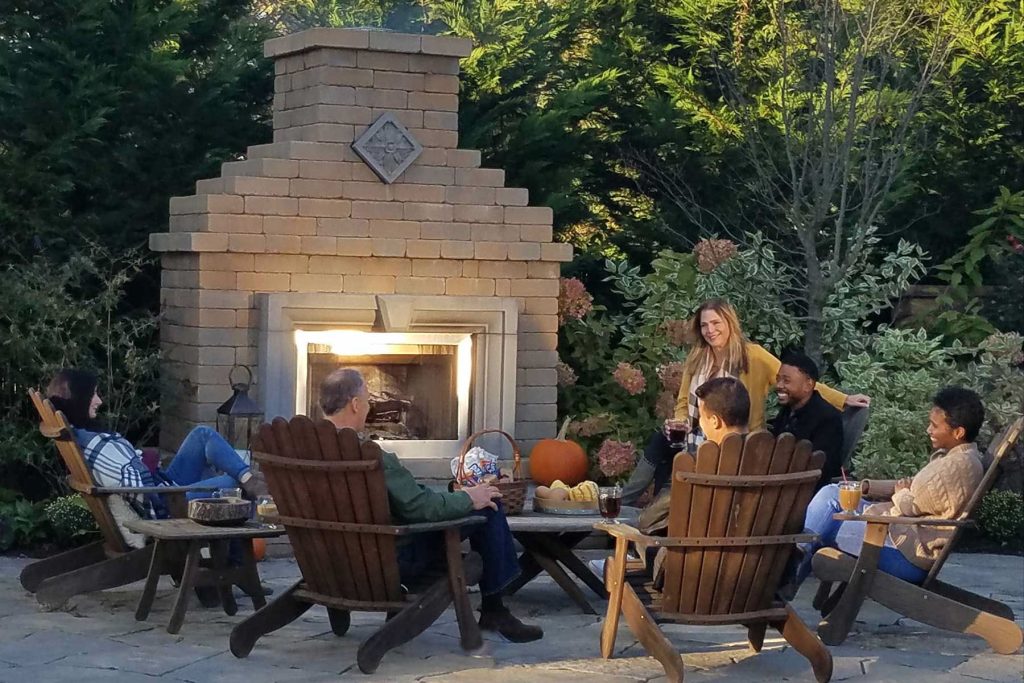
Outdoor fireplaces create an architectural presence even when no flame is burning. Their height and mass can frame one side of a patio and give furniture an obvious direction.
That arrangement works well for homeowners who want a defined outdoor room. Sofas and chairs can face the structure while the space behind them remains open for dining, cooking, or other activities.
Before choosing the location, look at the proposed fireplace from inside the house. A tall structure may become one of the first things you see through a kitchen window or patio door. In the right position, it can frame the backyard. Somewhere else, that same height might block a pool, garden, or distant view.
The Nicolock Fireplace with Verona Wall measures 91 inches long, 56 inches deep, and 97 inches high. Those dimensions show why it helps to map the full footprint rather than judging scale from a product photo alone.
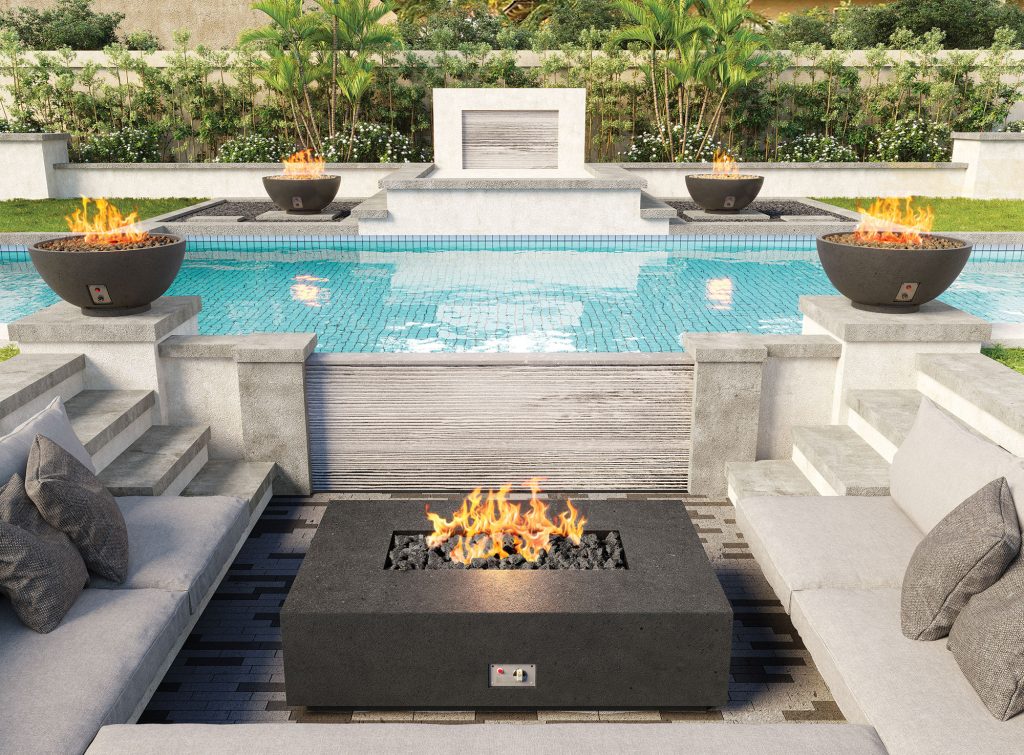
A fire table places the flame near seated guests without introducing the vertical presence of a fireplace.
The Sanctuary 1 has a rectangular glass fiber-reinforced concrete enclosure surrounding a 304 stainless steel burner system. Natural gas comes standard, with a liquid propane conversion kit available separately. Five color choices allow the table to coordinate with nearby hardscape.
Try placing opposing sofas or lounge chairs along its longer sides. Guests can talk across the flame, set down a drink where the model allows, and remain part of the same conversation.
That arrangement also leaves other portions of the patio available for dining or cooking.
Fire bowls add warmth and visual character without the height of a fireplace or the broader footprint of some gathering arrangements.
Their lower profile works well near landscaping, water elements, or open views where a taller structure might compete for attention. A fire bowl can serve as a focal accent, mark the edge of an outdoor room, or bring flame into a contemporary patio without visually dominating the setting.
Depending on the layout, bowls can also support the way a space functions. A strategically placed unit may bring warmth closer to lounge seating while preserving room for movement elsewhere on the patio.
Compact appearance does not remove installation requirements. Manufacturer instructions, fuel specifications, clearances, and local codes still determine whether a particular model belongs in a given location.
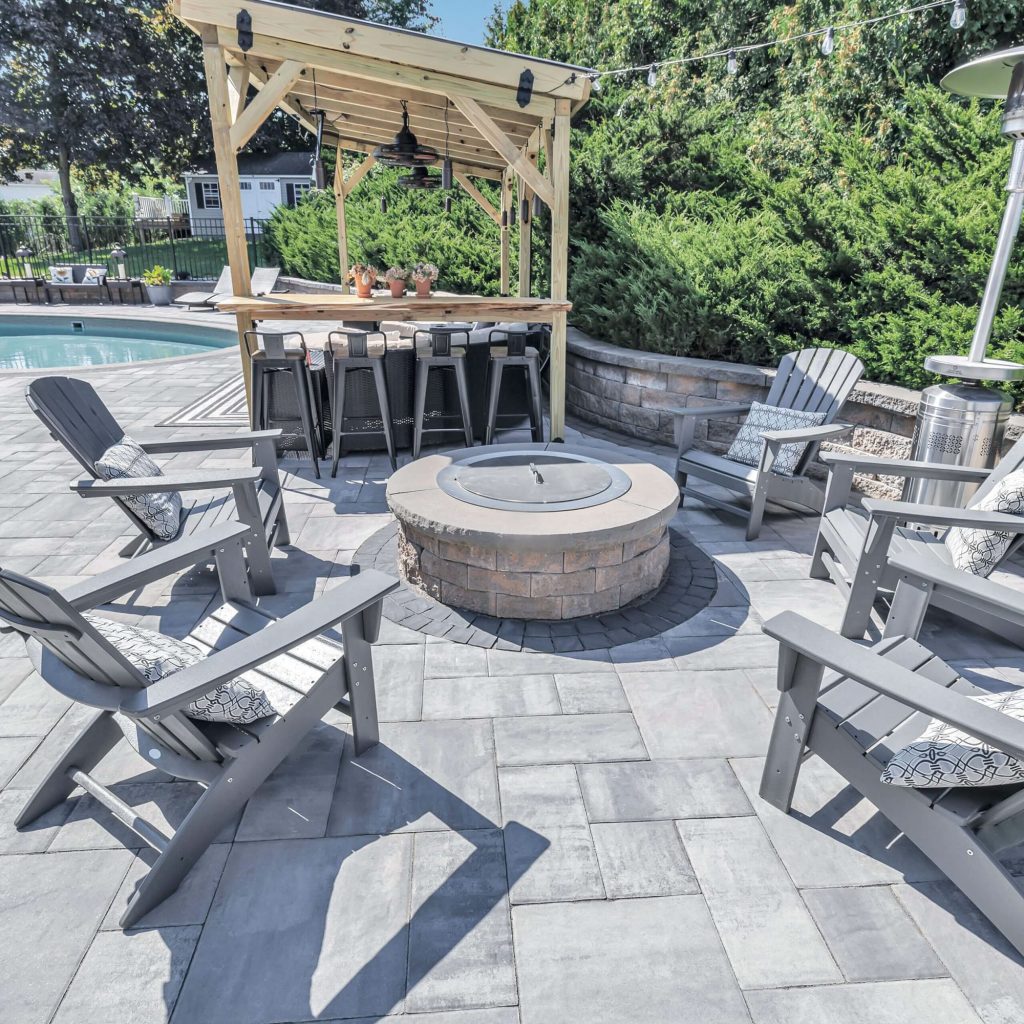
A fire feature needs more room than its listed dimensions suggest. Chairs, sofas, pathways, landscaping, and safe operating distances all add to the footprint.
Place the furniture on your plan before committing to the flame's location. Can someone push a chair back without entering a walkway? Is there enough room to stand and move comfortably? Will guests need to pass close to the fire when heading toward the house?
Then follow the routes people already use:
Good circulation often goes unnoticed, which is exactly the point. Nobody should have to squeeze behind a sofa or interrupt a group of seated guests just to cross the yard.
Structures and landscaping also need attention. Rooflines, pergolas, fences, trees, and planting beds can affect placement.
Don't rely on a single generic clearance measurement from the internet. Requirements vary by product, fuel, installation method, manufacturer instructions, and applicable local rules.
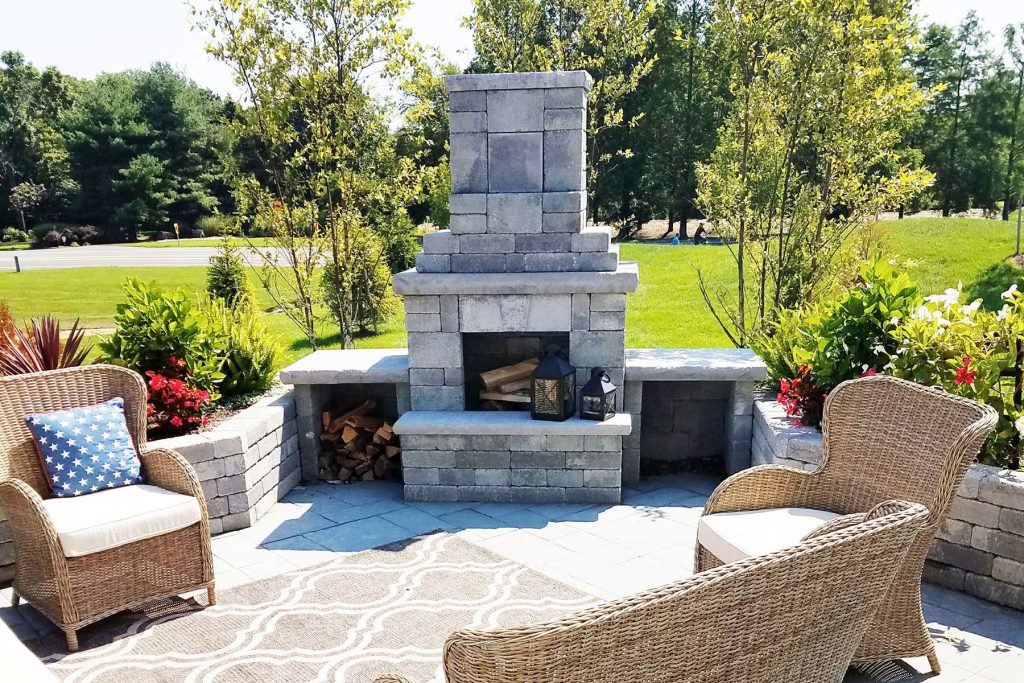
Fuel changes the experience long after installation day. Think about what happens when you decide to have a fire on an ordinary Wednesday evening, not just during a planned party.
For many people, part of the appeal lies in stacking the logs, hearing them crackle, and watching the flame change throughout the night.
That experience asks for more participation. Firewood needs dry storage. Someone has to start and tend the burn, then handle ash after everything cools. Smoke direction deserves attention during planning, particularly near dining spaces, doors, and windows.
Check local regulations before choosing a wood-burning model, since requirements differ by location.
A dedicated natural gas supply removes the need to store logs or keep portable fuel tanks ready.
That convenience matters if you expect to use the fire often. Instead of preparing fuel before guests arrive, you can spend that time setting the table, finishing dinner, or simply getting outside sooner.
Permanent connections require proper planning. Qualified professionals should handle regulated gas work where applicable.
Propane provides convenient ignition without depending on the same utility connection as natural gas.
The selected model determines how you must store and access the tank. Review ventilation, capacity, placement, and manufacturer specifications before deciding where the unit belongs.
Nicolock products offer different fuel configurations, so check current specifications for the exact model under consideration.
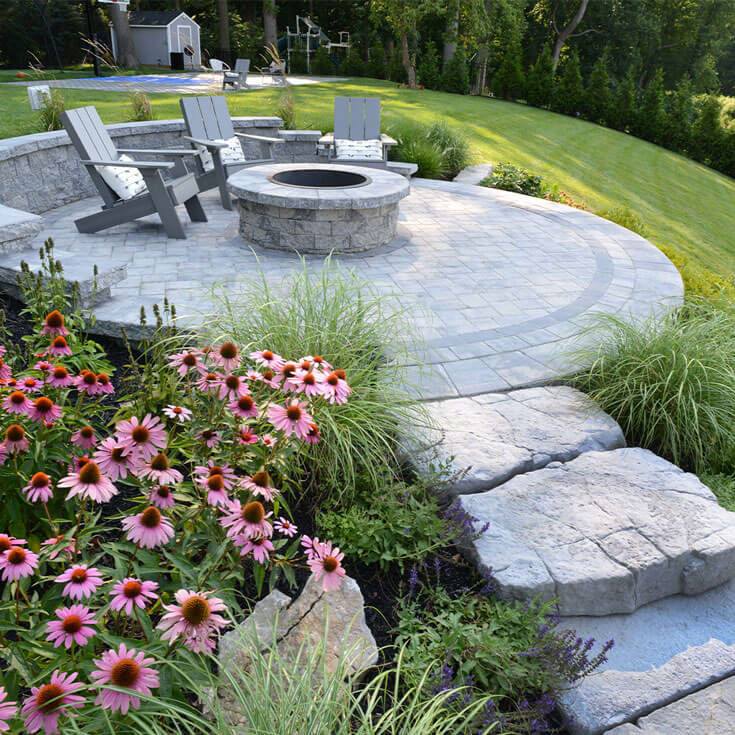
The flame may attract attention first, but the surrounding hardscape determines how the setting feels once everyone sits down. Pavers establish the floor, furniture supports conversation, walls shape the edges, and walkways connect everything beyond the fire.
You do not need a physical barrier to signal that one part of a patio serves a different purpose.
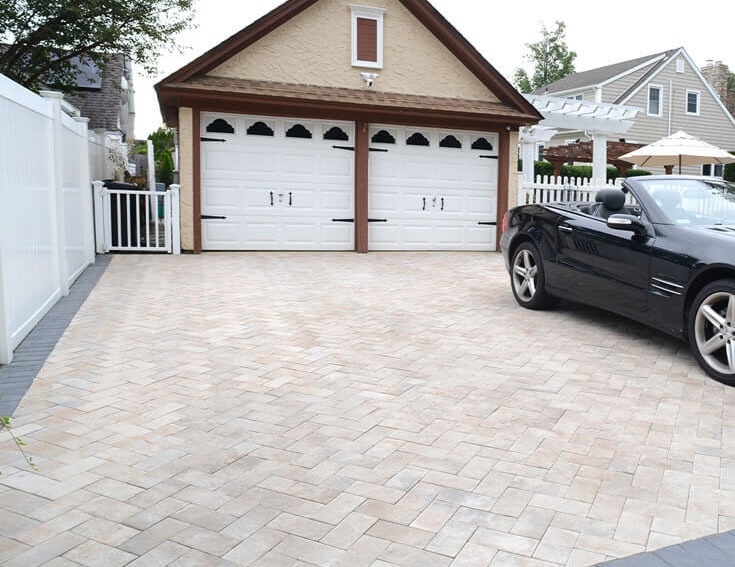
A border, pattern change, contrasting shape, or shift in color can define the fireside portion while maintaining one continuous surface. Circular paving can echo a round pit. Linear patterns complement rectangular tables and fireplaces particularly well.
Nicolock paving stones offer numerous shapes, textures, and colors for connecting patios with walkways, outdoor kitchens, walls, and other hardscape elements.
Rather than selecting the fire first and fitting everything else around it, plan the paving and feature as one composition.
A round pit invites people to look across the flame at friends sitting opposite them. Fireplaces direct attention forward. Rectangular tables can sit comfortably between two sofas or groups of lounge chairs.
Built-in seating creates permanence and can help define the edge of the space. Movable furniture gives you more freedom when four guests become eight.
Neither approach needs to fill every available foot of patio. Open space has a job, too. It lets people move without stepping through conversations or crowding the fire.
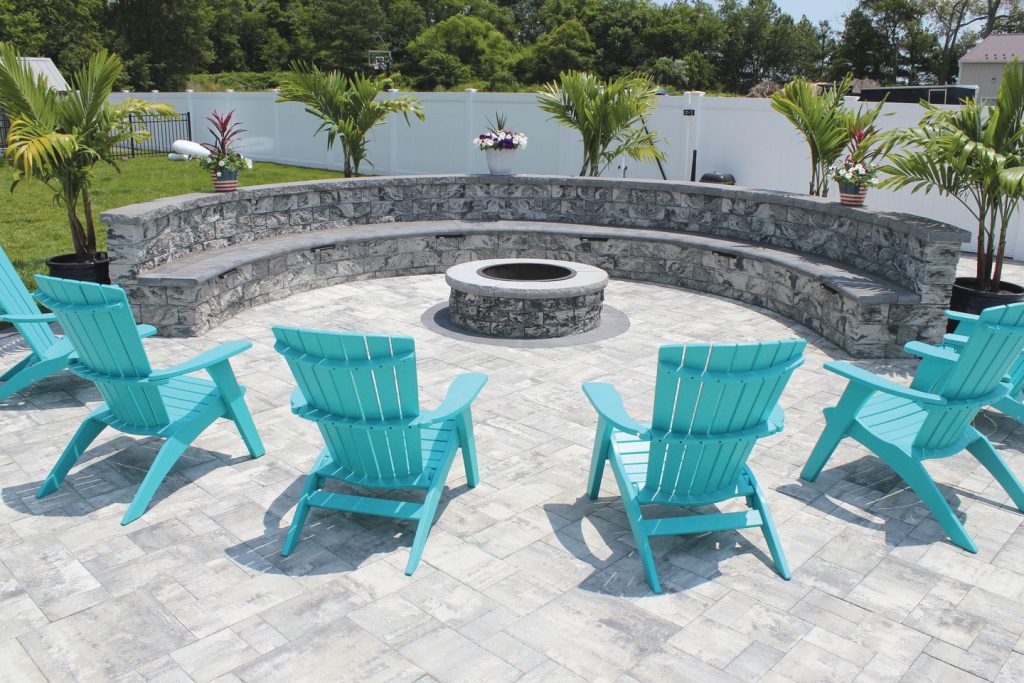
Landscape and seat walls give an open patio edges and structure.
One might follow the curve of a circular fire zone. Another could handle a change in grade behind the chairs. A low wall may separate conversation space from a nearby lawn while still keeping the view open.
Coordinating wall materials with the paving below helps separate pieces read as one beautifully executed outdoor environment.
On a cool spring night, guests can leave the dinner plates behind and move a few steps toward comfortable chairs without breaking up the gathering.
That transition becomes awkward if the fire sits at the far end of the property with no clear route between destinations.
Walk from the back door toward every major outdoor activity before finalizing the plan. Notice where paths cross and where people tend to turn. The grill, dining table, pool, lawn, and fireside seating can each serve a purpose without feeling disconnected.
Walk from the kitchen to the patio and look back at the house. Exterior colors, masonry, rooflines, proportions, and existing hardscape already offer clues about what will look at home nearby.
Exact matching is rarely necessary. Repeating one stone tone, paver color, texture, or architectural line may be enough to connect separate elements.
A fireplace that seems proportional in a catalog photo can feel very different once its full height stands beside the house. Check the proposed location from several viewpoints, including interior windows and doors.
Also consider what sits behind the structure. A solid vertical form can provide a handsome backdrop against fencing or neighboring properties. In another location, it might hide a favorite tree or block the view toward a pool.
The goal is not simply to fill an empty section of patio. Give the fireplace a reason to occupy that spot.
A comfortable evening around the fire depends partly on conditions you cannot see in a drawing.
Pay attention to prevailing wind. Wood smoke drifting toward the dining table can quickly change the mood of dinner, while poor placement near doors or windows may send it toward the house.
Keep combustible materials and debris away from operating flames. Follow manufacturer instructions for use, maintenance, and required clearances.
Building requirements, fire regulations, and HOA rules differ by location. Use the selected model's specifications and applicable local codes instead of relying on a universal distance.
Qualified professionals should complete gas connections and other regulated installation work where required.
Outdoor products spend their lives exposed to conditions that indoor furnishings never face. Sun, rain, moisture, temperature changes, heat, and repeated use all matter.
Nicolock builds different fire products for different applications. Sanctuary 1, for example, combines a GFRC enclosure with a 304 stainless steel burner system and includes a weather cover. Encore uses reinforced concrete panels through Nicolock's Vertical Panel Technology and comes in several textures and finishes.
Those details matter more than broad durability claims. Compare construction, care requirements, fuel systems, accessories, and installation needs for the exact model you are considering.
Give the surrounding hardscape the same attention. Pavers and walls are not decoration around the main attraction. They form the surfaces and boundaries your family will use every time someone heads outside.
The best backyard spaces make it easy for one part of the evening to flow into the next.
Dinner can begin beside the grill. Later, plates are cleared, and everyone shifts toward the fire. On an autumn Saturday, that same spot might become the place where friends gather after sunset. During a quiet weeknight, two chairs beside the flame may be all you need.
Careful placement keeps those moments easy and relaxed. Cooking, dining, lounging, and fireside conversation stay close enough to feel connected while each has enough room for its own purpose.
Nicolock's outdoor living collection brings together hardscape and fire products to create inviting backyards you can enjoy through spring, summer, fall, and beyond.
Choosing the best outdoor fire feature becomes much easier once you stop looking for a universal winner.
Choose a fire pit when you want people gathered around the flame with conversation flowing across it.
Consider an outdoor fireplace when the backyard needs a defined destination and a substantial architectural element.
Look at a fire table for lounge seating where guests can face one another across a lower flame.
Consider a fire bowl when preserving open views or adding a smaller visual accent matters more than creating a large gathering centerpiece.
Then step back and look at the whole yard. Seating, pathways, pavers, walls, fuel, landscaping, sightlines, and nearby activities determine whether the finished setting feels comfortable once people begin using it.
Ready to turn those ideas into a plan? Find a Nicolock dealer, connect with a contractor, or find a Nicolock Design Center to see colors, textures, fire products, and hardscape combinations in person.
Think first about how your guests interact. Fire pits encourage conversation from several sides, fireplaces orient everyone toward one focal point, and tables pair comfortably with lounge furniture. Guest count, patio dimensions, fuel preference, and clearances will narrow the options further.
Neither one wins for every property. An outdoor fireplace creates a substantial focal point and typically directs seating toward one side. An open pit keeps the gathering centered around the flame and may preserve wider views across the yard.
Compact pits, tables, or bowls may fit limited spaces if the chosen model meets all required clearances. Measure the furniture and walking routes along with the product itself. A small unit can still make a patio feel crowded if the chairs leave nowhere comfortable to walk.
Compatibility depends on the fire unit, paver system, heat management, installation method, and manufacturer requirements. Follow specifications for the selected products and applicable local rules rather than assuming every combination will perform the same way.
Choose according to the experience you prefer. Wood gives you traditional flame character along with storage, tending, smoke, and ash cleanup. Natural gas uses a dedicated connection for convenient operation. Propane provides another gas-fired option subject to the requirements of the individual model.
Let the shape guide the first draft of your furniture plan. Round pits support chairs from several directions, fireplaces generally face sofas and seating toward the structure, and rectangular tables work nicely between opposing lounge groups. Keep walking routes open and maintain all required clearances.
No universal measurement applies to every product. Required separation depends on the unit, fuel, nearby structures, manufacturer instructions, and local codes. Check the applicable requirements and consult qualified professionals before installation.
Possibly. Start by checking whether the patio has enough room for the unit, seating, walking space, and all required clearances. Also review surface construction, fuel access, heat management, installation needs, and local regulations before selecting a model.