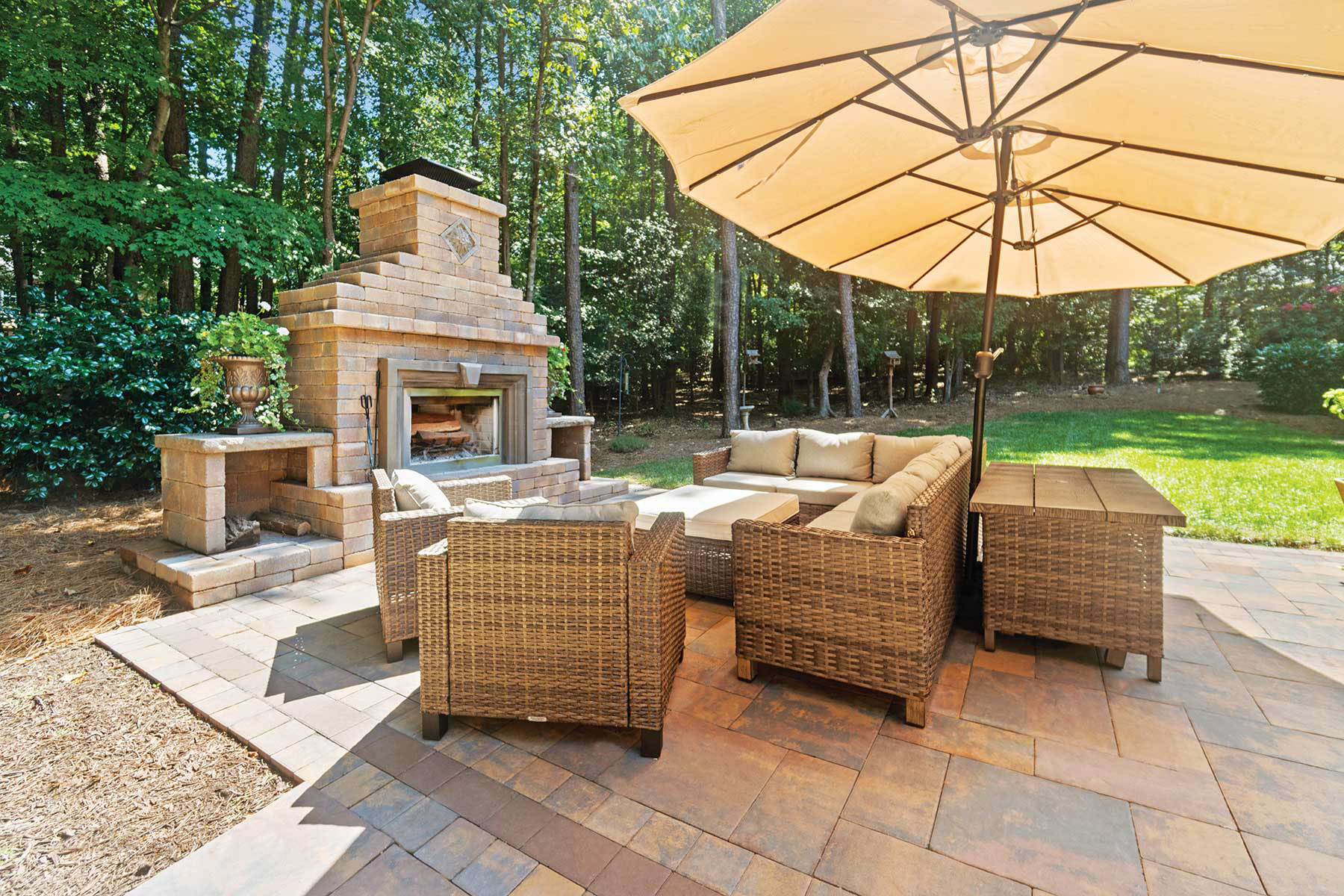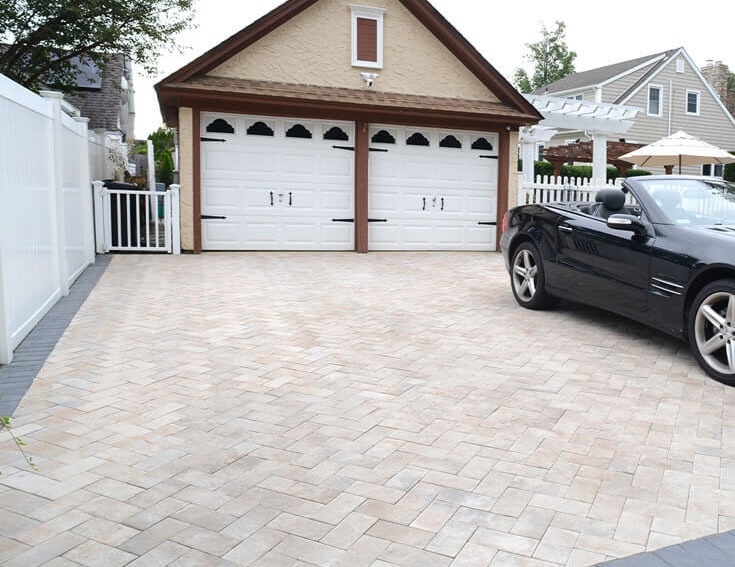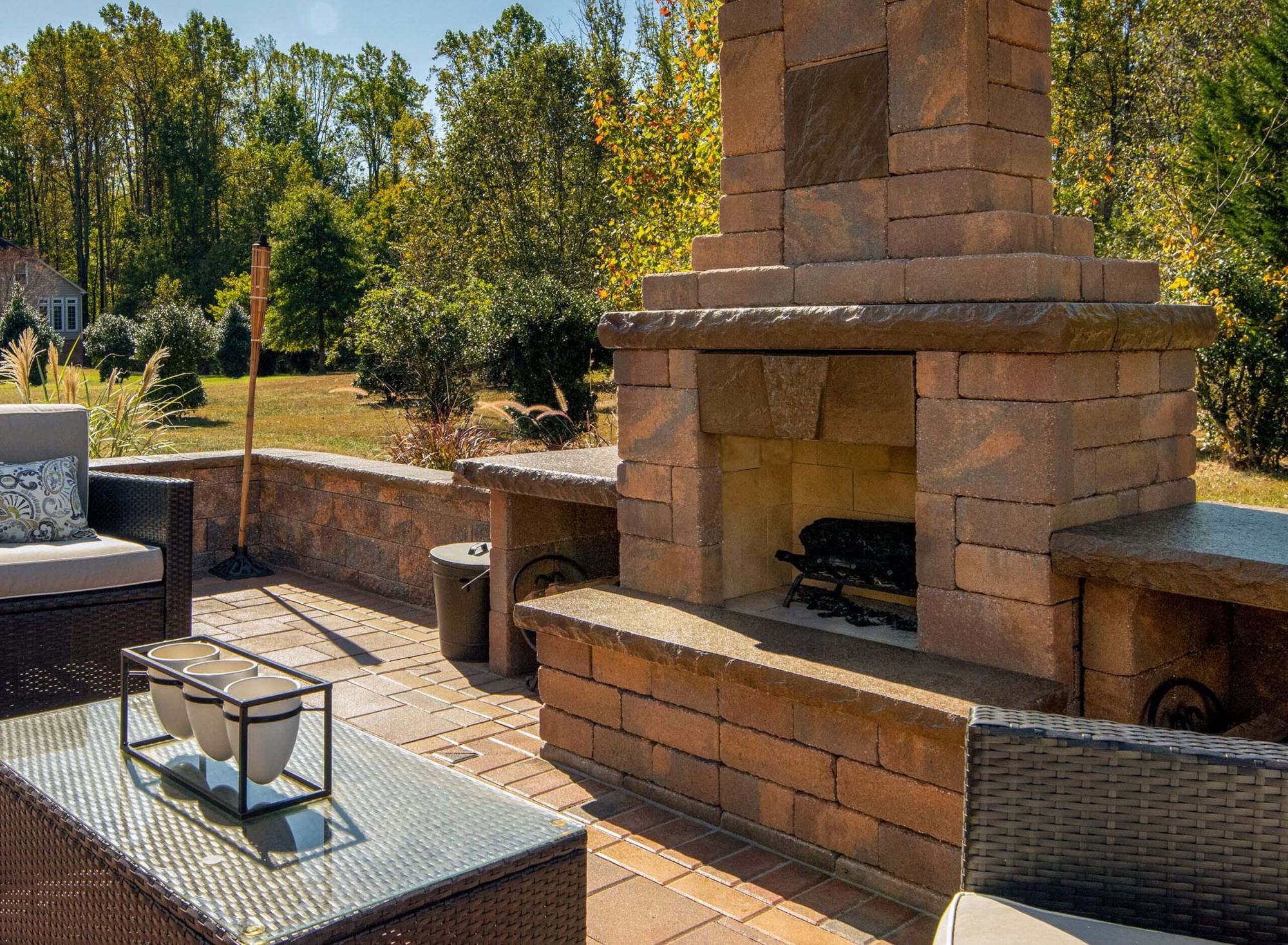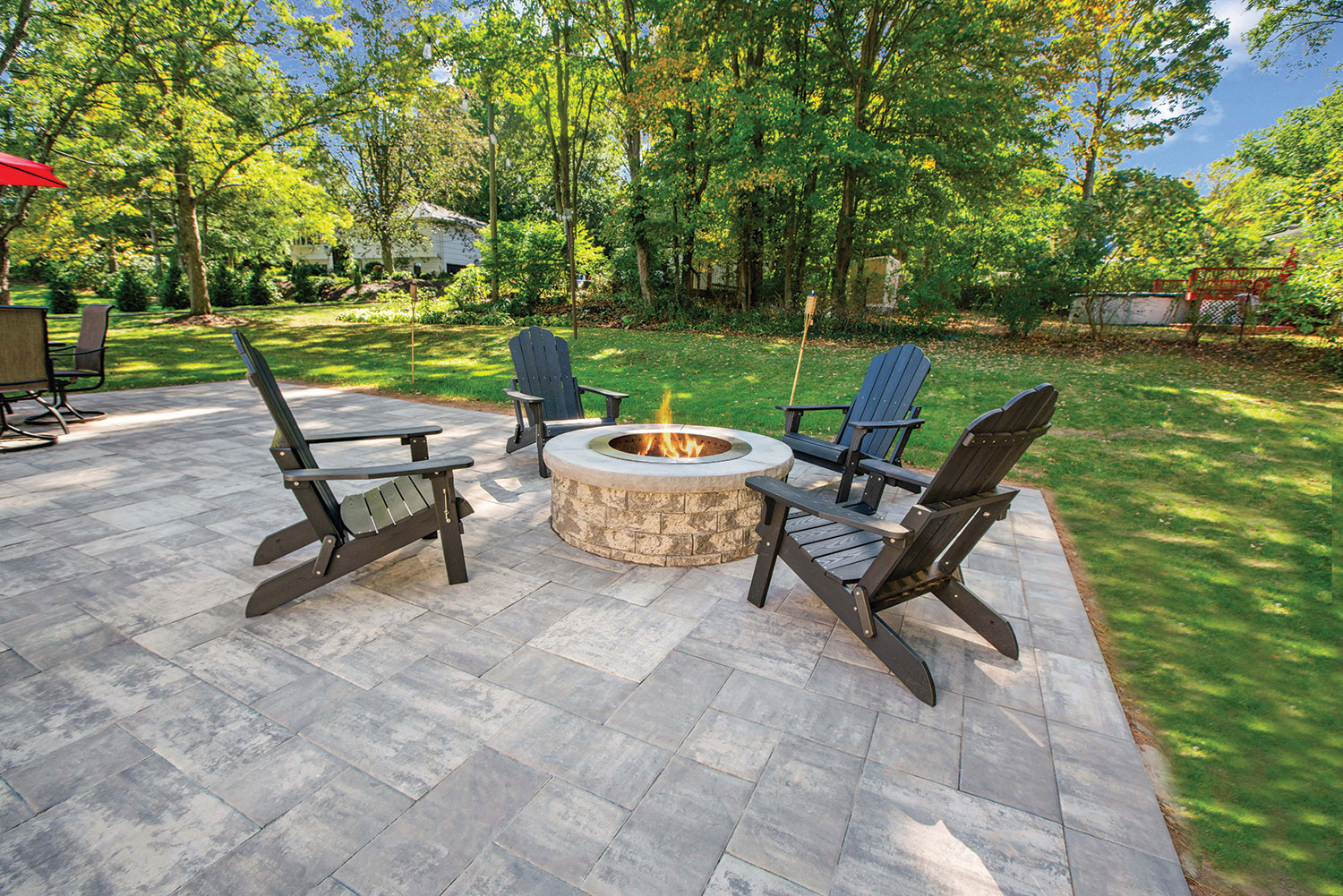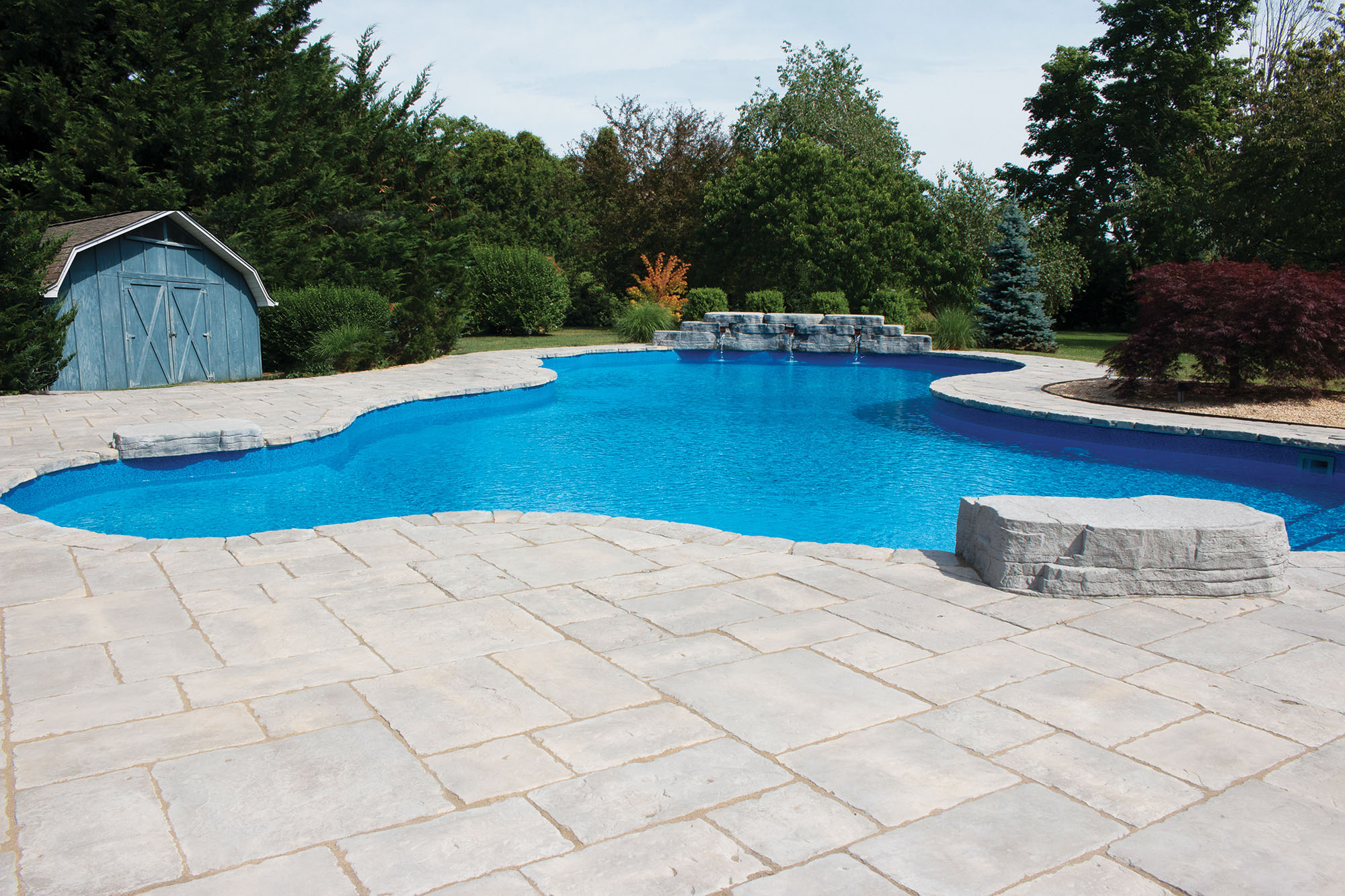
A new patio can give you more reasons to spend time outside, whether that means summer dinners with family, weekend cookouts with friends, or a quiet place to start the morning. Understanding flagstone patio cost helps you plan the space around your vision and budget, with 2026 national guides placing professionally installed flagstone around $15 to $32 per square foot. Your final price may fall outside that range based on the property, stone selection, and construction method.
Natural flagstone brings organic texture, distinctive variation, and timeless character to a backyard. Choosing the right surface also requires consideration of material pricing, installation requirements, long-term care, and how you expect to use the area.
National averages establish a useful baseline. Excavation, base preparation, drainage, backyard access, local labor rates, demolition, and detailed stone fitting all influence the finished price. With those variables in mind, you can compare natural stone and flagstone-look concrete pavers based on the complete project rather than surface price alone.
A professionally installed flagstone patio generally runs about $15 to $32 per square foot, based on national pricing data.
Published estimates vary. HomeGuide reports $15 to $32 per square foot for dry-laid installation, while Angi lists about $15 to $30. HomeAdvisor's general flagstone installation data falls around $15 to $22 per square foot. The differences illustrate why homeowners should treat online figures as budgeting references rather than fixed rates.
| Patio Dimensions | Square Feet | Broad Budget Range* |
| 10×10 | 100 | $1,500–$3,200 |
| 12×12 | 144 | $2,160–$4,608 |
| 12×20 | 240 | $3,600–$7,680 |
| 15×20 | 300 | $4,500–$9,600 |
| 20×20 | 400 | $6,000–$12,800 |
Figures apply a $15 to $32 installed rate compiled from national cost data. Local proposals may fall above or below these amounts.
How these estimates were calculated: The table compares published 2026 pricing from several national cost resources. These figures do not represent Nicolock pricing or a contractor quote. Location, chosen stone, installation method, site conditions, and the local labor market affect the final amount.
Flagstone cost and installed patio pricing describe two different numbers. The first may refer only to natural stone. A completed project may also include excavation, aggregate, bedding material, delivery, cutting, grading, drainage, disposal, and labor.
Consider a 15×20 patio measuring 300 square feet:
300 sq. ft. × $15–$32 = $4,500–$9,600
That puts the preliminary budget between $4,500 and $9,600. Extensive excavation, old concrete removal, drainage corrections, difficult material access, or detailed cutting could move the contractor's proposal beyond those figures.
Two patios with identical dimensions may require very different amounts of work. One property might offer level terrain and direct equipment access. Another could involve demolition, grading, water-management improvements, and materials carried through a narrow side yard.
Square-foot calculators rarely account for those site conditions. A contractor evaluating the property sees factors an online formula does not.
Patio construction begins below the finished surface. Grass, soil, roots, old base materials, or unsuitable ground may need removal before crews build a stable foundation.
Uneven terrain requires additional preparation in some yards. Hauling excavated material away also adds equipment time, labor, and disposal expenses.
Proper grading directs water around the patio and nearby structures. Slopes or existing drainage concerns may call for additional preparation before installation begins.
Such work rarely appears in a basic square-foot estimate, yet it may represent a meaningful portion of the overall scope.
Direct equipment access makes it easier to move stone, aggregate, tools, and excavated material. Fences, stairs, established landscaping, narrow gates, or limited side-yard clearance make material handling more labor-intensive.
Restricted access leaves the square footage unchanged while adding time to transportation and installation.
Replacing an older patio introduces demolition and disposal expenses before construction of the new surface begins.
Angi estimates existing-patio demolition at around $550 to $1,700, though size, surface type, disposal requirements, and regional rates affect the cost.
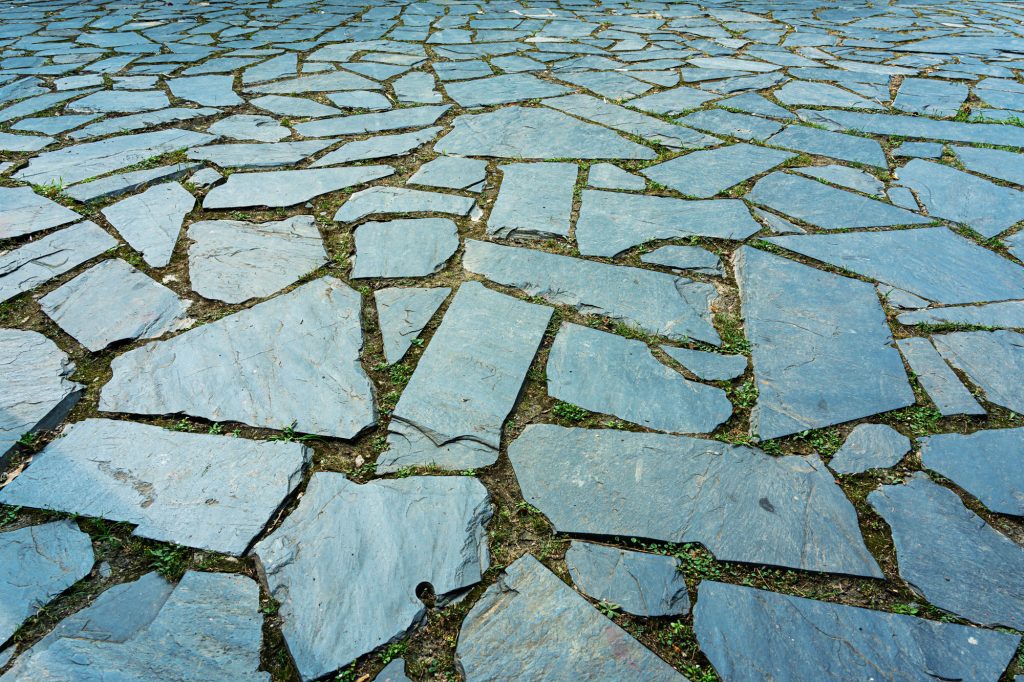
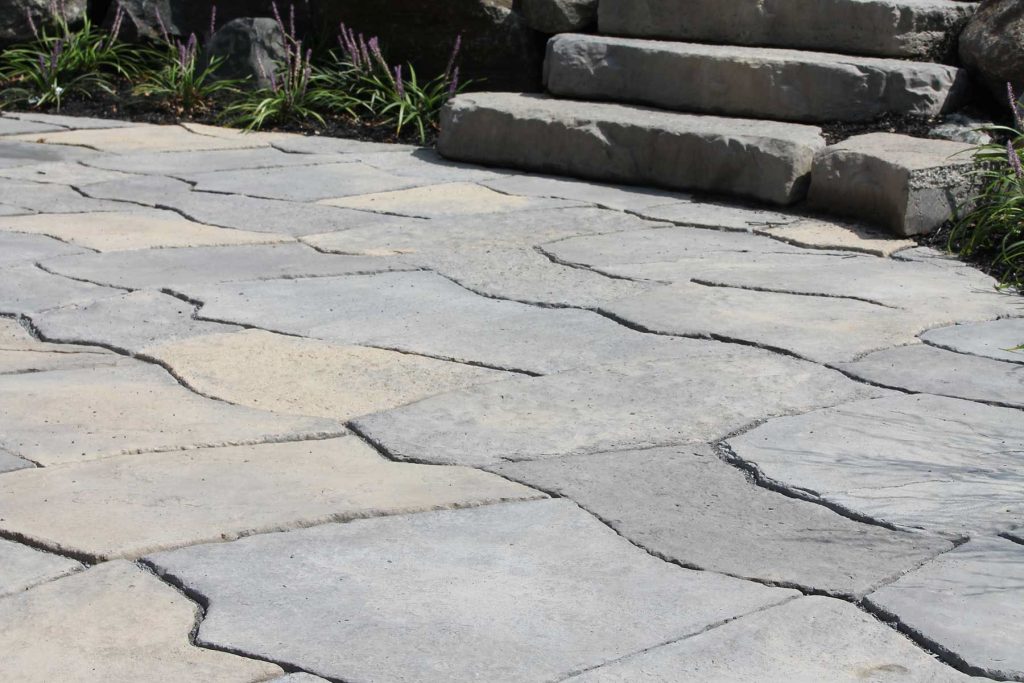
Natural flagstone varies by geology, thickness, density, dimensions, and source. Sandstone, limestone, bluestone, quartzite, slate, granite, and other varieties have different points.
Freight distance affects the delivered price of heavy natural stone, especially when a preferred variety originates far from the property.
Irregular pieces often require individual fitting. Curved borders, tighter joints, steps, transitions, or detailed patterns involve additional cutting and placement.
A rectangular layout with relatively simple geometry may therefore require less labor than an intricate natural-stone design covering similar square footage.
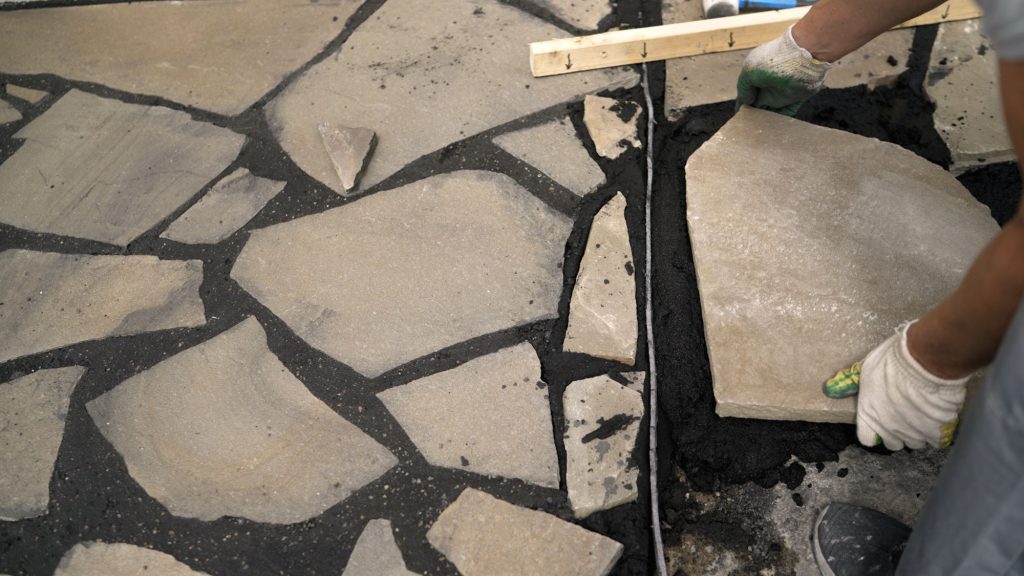
Flagstone cost may refer to the stone alone, while installed pricing covers the broader construction project. Knowing which figure you are reviewing prevents an attractive material price from creating an unrealistic patio budget.
HomeGuide lists flagstone materials around $6 to $25 per square foot, depending on stone type. Its dry-laid patio data places materials at roughly $6 to $15, with labor and supplies adding another $9 to $17 per square foot.
Stone is also sold by ton or pallet. Thickness and density affect coverage, so comparing pallet prices without checking the square footage each quantity provides may lead to an inaccurate comparison.
The construction method changes the required base, supplies, and labor. Dry-laid, mortar-set, and concrete-set patios therefore have different installed price ranges.
Dry-laid installations place stone over a prepared gravel-and-sand base rather than a poured slab.
HomeGuide reports approximately $15 to $32 per square foot for this method. Preparation requirements, individual fitting, and ground conditions still affect the completed price.
Mortar-set construction secures flagstone using mortar over an appropriate base.
HomeGuide places this approach around $20 to $42 per square foot installed. Before determining whether a surface provides a suitable foundation for the proposed work, you need to evaluate existing conditions.
Concrete-set construction incorporates a slab or another suitable prepared foundation and involves a more labor-intensive process.
HomeGuide reports approximately $23 to $45 per square foot for concrete-set installation. Additional foundation work helps explain why this method often costs more than dry-laid construction.
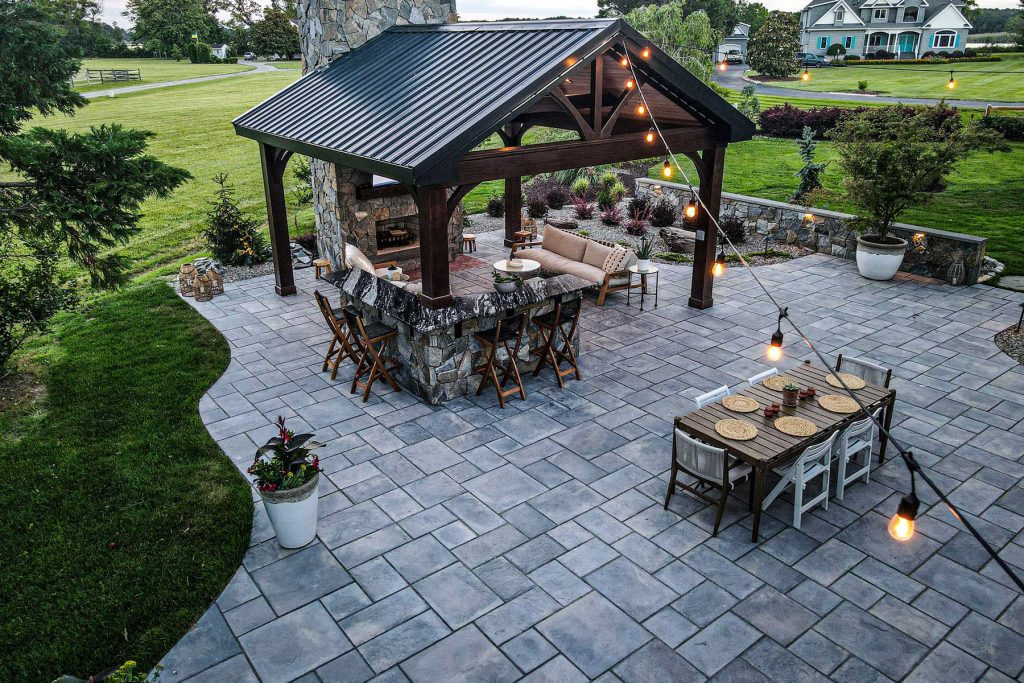
The cost of flagstone patio construction reflects the entire build, from ground preparation to placing the finished surface. A realistic estimate accounts for the materials and work required at each stage.
Potential components include:
Each property has different requirements. Ask contractors what their proposals include before comparing final totals.
One quote might cover demolition, hauling, grading, and base preparation. Another could list those services separately. Reviewing the full scope shows what you are getting for the proposed budget.
A 12×12 patio measures 144 square feet. At $15 to $32 per square foot, the installed estimate is about $2,160 to $4,608.
Published guides support similar figures. HomeGuide lists roughly $2,150 to $4,600 for this size, while Angi reports approximately $2,200 to $4,300.
Smaller patios still carry expenses that do not disappear with reduced square footage. Equipment, delivery, mobilization, excavation, and disposal all contribute to the total.
A 20×20 patio covers 400 square feet, putting the preliminary 20x20 flagstone patio cost around $6,000 to $12,800 at the rates used throughout this guide.
HomeGuide publishes the same $6,000 to $12,800 range. Angi reports approximately $6,000 to $12,000.
Larger areas also demonstrate the effect of seemingly small rate differences. A $5 change per square foot shifts a 400-square-foot budget by $2,000.
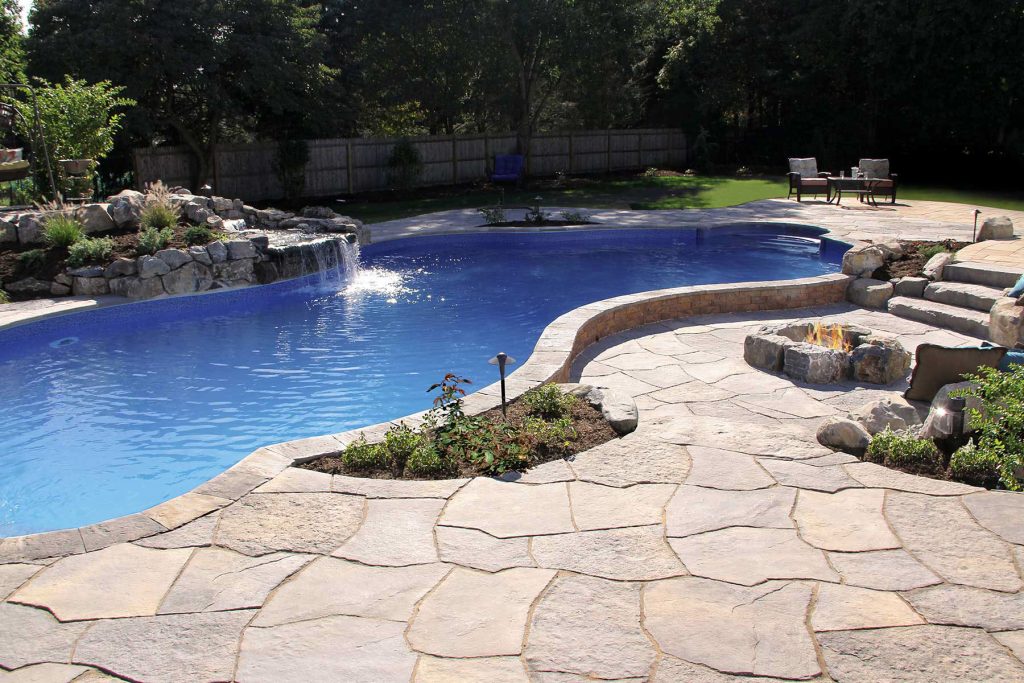
Is flagstone cheaper than pavers? In many cost comparisons, concrete pavers have a lower starting price, although neither material is automatically less expensive for every property. Site preparation, product selection, installation, access, regional labor, and design influence the finished price.
HomeGuide places flagstone installation around $15 to $32 per square foot, compared with roughly $10 to $17 per square foot for concrete or brick pavers installed on an existing compacted, level, well-draining surface. These figures show why concrete pavers may offer a lower entry point, though individual project ranges sometimes overlap.
When comparing the two surfaces, consider cost alongside maintenance, appearance, repair needs, and design flexibility.
| Consideration | Natural Flagstone | Concrete Pavers |
| Material | Quarried stone | Manufactured concrete units |
| Dimensions | Natural variation or cut pieces | Defined sizes and shapes |
| Colors | Determined by available stone | Broad coordinated selections |
| Installation | Irregular pieces may require individual fitting | Manufactured dimensions support planned layouts |
| Repairs | Method depends on original construction | Individual units are often accessible |
| Design | Organic stone character | Multiple textures, patterns, and formats |
| Pricing | Influenced by source, stone, and labor | Influenced by product, preparation, and layout |
For homeowners weighing both surfaces, Nicolock's Flagstone vs Pavers: Which Is Right for Your Outdoor Space? provides a deeper comparison of appearance, installation, maintenance, and design considerations.
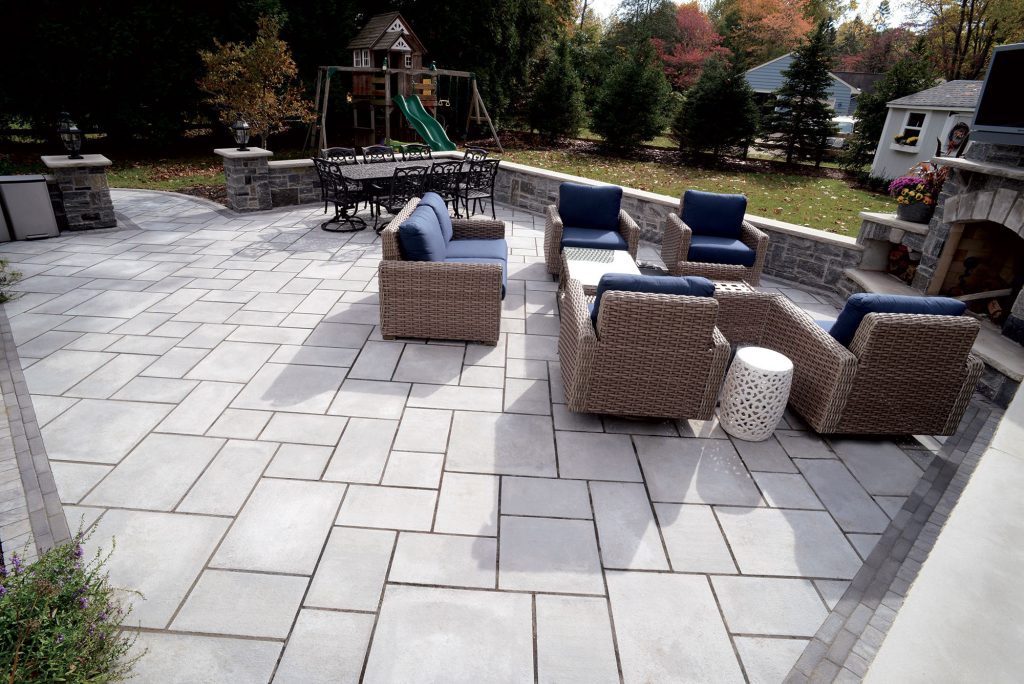
The appeal of flagstone often starts with its irregular texture, natural variation, and connection to traditional landscape design. Concrete pavers provide similar stone-inspired character with manufactured dimensions.
Nicolock's Nicostone collection includes Grand Flagstone, Natural Cleft Flagstone, Old Town Flagstone, Versailles Travertine, and Thermal Finish Flagstone. These products pair natural-stone-inspired surfaces with formats made for outdoor applications.
Natural Cleft Flagstone, for instance, features a cleft texture, modular dimensions, and saw-cut edges. Color choices include Bluestone, Gironde, Mocha, and York Brown.
Manufactured sizing also reduces some of the individual fitting associated with irregular natural stone. Future repairs may prove simpler because individual concrete units are often accessible without disturbing a larger section of hardscape.
Homeowners interested in this direction can view Nicolock's Nicostone paving options alongside the company's flagstone patio ideas for more backyard inspiration.
Think about how you expect to use the patio throughout the week and across the seasons. Weekend grilling, family meals, casual gatherings, and quiet mornings place different priorities on layout, maintenance, surface character, and surrounding features.
Repairs deserve consideration as well. Individual concrete pavers are often removable and replaceable, while natural stone repair depends on the original installation method and availability of pieces that complement the existing surface.
Color, texture, pattern, nearby hardscapes, and possible future additions also shape the decision. Looking beyond the initial price helps you choose a surface suited to both your home and how you spend time outside.
For a concrete paver patio, Nicolock's Paver Calculator estimates material quantities based on project dimensions before you discuss final requirements with a dealer or contractor.
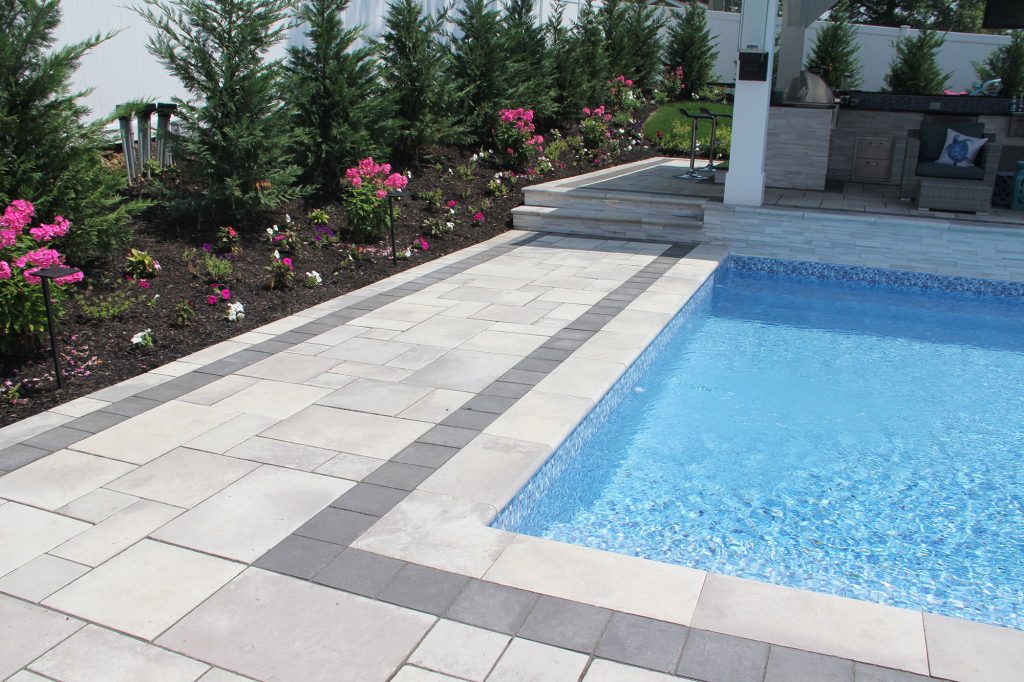
DIY installation reduces paid labor, but the homeowner assumes responsibility for the physical work and many technical details.
Depending on site conditions, the job may involve:
Tool rental, delivery, aggregate, disposal, and personal time belong in a realistic DIY budget.
HomeGuide estimates labor and supplies for dry-laid installation around $9 to $17 per square foot. This shows why material-only prices sit well below complete professional estimates.
National averages set expectations, while a site-specific proposal reflects your home's conditions.
Before contacting a contractor, gather:
Review each proposal based on the included work, not the final number alone. Ask whether the quote includes excavation, hauling, base preparation, drainage, disposal, and cleanup.
Seeing those details side by side makes it easier to understand where the proposed budget is going.
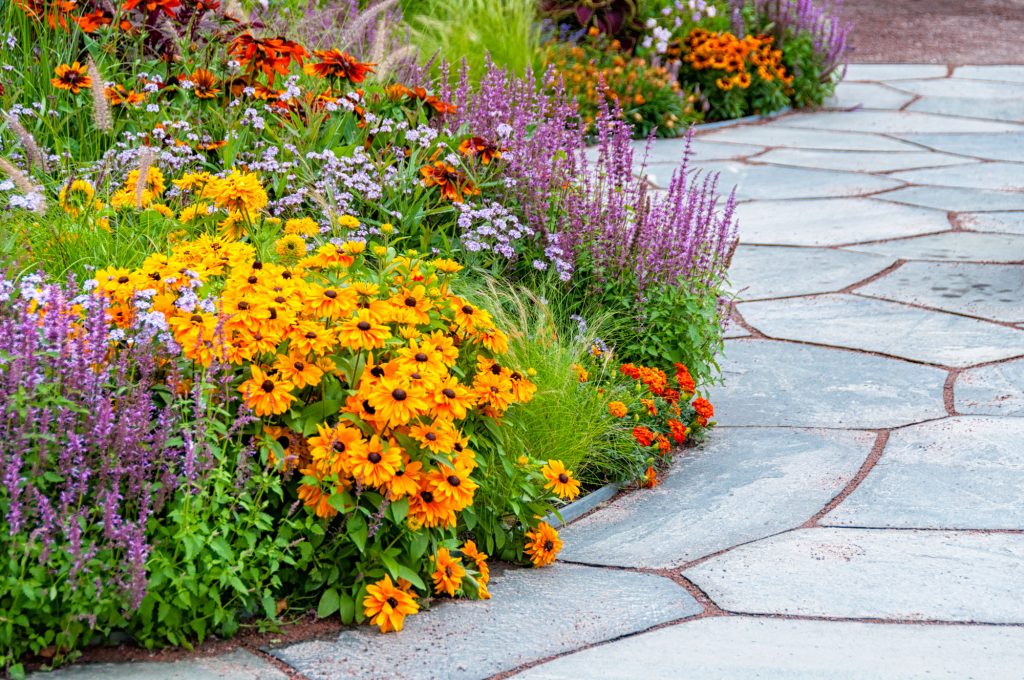
Natural flagstone materials generally run about $6 to $25 per square foot, depending on type, according to HomeGuide. A professionally installed patio costs more because labor, base materials, preparation, cutting, and other construction expenses are included.
A 20×20 patio contains 400 square feet. At $15 to $32 per square foot, the preliminary estimate is about $6,000 to $12,800. Site preparation, stone choice, local labor, access, and installation method may move a contractor's proposal outside those figures.
Basic poured concrete generally starts below natural flagstone. HomeGuide lists poured concrete patios around $5 to $15 per square foot, compared with approximately $15 to $32 for flagstone. Decorative finishes, demolition, grading, drainage, and property conditions affect either project.
Flagstone sits toward the higher end of common patio material prices because natural stone, transportation, preparation, and individual fitting contribute to the installed total. National guides generally put professional installation between $15 and $32 per square foot, though costs vary by project.
Natural flagstone may require excavation, base construction, delivery, heavy material handling, cutting, fitting, grading, drainage, and joint work. Irregular pieces frequently need more individual placement than manufactured units with defined dimensions.
HomeGuide reports approximately $500 to $1,500 per pallet, depending on the stone. Coverage changes with thickness, density, and piece dimensions, so compare the area each pallet covers rather than price alone.
Multiply the planned square footage by an appropriate installed rate. At 300 square feet, applying $15 to $32 produces a preliminary budget of $4,500 to $9,600. Factor in demolition, access, grading, drainage, design details, and other property-specific work before setting the full amount.
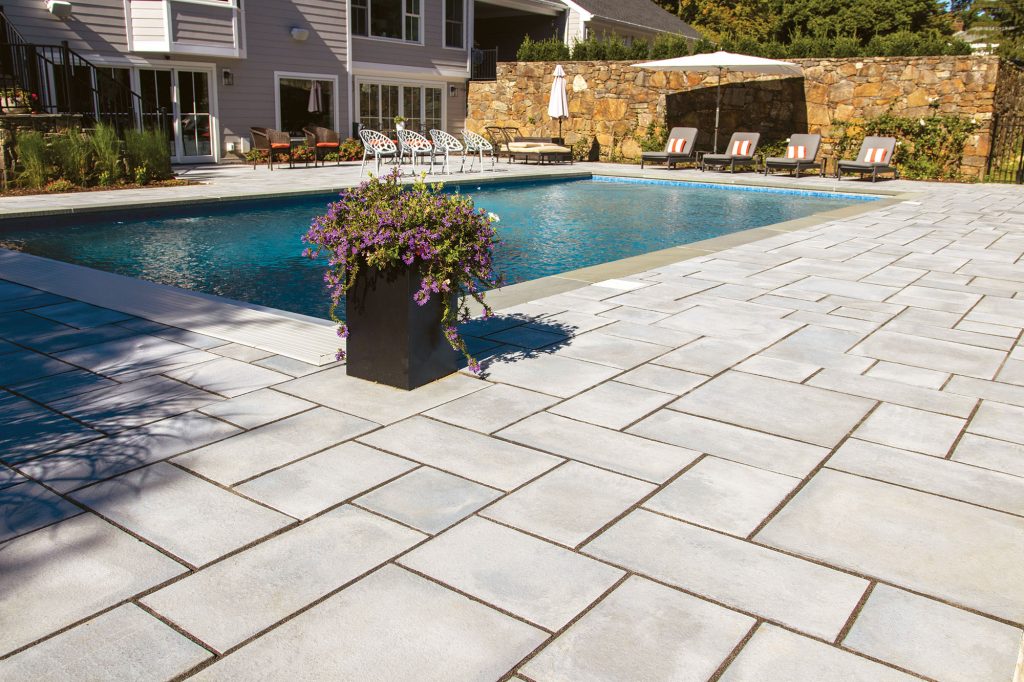
A backyard patio gives everyday life more room to move outside, from morning coffee to dinner with friends after sunset. Choosing the right surface creates a setting that complements your home and supports the ways you want to enjoy it.
Budget sets some parameters, while color, texture, pattern, and layout shape the personality of the finished space. If you love the natural appearance of flagstone, Nicolock's Nicostone collection offers concrete paving options inspired by the texture and variation of natural stone.
See those choices at a Nicolock Design Center, where you can compare full-size samples, colors, textures, and paving styles as your backyard ideas begin to take shape.