Choosing between pavers vs. bricks is one of the most common questions homeowners face before a hardscape project. Search for an answer, and you will find manufacturing specs, pattern guides, and material charts, but very few articles actually help you figure out which option fits your home, your climate, and your budget.
This article provides a clear comparison of the two materials. Bricks and concrete pavers are different products with different strengths. Once you understand those differences, the right choice becomes much clearer. Below, you will find a full breakdown covering appearance, durability, installation cost, long-term maintenance, and the one factor most homeowners overlook entirely.
Hardscape is a significant investment. A professionally installed paver patio typically runs $10 to $25 per square foot installed, with full projects commonly ranging from $10,000 to $30,000, depending on size and material. A new driveway can reach similar figures. Getting the material wrong does not just affect how your outdoor space looks. It affects how much you spend maintaining it, how well it holds up through freeze-thaw cycles, and whether it still looks sharp a decade from now.
Your front walkway is the first impression your home makes. Your patio is where your family gathers through every season. These surfaces carry real weight, both in daily enjoyment and in resale value. A surface that ages well quietly adds to both. One that fades, cracks, or heaves does the opposite.
Both bricks and concrete pavers have real strengths. Both carry real risks if chosen for the wrong application. Choosing well starts with understanding what each material actually is.
These terms get used interchangeably, and that is where much of the confusion starts. They are not the same product.
Traditional bricks are made from natural clay shaped, dried, and fired in a kiln at high temperatures. The firing process makes each unit hard and dense, but it also introduces slight dimensional variations. Individual bricks from the same batch can differ slightly in size, which matters during installation. Clay is inherently porous, a property that shapes how bricks absorb moisture and respond to freeze-thaw cycles.
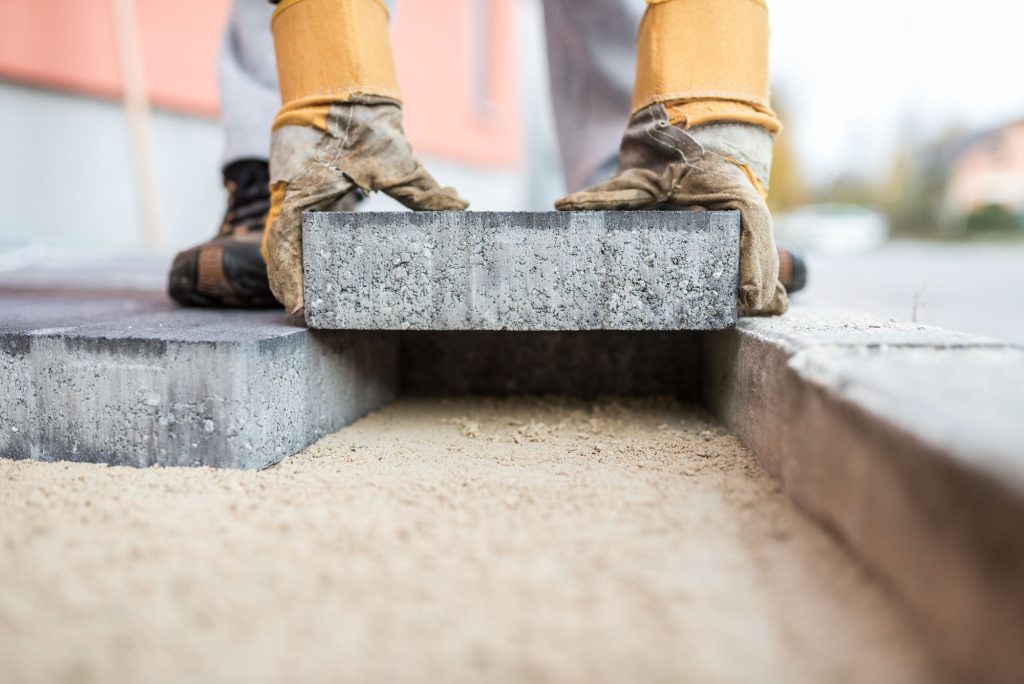
Concrete pavers are manufactured from a precise blend of Portland cement, aggregates, sand, and pigments. That mixture is compressed into molds under high pressure, then air-dried in a controlled environment. The result is a product with consistent dimensions, high compressive strength (roughly three times stronger than poured concrete), and color that runs through the full depth of the paver, not just on the surface.
At Nicolock, that process goes one step further. paver-shield™ technology concentrates an extra layer of Portland cement and iron oxide pigment at the wear surface, creating a denser, tighter finish that protects both the structure and the color beneath.
Brick pavers (clay units used specifically for paving) are a subset of the broader paver category. Any unit installed to surface an outdoor area can be called a paver. That is why the two terms get blurred. For clarity, this article uses "pavers" to mean concrete paving stones and "bricks" to mean clay-based units fired in a kiln.
The right material depends on your home's architecture, your local climate, and how much traffic that surface will take. Most comparison articles skip this question entirely. It is, in fact, the most important one.
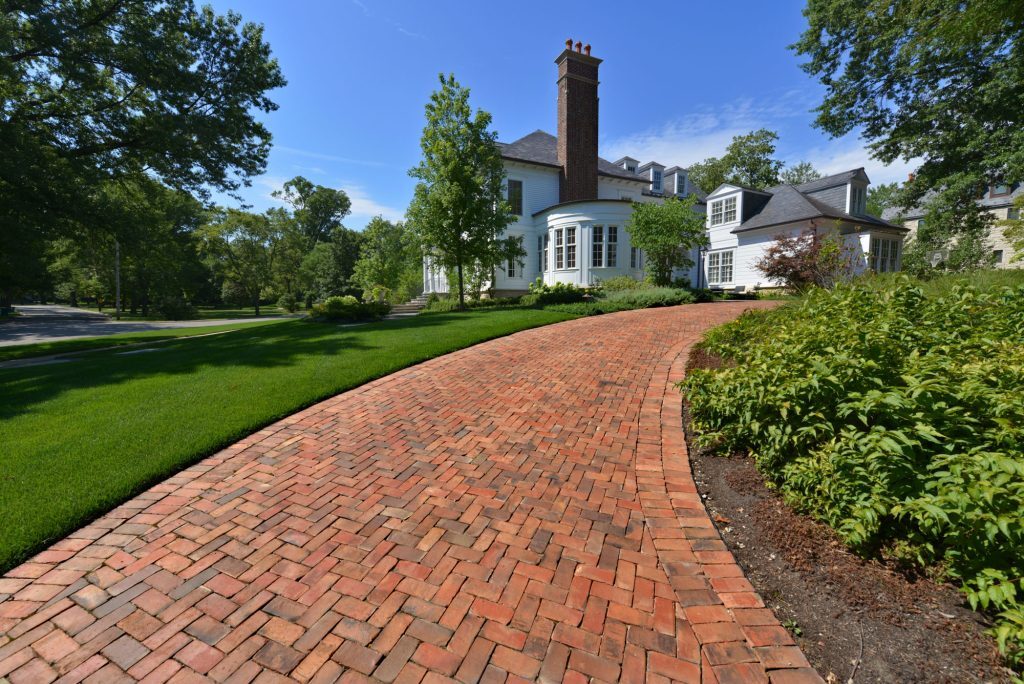
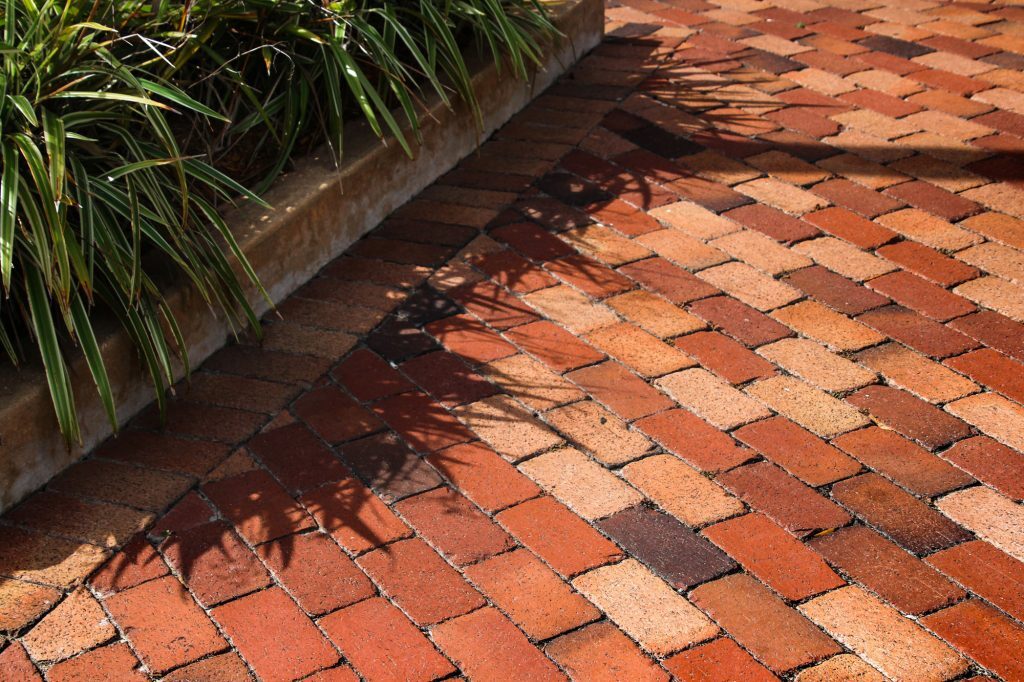
For homes with traditional or historic architecture, brick can be the more cohesive visual choice. The warm reds, earthy browns, and muted tones of clay brick complement colonial facades, farmhouse styles, and older New England homes naturally. That look comes from the clay minerals themselves. No color treatment is required. The trade-off is a fixed palette. You get the colors that clay provides, typically reds, pinks, and browns, and nothing beyond that range.
Brick also holds its color well over time. Because the pigmentation comes from mineral content throughout the unit, surface wear does not alter its appearance the way it affects other materials. Some homeowners find clay pavers more attractive ten years after installation than at the time of installation. That natural aging is a real advantage, provided you can work within a narrow color palette.
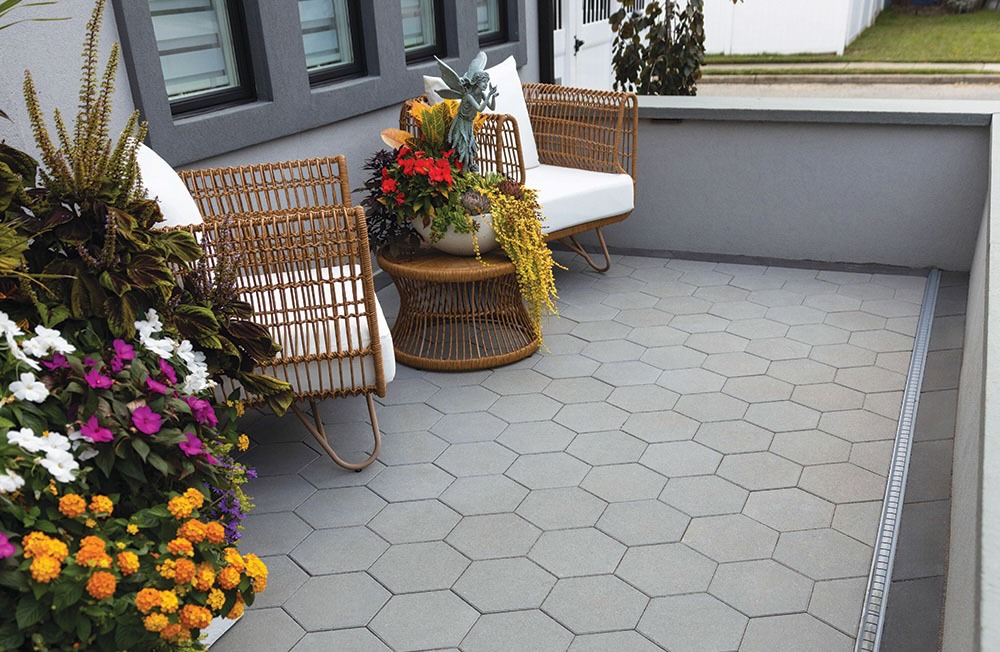
For homeowners who want design control, concrete pavers are in a category of their own. They come in shapes ranging from traditional 4"x8" rectangles to large-format 24" slabs, plank styles, and irregular stone looks. Colors span warm earth tones, cool grays, charcoals, and multi-tone blends. Nicolock's advanced color blending technique creates variegated tones across the surface of a single paver. The tones vary naturally rather than appearing as uniform blocks of color, a natural variation that makes a finished project look intentional rather than installed.
Consider what each material allows:
Brick pavers:
Concrete pavers:
Nicolock's line includes products from classic paving stones to Nicostone large-format slabs, which mimic natural flagstone and travertine while offering the structural consistency of manufactured concrete. That range means a patio, retaining wall, fire pit surround, and front walkway can share a consistent color family, making the finished property feel designed rather than assembled from mismatched parts.
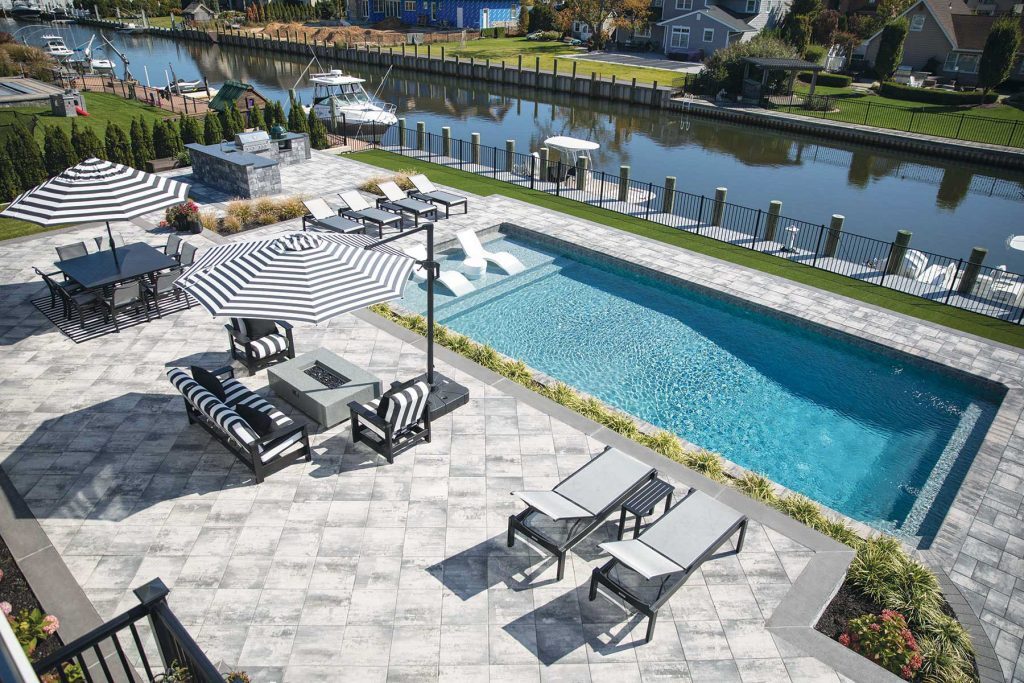
For homeowners in the Northeast (Nicolock's primary market spans Long Island through Connecticut, New Jersey, Maryland, Virginia, and beyond), climate is a major factor. Clay is porous. Budget brick pavers absorb water, and as that water freezes and expands, units can crack or chip over time. Higher-quality vitrified brick pavers reduce this risk, but performance varies significantly by product quality.
Nicolock concrete pavers are specifically engineered for cold-weather conditions. The low-porosity design limits water absorption, reducing the freeze-thaw damage cycle. Installation over a compacted aggregate base creates a surface strong enough to bear load yet flexible enough to shift with seasonal ground movement without cracking or heaving. That engineering is backed by a transferable, limited lifetime warranty on many products.
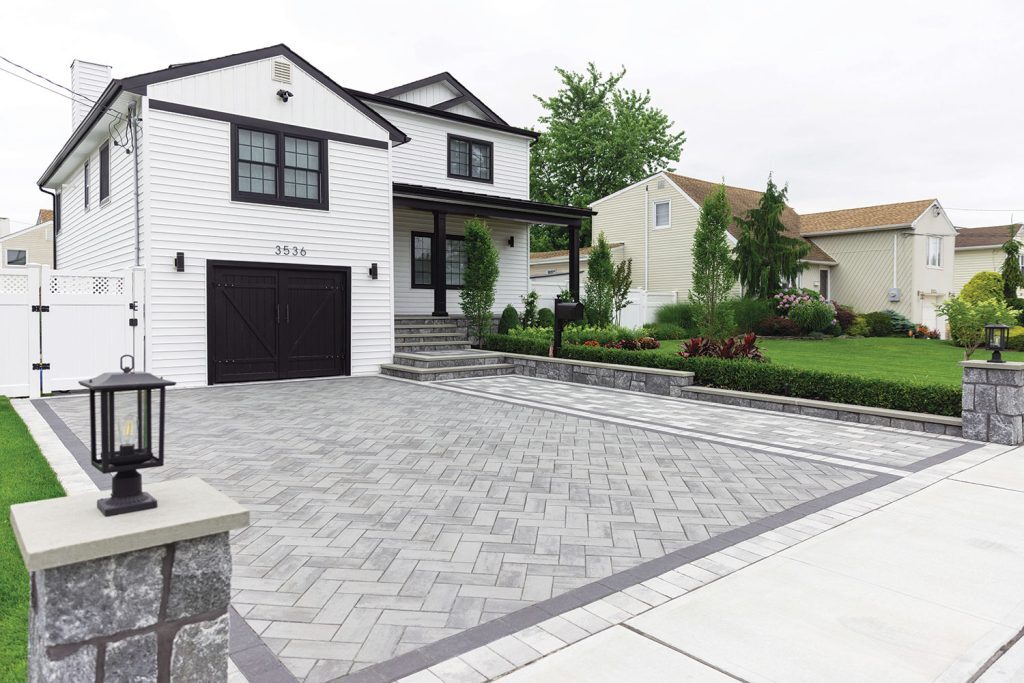
Light-use garden paths and decorative borders can work with either material. Driveways, pool decks, and high-traffic entertaining patios are a different situation. For residential driveways, Nicolock recommends 8 to 12 inches of compacted base material with a 2-3/8" thick paver in a herringbone pattern. That configuration distributes vehicle load across the interlocked surface rather than concentrating stress at individual joints. Brick pavers set in mortar do not offer the same load-bearing capacity under repeated vehicle loads.
Rather than reading every feature comparison, answer these four questions. The answers will guide your decision more reliably than any spec sheet.
Standard concrete pavers can fade. UV exposure and weather gradually erode the surface, exposing aggregate beneath and dulling the original color. This is a documented issue with many concrete paver products, acknowledged across the industry.
Brick ages differently. Mineral content provides the pigmentation throughout the unit, so surface wear does not change its look in the same way. The limitation is the palette. You are choosing within a narrow band of natural clay tones.
Not all concrete pavers carry the same fading risk. The difference comes down to how they are manufactured, and that is where paver-shield™ technology matters. More on that below.
Clay brick pavers can cost up to 30% less in raw materials than premium concrete pavers. That is a real difference worth knowing upfront. However, the labor side often tells a different story. Kiln-firing introduces dimensional variations among individual bricks, requiring more precise cutting, alignment, and adjustment during installation. Labor hours for brick installations are typically higher than for concrete paver projects.
Site conditions also significantly influence total cost. Grading, drainage corrections, base depth, and edge restraint requirements often account for a larger share of the final bill than the material choice itself. Compare installed project quotes, not material-only prices, before making any cost judgments.
As a general benchmark, concrete pavers in the Northeast run approximately $10 to $25 per square foot installed, depending on product, pattern complexity, and site conditions. Brick installations often land in a similar range once labor is factored in.
For most Northeast homeowners, engineered concrete pavers built to withstand freeze-thaw conditions carry less risk than clay brick. Nicolock pavers' low-porosity construction limits the water absorption that drives cold-weather damage. Proper installation over a compacted aggregate base adds structural flexibility, allowing the surface to move slightly with the ground rather than fracture against it.
Budget-grade concrete pavers can fail just as easily as low-quality brick in harsh conditions. The manufacturing standard matters as much as the material category. That is why choosing a product backed by a lifetime warranty is meaningful, not just a marketing claim.
Brick holds a clear edge here for homeowners who want a low-maintenance surface. Clay pavers do not require sealing. They age gracefully and, in most cases, need only basic cleaning to stay in good shape.
Standard concrete pavers typically need resealing every three to five years to protect their surface color and structural integrity. That means recurring cost and recurring time.
Two maintenance notes apply to both materials equally:
Standard concrete pavers fade. The surface erodes under UV exposure and weather over years, exposing aggregate and dulling the original color. For a product expected to last decades, that is a meaningful liability that affects both appearance and perceived home value.
Brick handles color differently. Mineral pigmentation runs through the full unit, so surface wear does not alter it. The cost is a limited palette that you cannot change.
Nicolock's paver-shield™ technology was built to solve the concrete fading problem at the source: during manufacturing, not after the fact.
The paver-shield™ process concentrates an extra layer of Portland cement and iron oxide pigment at the wear surface of every paver. The result is a surface that is tight and dense rather than coarse and open. The aggregate that gives the paver its structural strength stays sealed beneath that dense wear layer, protected from the surface erosion that causes standard pavers to fade. Iron oxide pigments used in paver-shield™ pavers are guaranteed not to fade.
paver-shield™ is not a coating applied after manufacturing. It is not a sealer that wears off over time. The protection is built into the paver itself, from the start.
Here is what that means in practice:
Nicolock has been manufacturing hardscape products in the United States for more than 50 years. That track record, built through decades of product development and quality control, is the foundation behind paver-shield™. The company is 100% U.S. owned and operated, with manufacturing facilities on Long Island and in New Jersey, Maryland, and Connecticut.
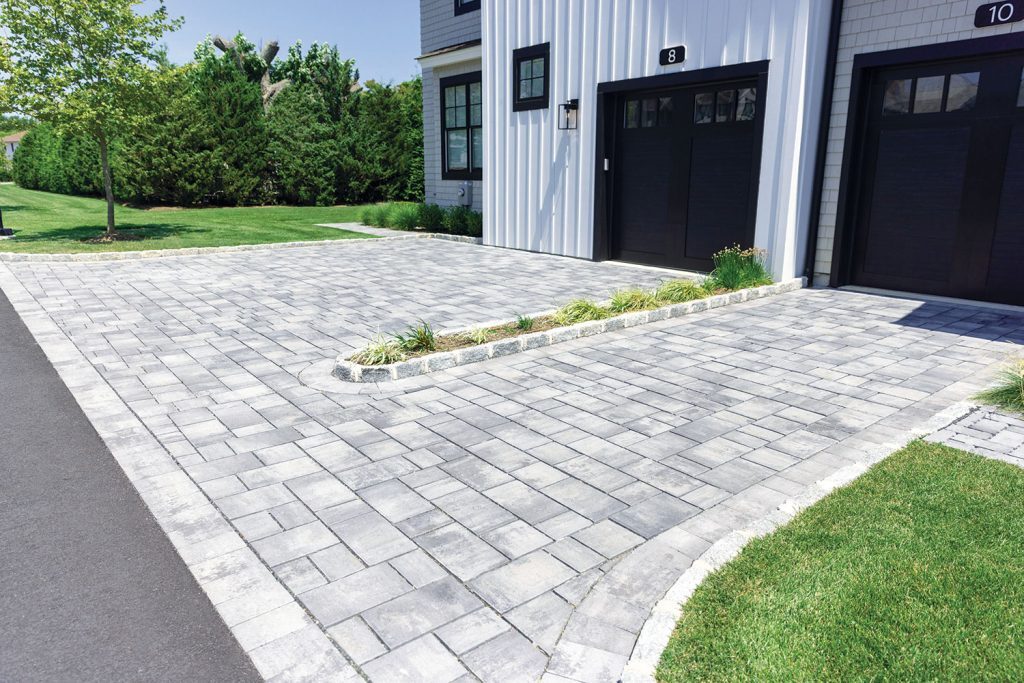
Not every project calls for the same material. Here is a straightforward breakdown by application type.
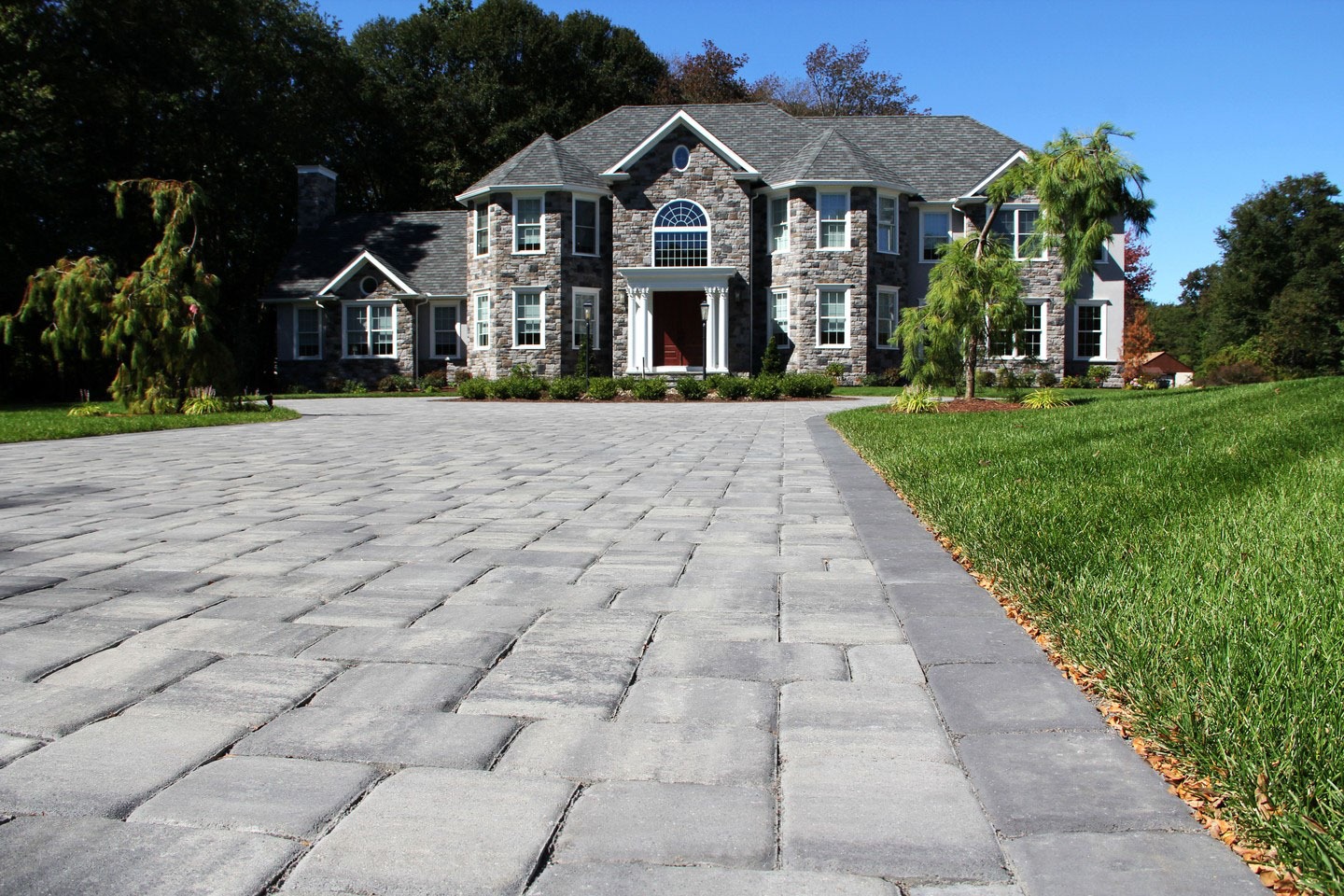
Concrete pavers. Repeated vehicle weight requires structural performance that mortar-set brick installations cannot reliably provide long-term. Nicolock recommends a herringbone pattern for driveways with 8 to 12 inches of compacted base material. The interlocking installation distributes load across the surface rather than concentrating stress at joints.
Patios and Outdoor Entertaining Areas
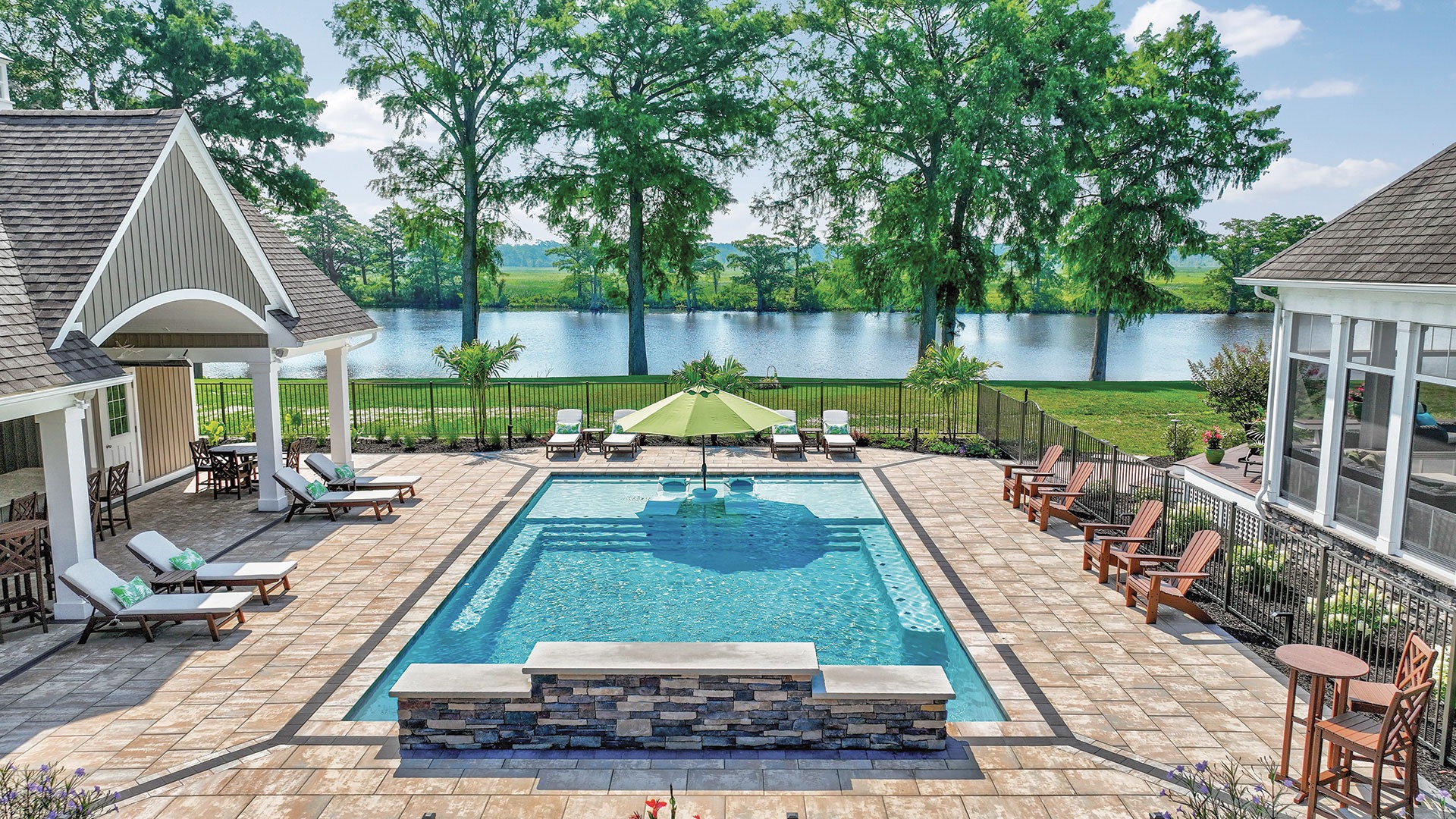
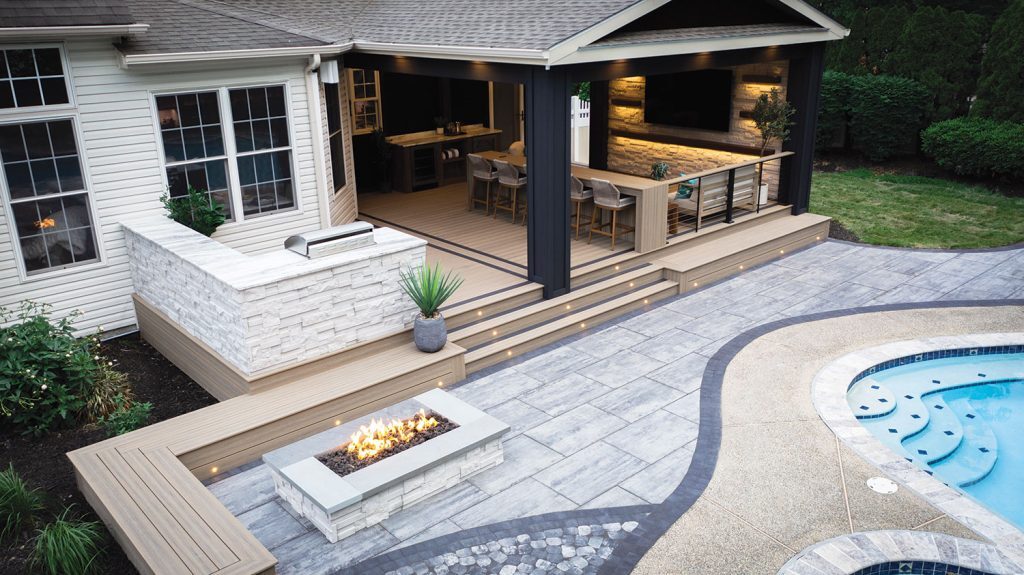
Concrete pavers. Design flexibility, color options, and the ability to coordinate with fire pits, outdoor kitchens, and retaining walls make concrete pavers the clear choice for primary outdoor living spaces. Nicolock's outdoor living line includes fire pit kits, outdoor kitchen systems, grills, and outdoor ovens, all designed to integrate with the same paving stone system for a cohesive finished result.
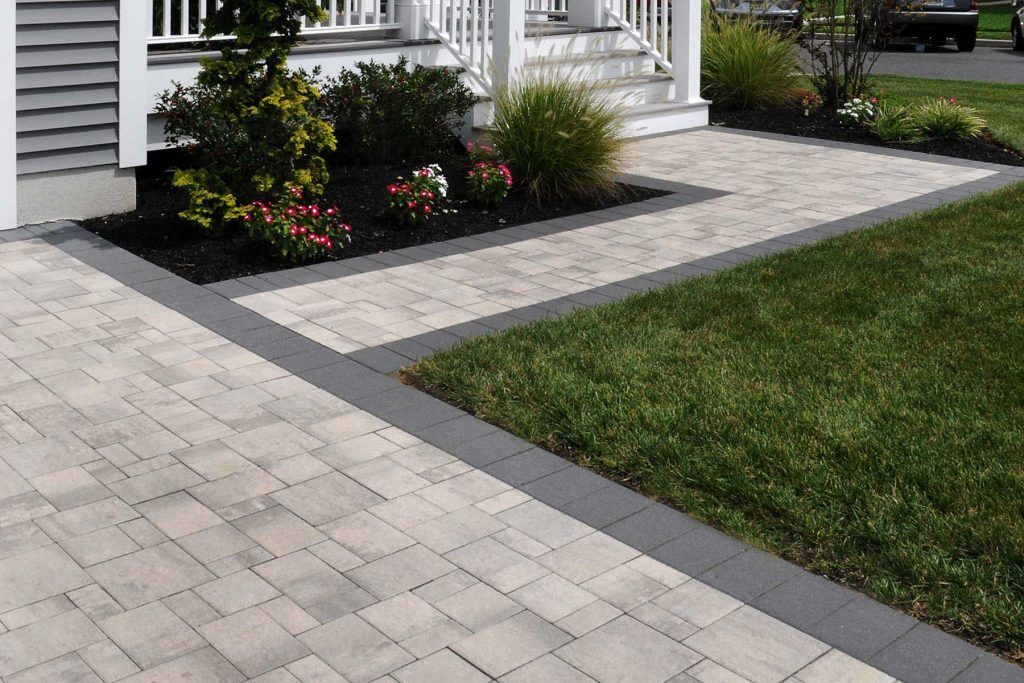
Either material, depending on home style. Brick walkways complement traditional and colonial homes naturally. Concrete pavers suit modern, transitional, and custom homes, offering far more design options. In freeze-thaw climates, engineered concrete pavers carry less moisture risk at front entries where ice and snow accumulate.
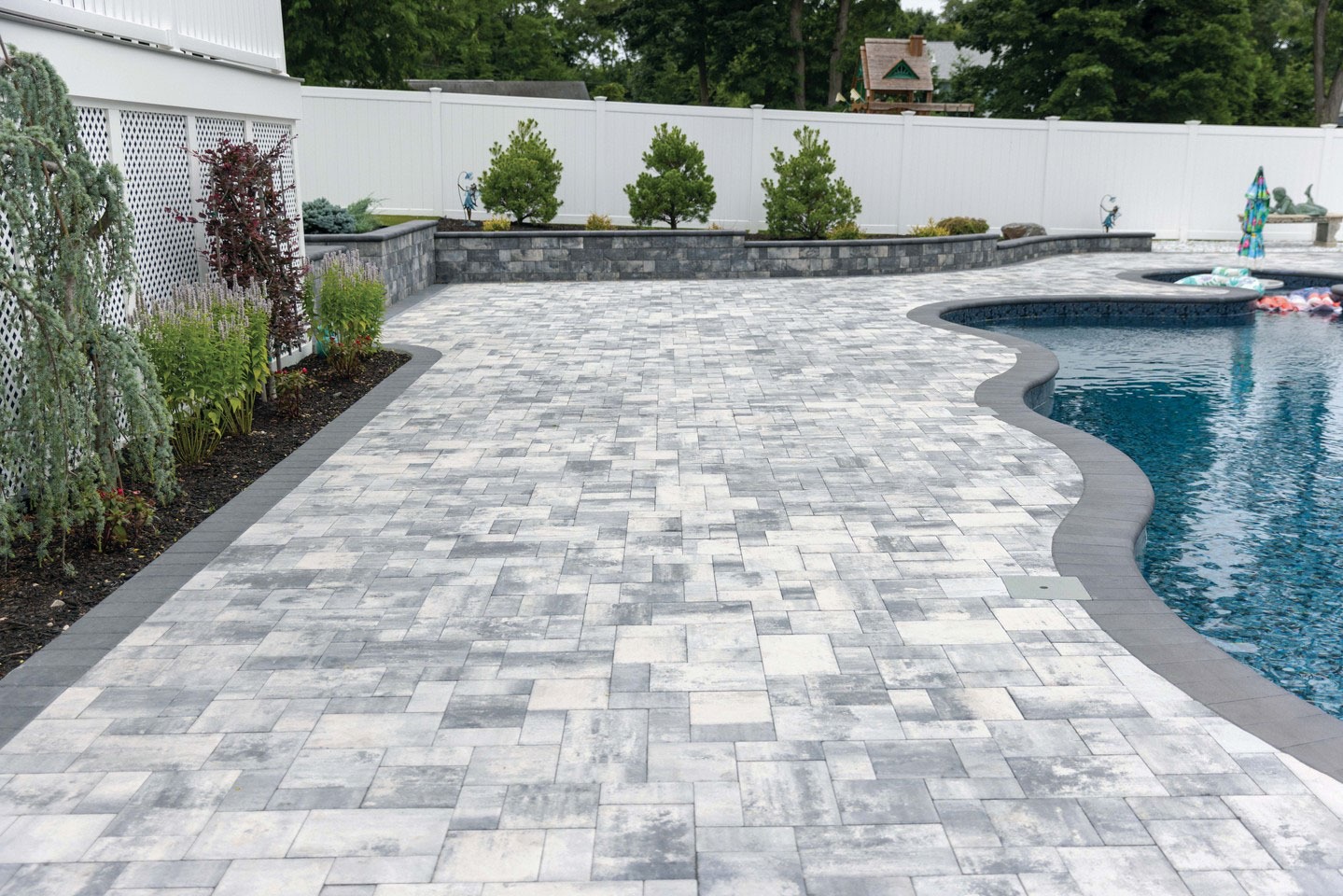
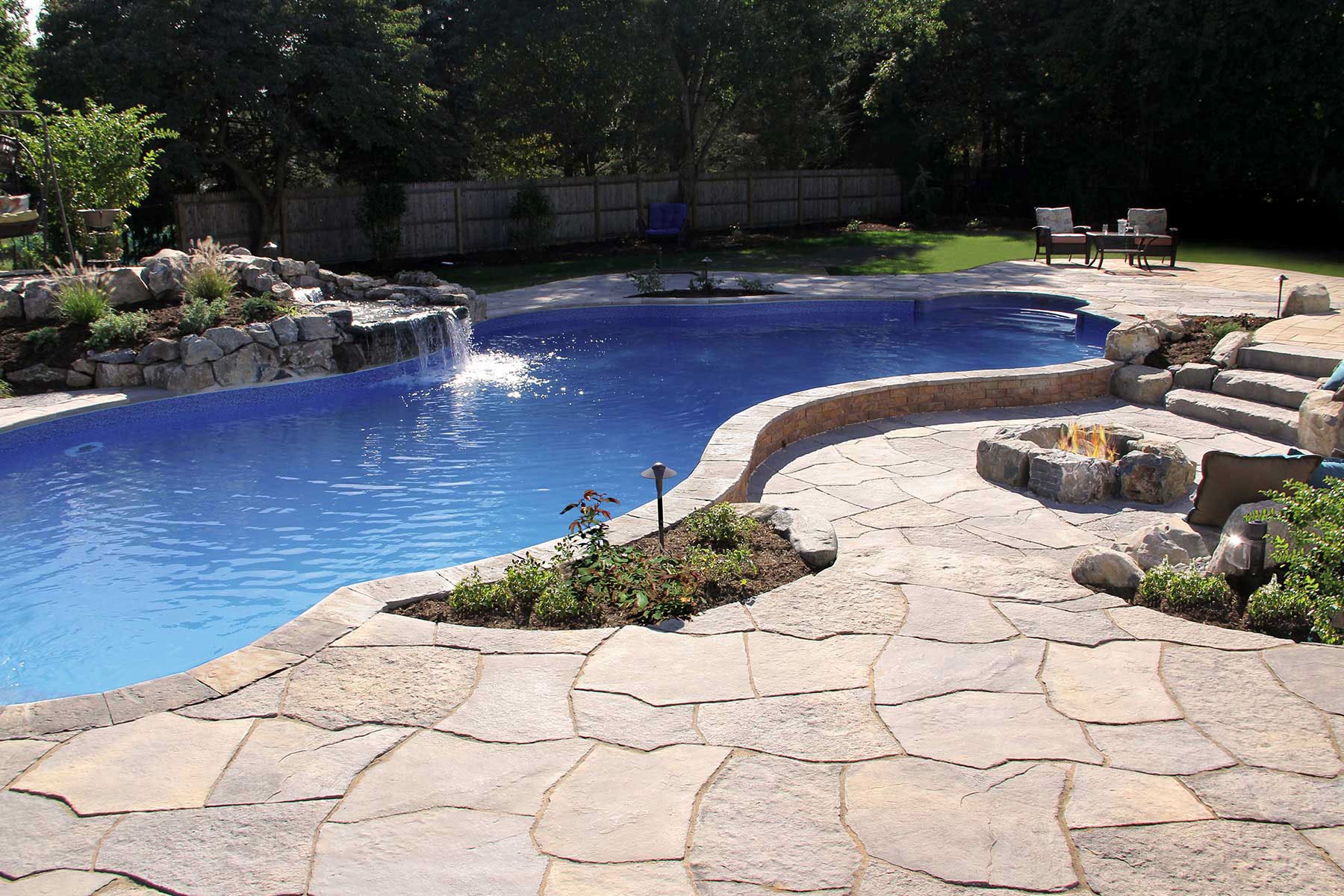
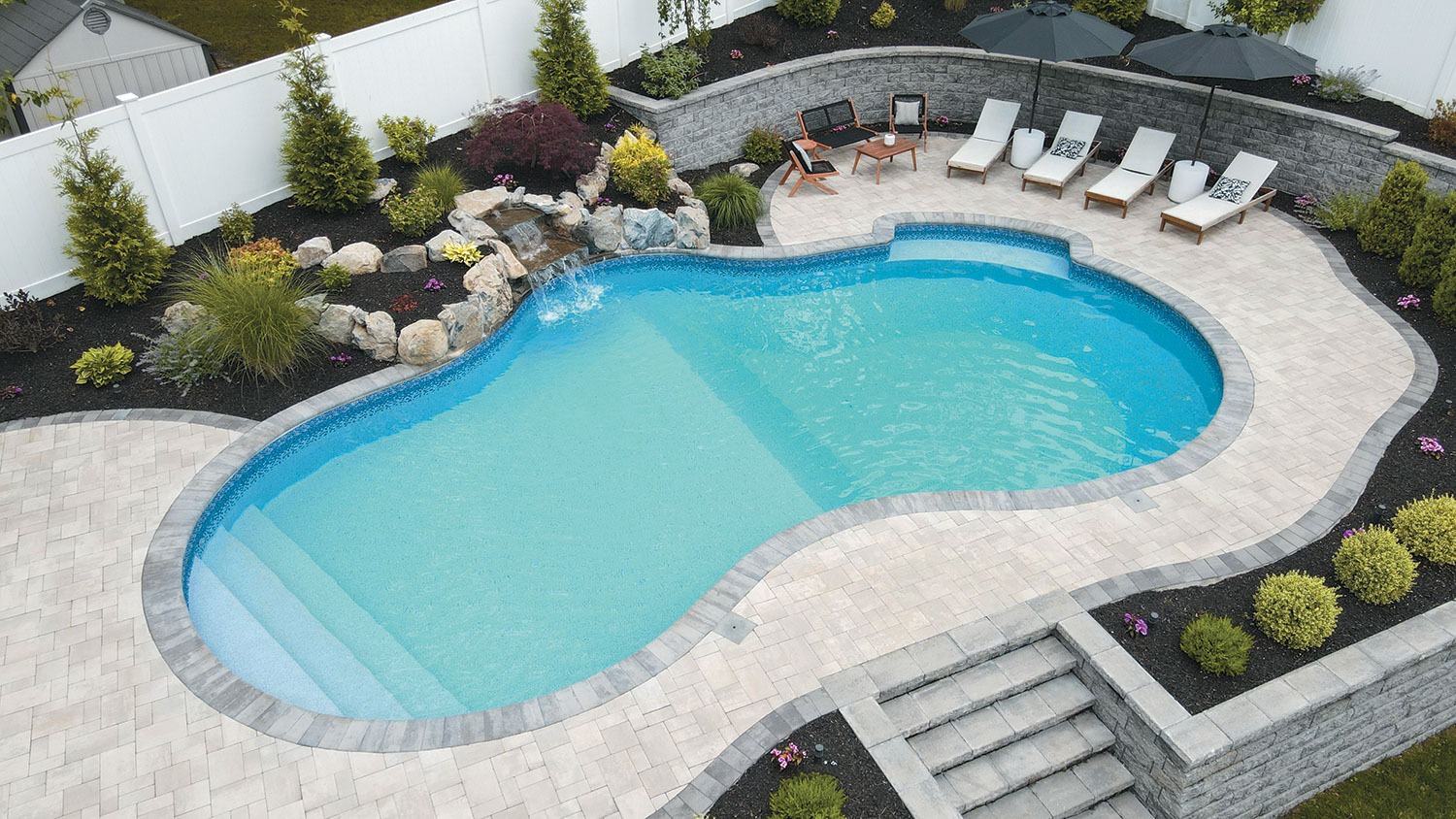
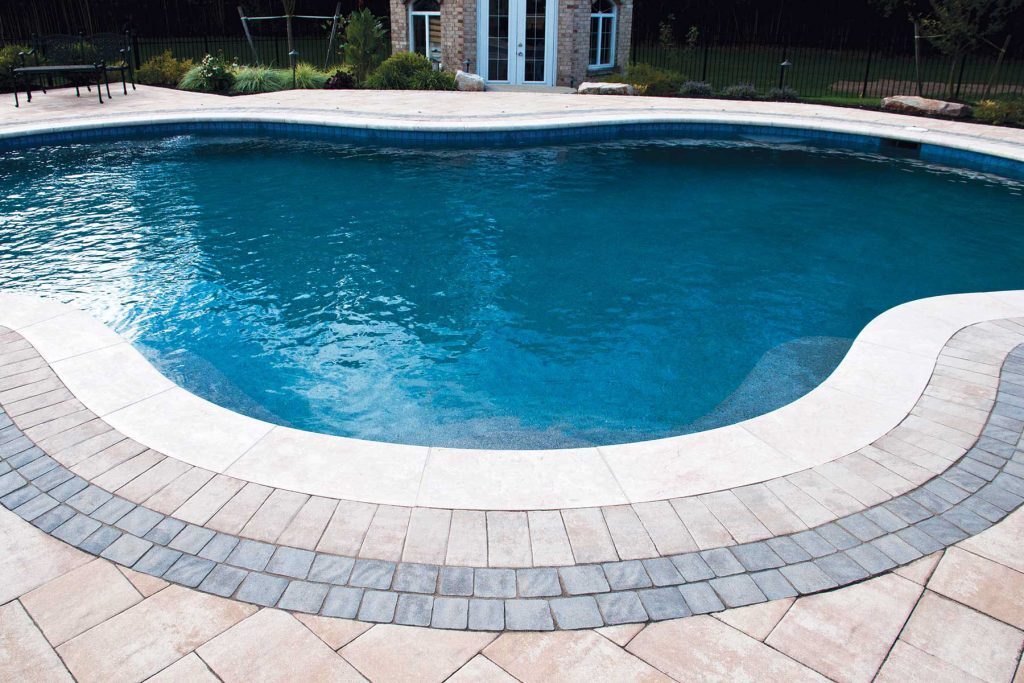
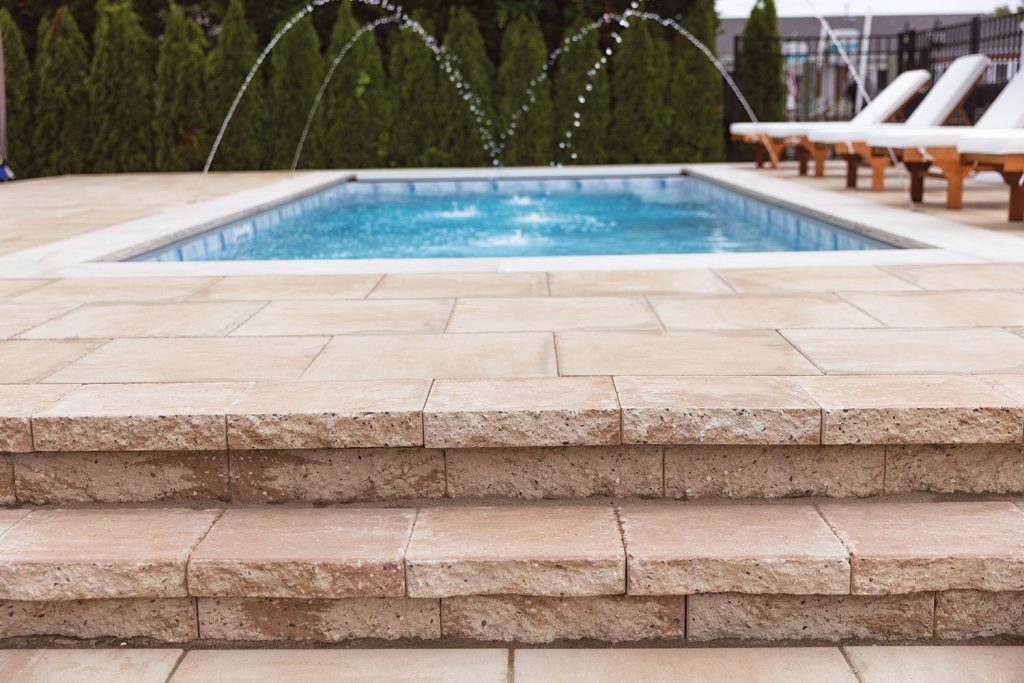
Concrete pavers. Slip resistance, moisture management, and cooler surface temperatures make pavers the preferred choice around water. Nicolock's Fullnose and Pool Coping Pavers provide clean, finished edges for pool surrounds. Lighter color selections reflect sunlight and stay cooler underfoot. The joints between pavers allow moisture to dissipate naturally rather than pool on top.
Concrete pavers. Fire pits need a solid, heat-tolerant foundation. Concrete pavers are well-suited for this application. Nicolock's outdoor living products, including fire pit kits and complete outdoor kitchen packages, integrate directly with the same paving system, creating a unified hardscape from the ground up.
Brick earns its place here. For small accent paths, decorative garden edges, or vintage-inspired features, brick's natural character and lower material cost can be entirely appropriate. Not every application demands the full performance of engineered concrete pavers.
| Category | Brick Pavers | Concrete Pavers |
|---|---|---|
| Material | Natural clay, kiln-fired | Portland cement, aggregate, pigment |
| Appearance | Warm, classic, rustic | Wide range of styles, textures, and finishes |
| Color range | Reds, browns, muted neutrals | Warm, cool, and multi-tone blends |
| Long-term color | Stable but fixed | Varies by product; paver-shield™ pavers guaranteed not to fade |
| Shape options | 4"x8" rectangle primarily | 4"x8" to 24" slabs, planks, irregular shapes |
| Laying patterns | Running bond, herringbone, basket weave | Unlimited combinations |
| Installation complexity | Higher; dimensional variation requires precision | More consistent; manufactured to uniform dimensions |
| Freeze-thaw performance | Variable by product quality | Engineered for cold-weather resistance |
| Maintenance | No sealing required | Standard pavers: reseal every 3 to 5 years; paver-shield™: warranty-backed protection |
| Material cost | Often up to 30% less than premium concrete | Higher for premium products |
| Long-term value | Best for decorative, light-use applications | Superior for driveways, patios, pools, and high-use areas |
Do concrete pavers fade over time? Standard concrete pavers can fade as UV exposure and weather erode the surface layer, exposing aggregate beneath and dulling the color. Nicolock's paver-shield™ pavers use iron oxide pigments guaranteed not to fade, protected by a manufacturing process that concentrates extra cement and pigment at the wear surface.
Do brick pavers need to be sealed? Brick pavers generally do not require sealing. Their color comes from mineral content throughout the unit, so the surface does not need protective treatment to maintain its appearance. Standard concrete pavers, by contrast, typically need resealing every three to five years.
How long do concrete pavers last compared to bricks? Both materials can last decades when installed correctly. Concrete pavers installed over a proper compacted aggregate base in freeze-thaw climates are engineered to resist cracking and heaving. Nicolock backs many products with a transferable limited lifetime warranty. High-quality brick can also have a long lifespan, though performance varies more by product tier.
What is polymeric sand, and why does it matter? Polymeric sand is a specialized blend of fine sand and binding agents used to fill the joints between pavers. When activated with water, the binders harden, locking the sand in place. This reduces weed growth, resists ant and insect activity, and prevents joint erosion. It is the standard joint material recommended for both concrete paver and brick paver installations.
Can pavers be used for a driveway? Yes. Concrete pavers are well-suited for residential driveways. Nicolock recommends 8 to 12 inches of compacted base material with a 2-3/8" thick paver in a herringbone pattern for standard residential vehicle traffic. Brick pavers are generally not recommended for driveway use due to their mortar-set installation and susceptibility to load stress.
What does a paver patio cost per square foot? Installed costs in the Northeast typically range from $10 to $25 per square foot for concrete pavers, depending on product selection, pattern complexity, and site conditions. Brick paver installations often land in a similar range once labor is included. Material costs alone can be 20% to 30% lower for brick, but higher installation labor frequently offsets that difference.
What is paver-shield™? paver-shield™ is Nicolock's patented manufacturing technology that concentrates Portland cement and iron oxide pigment at the paver's wear surface. The result is a denser, tighter finish that protects color and surface texture over time. paver-shield™ is not a coating. It is built into the paver during manufacturing. Products made with paver-shield™ carry iron oxide pigment guaranteed not to fade and are backed by a transferable limited lifetime warranty.
If You Want Timeless Character on a Tighter Material Budget
Quality brick pavers are a legitimate choice for smaller decorative projects, traditional home styles, or situations where design flexibility takes a lower priority. Natural color stability and no sealing requirements are real advantages. For the right project on the right home, brick earns its place.
If You Want Durability, Design Range, and Color That Lasts
For patios, driveways, pool decks, walkways, and complete outdoor living spaces, concrete pavers outperform brick across every performance metric that matters over a 10- to 20-year horizon. Structural strength, design range, freeze-thaw resistance, and system compatibility all favor concrete pavers in high-use, high-visibility applications.
If You Want Concrete Pavers That Hold Their Color
Look for paver-shield™. The fading risk that comes with standard concrete pavers is real and documented. It is not, however, inevitable. Nicolock's paver-shield™ technology addresses it at the manufacturing level, delivering a warranty-backed surface that holds its color year after year without the recurring maintenance cycle standard products demand.
With nearly 1,000 combinations of shape, color, and texture, plus a full outdoor living product line covering fire pits, kitchen systems, retaining walls, steps, and pool coping, Nicolock makes it possible to build the outdoor space you have been planning.
Whether you are still planning or ready to move forward, Nicolock provides several ways to get expert guidance and see products in person.
Visit nicolock.com to browse the full product catalog, use the color visualizer tool, or request a free color sample.