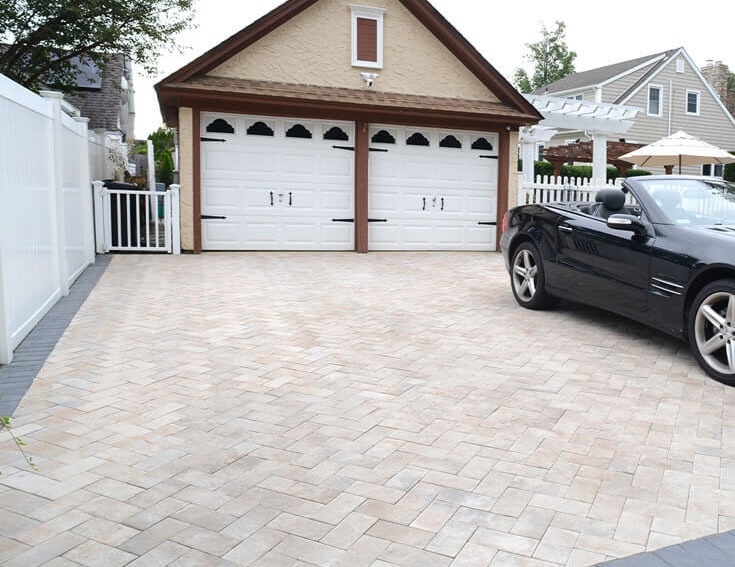
Pulling into your driveway should feel like arriving home, not entering a parking area. The best pavers for driveways bring warmth, texture, and personality to that everyday moment while standing up to cars, turning tires, rain, snow, and years of regular use.
Choosing well means looking beyond the sample that first catches your eye. Thickness, vehicular suitability, drainage, base preparation, and layout deserve attention before color enters the conversation. Once those needs are settled, the creative side opens up.
With more than 50 years of concrete manufacturing experience, Nicolock gives you plenty of room to make that choice personal. Our current collection includes 28 color blends, along with shapes and finishes suited to architectural styles ranging from classic to contemporary.
Key Takeaways
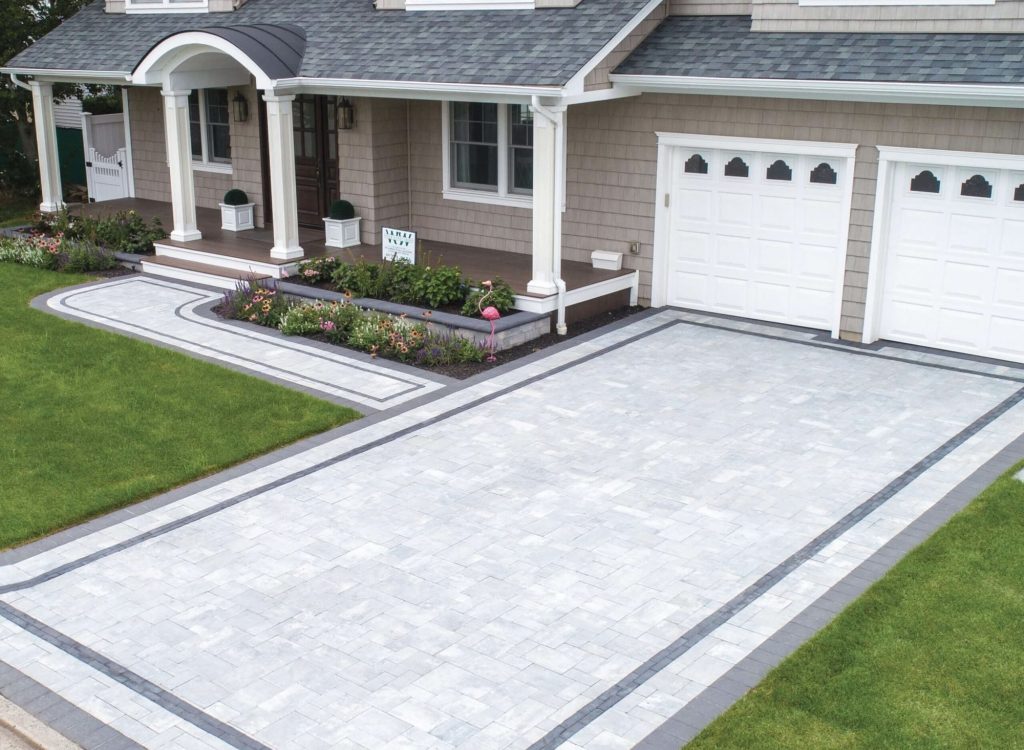
Driveway paving stones have a tougher job than the materials beneath a backyard dining set. Parked vehicles add weight, while braking, acceleration, and turning introduce forces that pedestrian spaces rarely experience.
Before comparing colors, make sure the paving stone is approved for vehicles. Then consider:
For standard residential applications, Nicolock recommends paving stones at least 60 mm thick. Appropriate 80 mm products make sense where trucks, trailers, or other heavier vehicles regularly enter the property.
Those requirements narrow the field. Instead of wondering whether a favorite profile will hold up, you can make creative decisions among choices intended for the job.
Good driveway planning doesn't force you to choose between performance and personality. Technical needs establish the boundaries. Your home supplies the inspiration.
Monday morning might mean two cars leaving for work. Saturday could bring extra vehicles as friends arrive and move between the front walk, patio, and backyard. Over time, thousands of arrivals, departures, turns, and stops add up.
Interlocking concrete paving stones handle those demands as a system. Individual units work with their joints and prepared foundation rather than behaving like one continuous slab.
That construction offers another practical advantage. If underground access or an isolated repair becomes necessary, a contractor can lift affected units and reset them afterward.
Large paving stones bring clean lines to modern homes, but visual weight isn't structural strength.
Some large-format units are designed for cars. Others belong in pedestrian areas. Manufacturer specifications settle the question.
Blue Ridge Contemporary 80MM offers a good Nicolock example. Its broad proportions and smooth face create an uncluttered look, while the 80 mm profile is intended for vehicular applications.
Run your eye from the driveway toward the building. Brick, stone veneer, siding, roof color, steps, and landscape materials already create a visual vocabulary.
The paving should join that conversation.
Stone Ridge, for example, has a lightly textured face and chamfered edges that introduce natural character without trying to imitate irregular quarried stone. Its surface also adds traction, a useful consideration during wet weather.
Smoother profiles tell a different story. Paired with restrained geometry, they suit homes where long lines and larger fields of color carry more of the visual interest.
Driveways spend every day outside. Sun, precipitation, seasonal changes, tires, and regular activity become part of life on the surface.
Nicolock paver-shield™ technology creates a dense face with vibrant pigments and color throughout the paving stone. The technology is built into the manufacturing process rather than added later as a topical coating.
With 28 available color blends across the Nicolock collection, you can draw from warm masonry, cool siding, natural stone, dark trim, or surrounding hardscapes. A border can add contrast, while a quieter blend lets the architecture remain the focus.
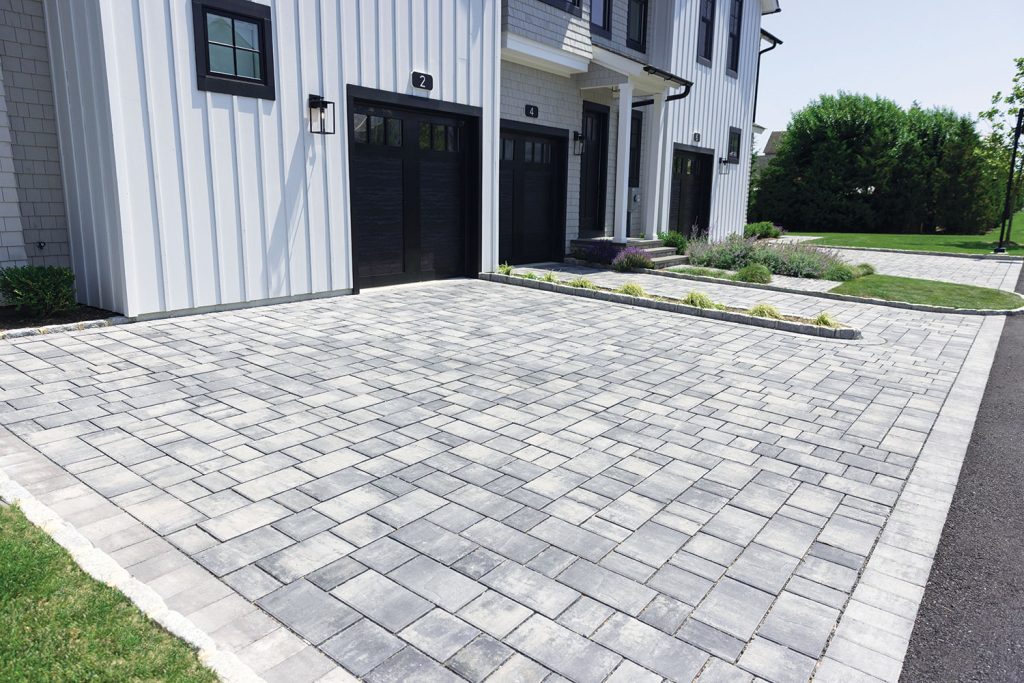
The best paver for driveways suits the property's traffic, weather, drainage needs, maintenance expectations, and architecture. Concrete paving stones offer broad flexibility, though brick, natural stone, and permeable systems each bring their own character.
Few materials offer as many ways to shape the arrival at your home.
Concrete paving stones can move from cobblestone-inspired profiles to crisp contemporary geometry without leaving the same material category. Manufactured dimensions also support established laying patterns and coordinated borders.
Nicolock offers driveway-suitable choices including Colonial Cobble, Stone Ridge, Hex Paver, Paragram Paver, and Blue Ridge Contemporary 80MM. Many feature paver-shield™ technology for vibrant color and a dense wearing layer.
Individual-unit construction also brings a practical benefit. If a localized repair is needed, you can often lift and reset affected pieces rather than replacing a broad continuous section.
Brick and clay feel at home around traditional architecture. Familiar proportions work naturally with established layouts and homes that already include masonry details.
Don't rely on appearance alone. Vehicular approval, thickness, weather suitability, and care requirements vary among products.
Granite, cobblestone, and other appropriate stones give a driveway variation that comes directly from nature. Differences from one piece to another become part of the finished character.
Material properties vary just as much. Porosity, dimensions, strength, upkeep, installation requirements, and weather response should all factor into the choice.
After a summer downpour, drainage suddenly feels every bit as meaningful as color.
Permeable pavement gives rainfall a route through openings in the finished area and into an engineered aggregate system below. When the complete assembly is designed correctly, it can reduce runoff while maintaining a vehicle-ready surface.
Nicolock options such as Eco-Tre and SF-RIMA® give projects with stormwater needs an alternative to conventional pavement. Their performance depends on more than the visible units. Joints, aggregates, underlying layers, soil conditions, and maintenance all matter.
Use this comparison to narrow your options before looking at individual paving stones.
| Material | Character | Style Options | Maintenance | Weather Factors | Main Consideration |
| Concrete pavers | Classic through modern | Extensive profiles, colors, textures, and layouts | Individual units can be lifted and reset | Select a product suited to regional conditions | Verify vehicular rating and thickness |
| Brick or clay | Established and traditional | Strong pattern possibilities | Care varies by material | Confirm regional suitability | Check load specifications |
| Natural stone | Organic and individual | Variation comes naturally from the material | Depends on stone type | Porosity and weather response differ | Select appropriate stone and dimensions |
| Permeable paving | Traditional through contemporary | Multiple layouts available | Openings require suitable care | Useful where runoff needs management | Complete system must support infiltration |
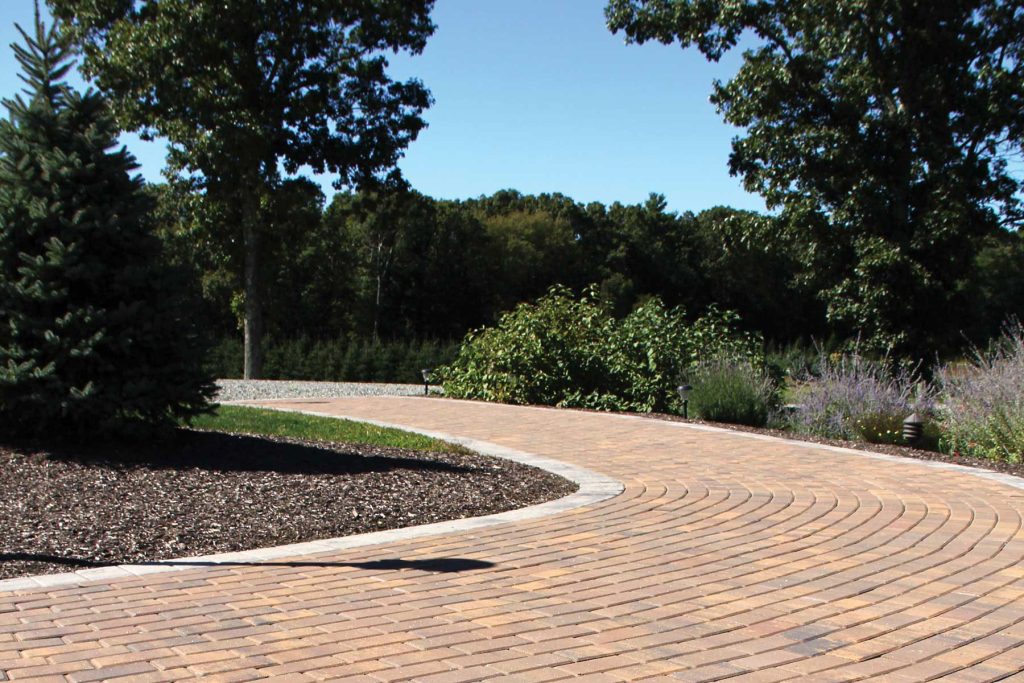
The most attractive paving stone in the catalog still relies on what you never see.
Beneath the finished drive, excavation, soil, aggregate, compaction, bedding material, and water management form the working foundation. Shortcuts here may eventually show themselves above as settling, movement, or uneven areas.
A front walk and a driveway don't ask the same thing from their foundations.
Cars repeatedly load the pavement, so site preparation matters even more. Soil conditions, climate, expected traffic, and local requirements help determine how a professional should build the supporting layers.
No single specification fits every property. An experienced hardscape contractor can evaluate the site before determining the appropriate approach.
Edge restraints rarely get the attention the paving field does, yet they serve a valuable purpose.
These components support the perimeter and help limit outward movement. Joint material works within the paved field so individual units function as a connected system.
Much of what makes an installation dependable is hidden once the work is finished.
Water doesn't wait until the rest of the project is planned.
Grading should direct runoff where it belongs and limit unwanted pooling near structures. Sites with specific stormwater needs may call for permeable paving or another drainage strategy.
Make that decision early. Fixing water problems after construction usually means disturbing work that's already been completed.
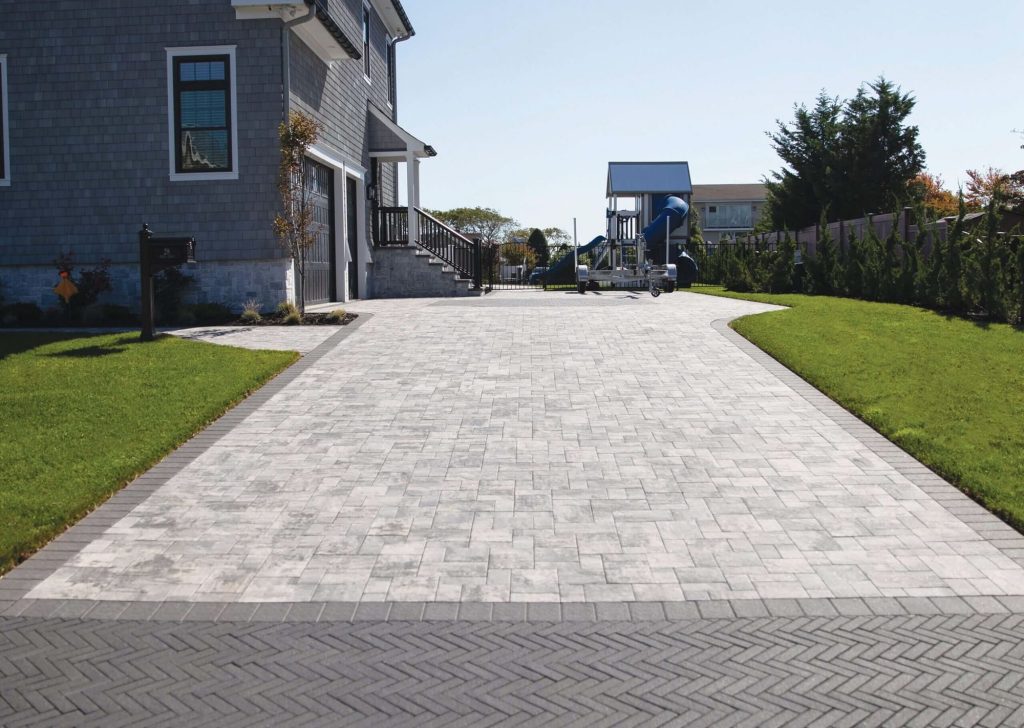
The best pavers for driveways also need a layout appropriate for the intended application. Pattern changes the personality of a large paved area and affects how units interact under vehicle traffic.
Turn rectangular paving stones at opposing angles, and the surface gains immediate energy.
Herringbone also promotes interlock in multiple directions, which helps explain its long history in vehicular applications. Nicolock Holland Stone offers both 45-degree and 90-degree versions, letting the same profile create distinctly different effects.
Running bond takes a quieter approach.
Offset rows create orderly lines that can draw the eye toward the garage or entrance. The simplicity works across many architectural styles, particularly where other exterior features already provide plenty of detail.
Match the layout to the installation patterns specified for the selected paving stone.
A broad driveway doesn't need to read as one uninterrupted field.
Mixing compatible sizes changes the scale as you move across the pavement, adding variation without depending on strong color contrast. Modular arrangements can also create a natural visual relationship with nearby paths or entrance areas.
Good planning prevents many disappointments before construction begins.
The patio paver you love may not be rated for cars. Look in the manufacturer's vehicular collection rather than forcing a favorite profile into the wrong application.
A large format looks substantial, so you assume it belongs on a driveway. Dimensions don't establish load suitability. Some broad units accept traffic; others are pedestrian-only.
Most of the budget goes toward what you can see. Excavation, aggregate, compaction, joints, and edge support don't have the visual appeal of a new color blend, yet each contributes to the finished pavement.
Drainage enters the conversation too late. Decide where rainfall will travel while planning the project, not after water begins collecting in unwanted places.
Nicolock Tip: Narrow your choices to paving stones approved for the intended application before comparing colors and textures. That simple order lets the creative part of the process move forward with greater confidence.
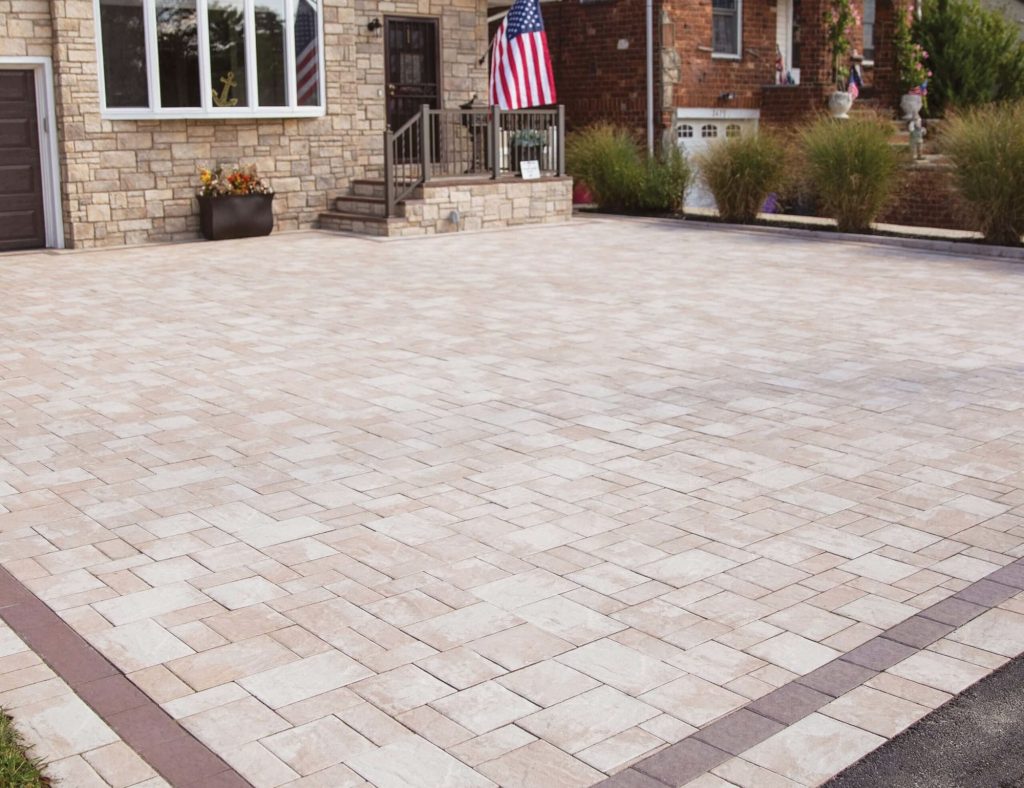
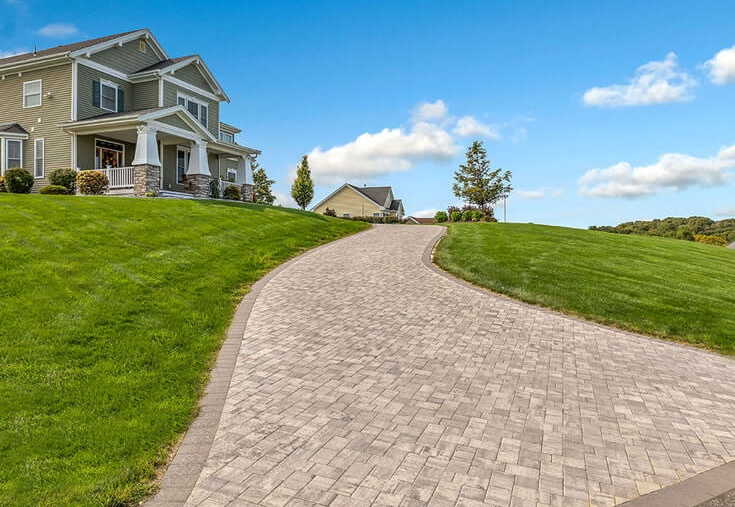
From the street, few hardscape features command more attention than the driveway. Treat it as part of the architecture to create an entrance that feels intentional from curb to front door.
A Colonial, Cape, or other traditional home may feel naturally grounded by cobblestone-inspired shapes and subtly textured faces. Modern architecture often benefits from larger proportions, cleaner geometry, and fewer visual interruptions.
Transitional homes leave room to mix those ideas.
Exact color matching isn't necessary. Pulling a secondary tone from brick, stone, siding, roofing, or trim often creates a more relaxed relationship between the house and hardscape.
Borders become particularly useful across a wide driveway.
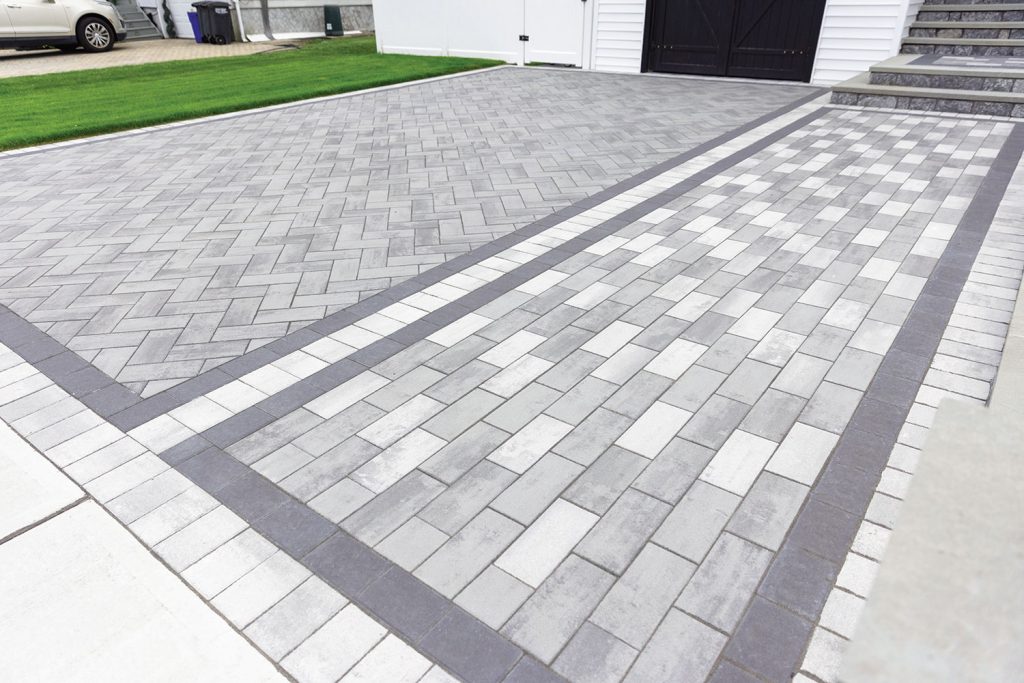
A darker band around a lighter field visually tightens the paved area. Closely related shades create softer definition. Changing the profile or texture introduces another layer without relying on strong contrast.
Small details carry considerable visual weight when repeated along a long edge.
The point where the driveway meets the street offers an opportunity to signal the property entrance.
A pattern change or complementary accent can distinguish the apron while maintaining a connection with the main field. Check local requirements before planning work near public streets or rights-of-way.
The driveway is one part of a larger arrival sequence.
From the curb, paving leads the eye toward the garage, front walk, landscaping, steps, and entry. Repeating a border shade or related texture along the walkway creates a visual connection without covering every area in identical paving stones.
Each space keeps its own purpose while the front of the property reads as one composition.
Rather than starting with a product name, decide how you want your home's approach to feel.
Colonial Cobble gives traditional architecture a familiar cobblestone-inspired rhythm without appearing overly formal. Its defined face works especially well where brick, shutters, established landscaping, or other classic exterior details already set the tone.
Stone Ridge offers more texture. Chamfered edges and a natural-looking face add depth across the pavement, making it well suited to properties where stonework or organic landscape materials play a larger role.
Modern homes often look strongest when the driveway doesn't compete with the architecture.
Blue Ridge Contemporary 80MM uses larger proportions and a smooth face to reduce visual interruptions across the drive. Its 80 mm profile is intended for vehicular applications.
Paragram introduces movement through a parallelogram shape rather than surface ornament. Hex Paver takes another route, using six-sided geometry to create patterns that feel distinctly different from conventional rectangular layouts.
Sometimes color does the most important visual work.
A warm blend can pick up brick or natural stone around the house. Cooler tones may relate better to gray siding, dark trim, or contemporary masonry. Contrasting borders add definition without changing the entire field.
Nicolock's 28 color blends provide plenty of latitude, while paver-shield™ technology is engineered to help those choices hold their character over time.
Properties with stormwater concerns don't have to treat drainage as an afterthought.
Permeable pavers provide options where rainfall management forms part of the pavement plan. A qualified professional can determine how the selected paving stone, aggregate layers, soil, traffic, and local requirements should work as one system.
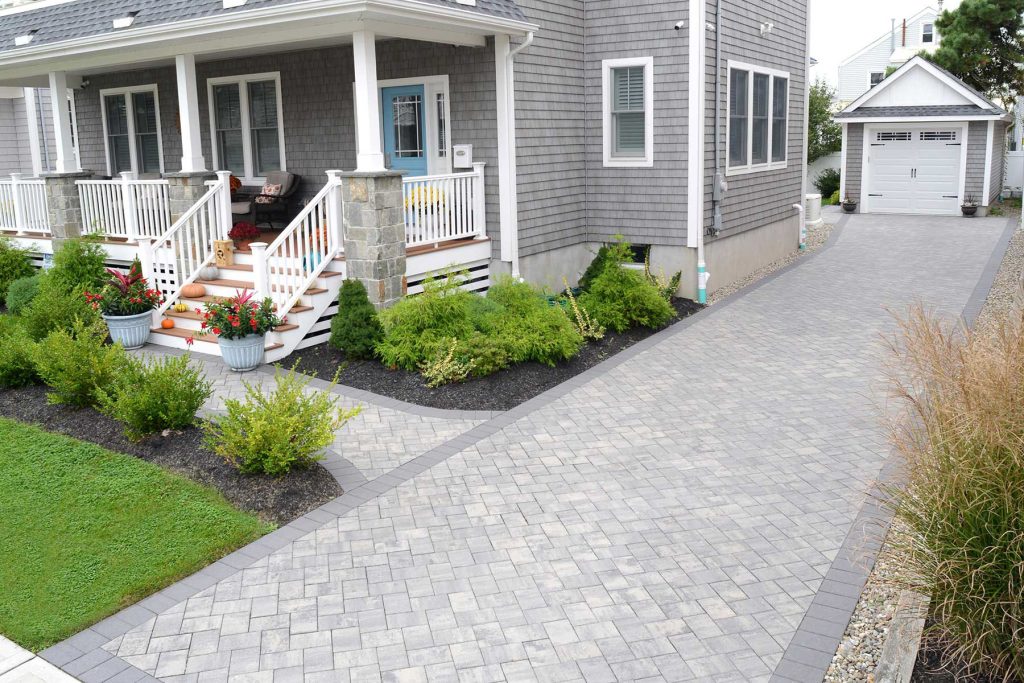
Life leaves evidence on a driveway. Autumn brings leaves, summer gatherings bring extra cars, and ordinary weeks bring dirt, rain, and the occasional spill.
Regular care keeps those everyday marks from becoming larger maintenance concerns.
Remove accumulated debris, respond to stains using methods approved for the paving stone, and periodically inspect joints or edges. In colder regions, follow Nicolock's care guidance for snow removal and deicing products.
Permeable installations need special attention to their openings. Keeping them clear of excessive sediment helps water continue moving into the pavement assembly below.
If a localized repair is needed, interlocking construction offers another advantage. A professional can often remove individual units, address the affected area underneath, and reset the paving without rebuilding the entire drive.
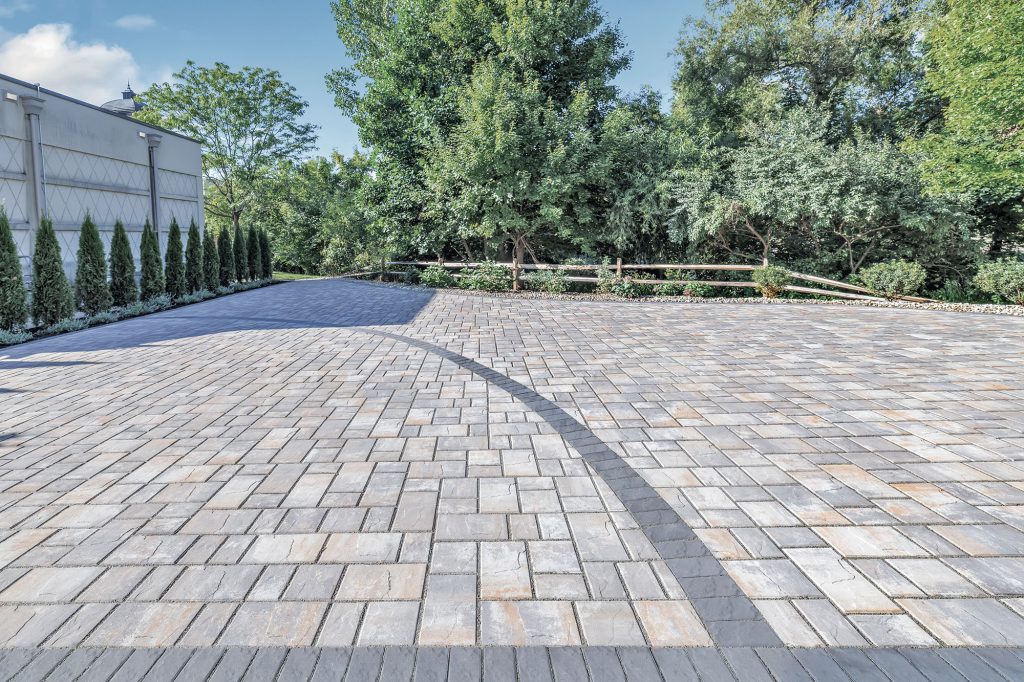
Before making the final selection, look at the project from both sides: what the driveway needs to do and how you want it to feel when you come home.
Ask yourself:
Once you have clear answers to those questions, choosing between shapes and color blends becomes much more enjoyable.
Nicolock Tip: View samples where the paving stones will live. Direct sunlight, shade, surrounding masonry, siding, and landscaping can change how a blend reads throughout the day. Seeing those relationships on the property gives you a better sense of the finished result than viewing a sample by itself.
Concrete paving stones rated for vehicles offer an appealing balance of strength, color selection, repairability, and creative freedom. Brick, natural stone, and permeable systems may also suit residential drives when the chosen material and installation match the site's traffic, weather, and drainage conditions.
Nicolock recommends at least 60 mm for standard residential applications. If trucks, trailers, or other heavy vehicles regularly use the drive, look to appropriate 80 mm options. Product specifications and site conditions still govern the final selection.
Yes. Vehicular-rated concrete paving stones combine dependable performance with numerous shapes, finishes, colors, and laying patterns. Their individual-unit construction also lets you remove and reset affected pieces when access or repair becomes necessary.
Herringbone is commonly selected for vehicle applications because its angled arrangement encourages interlock in multiple directions. The right answer still depends on the paving stone and its approved installation patterns.
Some can. Large dimensions alone don't indicate vehicle suitability. Blue Ridge Contemporary 80MM is one Nicolock option that pairs broad proportions with a thickness intended for vehicular applications. Other large-format products may be limited to pedestrian areas, so check the specifications before choosing.
Nicolock states that paving stone driveways can last 50 years or more with proper installation and care. Foundation construction, soil, drainage, weather, traffic, and maintenance all influence service life. Nicolock paving stones also come with a transferable lifetime warranty, subject to its terms.
Not every paving stone requires sealing. Follow the care recommendations for the Nicolock product selected and consider the appearance or maintenance goals behind adding a sealer. Permeable installations require methods that preserve water movement through their openings.
Certain permeable paving stones are made for vehicular applications. Openings allow rainfall to enter aggregate layers beneath the finished area instead of sending all runoff across the top. Proper foundation design and ongoing joint care help the system maintain that function.
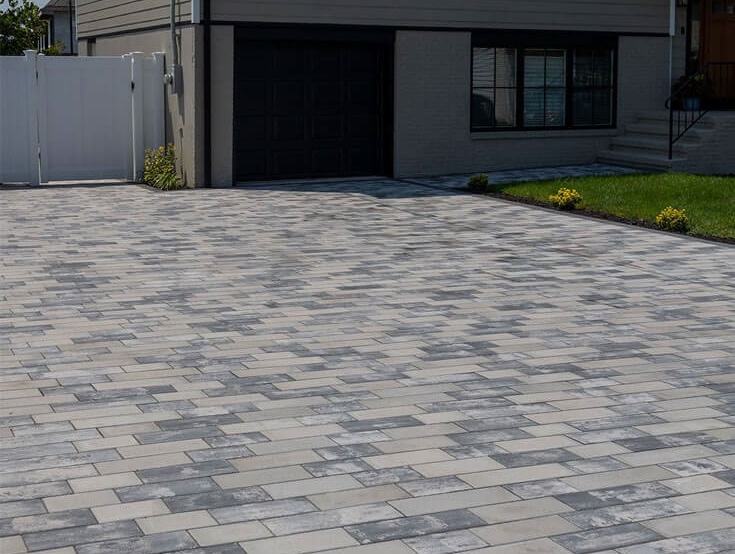
The first few seconds after turning off the street are part of the home experience. A well-designed driveway looks and feels connected to the architecture, front walk, landscape, and spaces beyond.
Strength still comes first. Choose paving stones made for traffic, give them the right foundation, and plan for water before installation begins. Then make the project yours through shape, texture, pattern, and color.
Nicolock brings more than five decades of concrete manufacturing experience to that balance. From classic profiles to modern geometry and permeable options, our paving stones give you room to create an entrance with lasting character and paver-shield™ color.
Ready to see the possibilities in person? Find a Nicolock dealer, connect with a qualified contractor, or visit a Nicolock Design Center to compare paving stones and colors for your property.